The Level 1 Car Park hums under fluorescent strip lighting. In one corner, a ticket machine awaits; in another, a set of blue fire doors stands open next to a bright yellow banner bearing the words ‘NO MORE NOWT’. Whether arriving by bus, foot or car, this liminal scene is the way into the exhibition Going Back Brockens: Monuments and Rhetoric After the Miners’ Strike since it is only accessible via the parking facility of Bishop Auckland’s central Newgate shopping centre. Conceived by North East artist Narbi Price with writer Mark Hudson the show includes work by filmmaker Carl Joyce and artist Jamie Holman alongside the launch of a major project by Price and Hudson, commissioned by the County Durham-based, Creative People and Places Programme and Building Culture CIC, No More Nowt. It is staged at The Warehouse, a gallery occupying an empty unit of the Newgate Centre whose shell mirrors its car park entrance, with breeze block walls, exposed pipes and recessed squares in the concrete ceiling. Windows on one side frame views of brown-tiled roofs of 1950s houses, and on the other, the wood and brick development of a new bus station and a high-rise office block.
A central area has been created within the space by a timber and board structure spanning concrete pillars, looking a little like building site hoarding. It displays forty acrylic paintings by Price, small and medium canvases that depict present-day locations in former mining communities across County Durham. Devoid of people, they feature details which repeat across canvases, including brick walls, garden fences, windows, desire lines, roads and the sea. Skies are often grey but are sometimes blue, indicating some sense of time passing. Mostly, though, the painted scenes feel suspended in the melancholy of a Tuesday afternoon in November. They number forty to mark the years passed since the 1984-5 miners’ strike.

The exhibition subtitle, then, could be somewhat ironic. Are some scrappy trees, layers of worn away bricks and silhouetted barbed wire all that’s left to memorialize the loss of industry in these places? ‘Like Black Diamonds’ (2025) seems to depict an actual commemorative structure, a black column with a plaque in front, backlit by low winter sun. Juxtaposed as it is with a distant pylon it appears incidental; it could well be street furniture. There is something monumental, though, in ‘They Chased People Through People’s Houses and Gardens’ (2024), in the way a gable end wall seems to square up to the edges of its 90 x 110cm canvas. It displays its sandy yellow and red render like armour. Making marginal details feature centrally like this is a simple gesture to counter the idea of these places as overlooked, it asks for them to be witnessed.

Price’s use of paint in the series also obscures quick legibility. Images come together through inky washes of colour, flat opaque blocks and occasional greasy daubs that sit on the surface. Renderings of light between trees, which up close appear laboured, settle when seen from a distance – only it is sometimes difficult to step back sufficiently within the display as there isn’t enough space. The sheer number of paintings seems to invite a sequential, up-close viewing. Helpfully, this rhythm is disrupted by apertures. As paintings straddle rectangular gaps between boards, their scenes echo the odd empty spaces around the shopping unit, like glimpses of large concertina-door goods lifts, or a handwritten sign hanging from a pipe that reads ‘Paperware and Cereals’. In a recent interview with NARC Magazine, Price described the experience of navigating villages that have been shaped by mining, saying, ‘The whole landscape is hunkered around a void.’
The paintings’ quiet assertion is different to the communicative urgency of the union banners marched each year at the Durham Miners’ Gala. Two contemporary examples of these are presented outside the display structure, leaning against a wall next to a drop-in any-age engagement activity. Artist Jamie Holman’s ‘Above, Below, Beyond’ (2019) banners combine text, motifs and images rendered in shimmering silk as part of a project which was developed and co-created with communities in East Durham, the banners connect acid house references to the Gala’s collective visual narratives of place, pride and struggle.

Voices broadcast from speakers mounted high on the concrete pillars add to the exhibition’s layered experience. During his time living in Horden in the early nineties, Hudson conducted interviews to document the impact of its colliery’s closure. These recordings, played here publicly for the first time, later became the foundation for his book Coming Back Brockens: A Year in a Mining Village, which lends the show its title. The sound installation is not a voice-over. Mostly, it has an understated presence, acting as an ambient score marked by tone, accent and the age of the recordings. Phrases come in and out of focus, sometimes with gut-punch clarity as with the words ‘four hours and twenty minutes…I thought I was going to die…’. Price’s titles carry other fragments of language from this archive. Some, like ‘But the Burden…’ (2024), evoke a heavy inheritance; others, like ‘I Could Feel the Boots’ (2025), give vivid sense images. ‘You Don’t Know These Things’ (2025) and ‘It Doesn’t Work That Way’(2023) speak of the complexity of articulating history. A reminder, even with stories that have been frequently told, of the importance of going back to source.
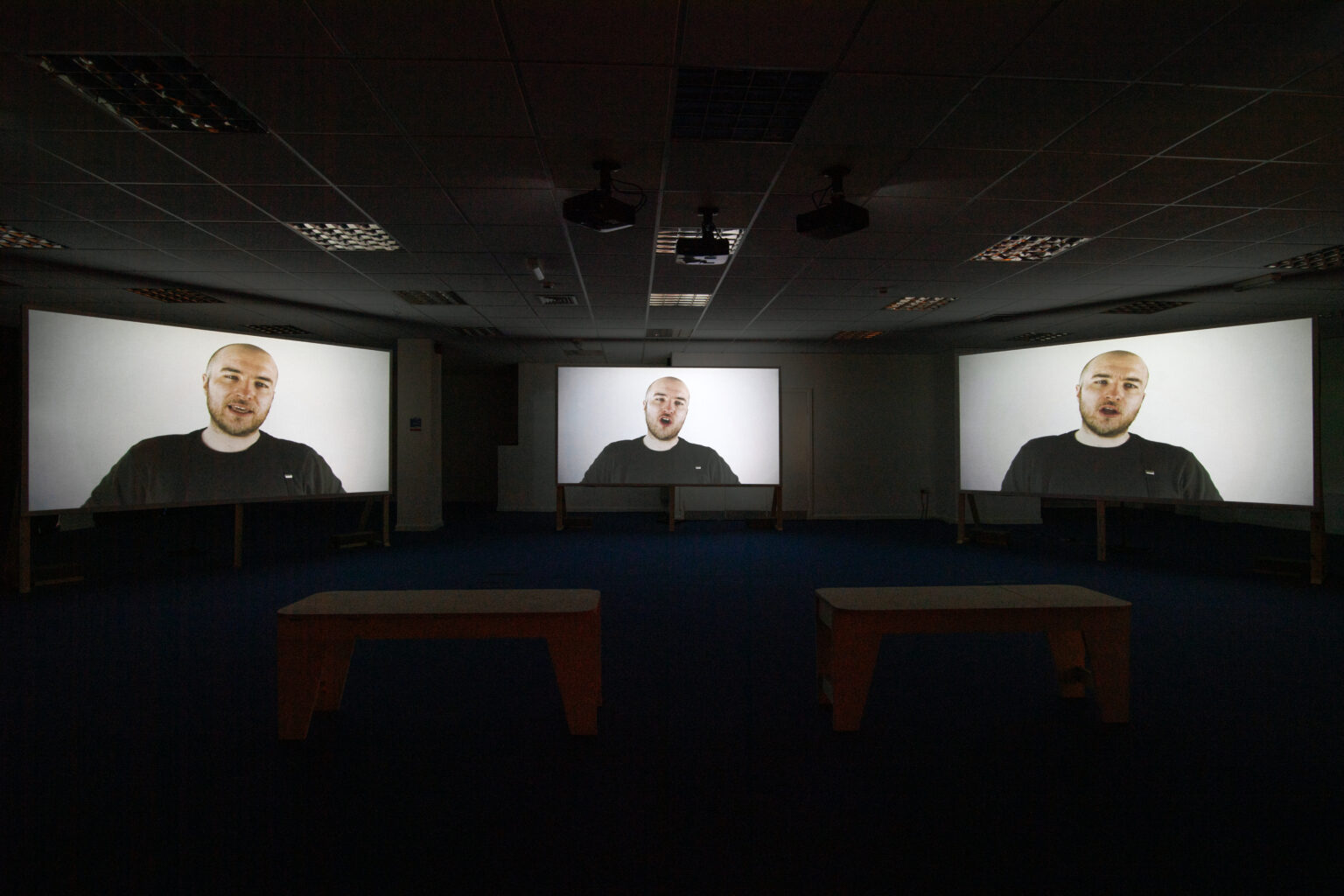
Carl Joyce’s short film series Where We Belong (2025), produced as part of wider engagement work in the development of Going Back Brockens, continues in this vein. Across two projections, with seating, wireless headphones and plenty of space around them to dwell, the series presents six individually-titled portraits of people from former mining communities. Each is driven by its subject’s voice, which is heard over footage of them in the places they are speaking about, often shown in slow motion. The framing of location details recall, and sometimes directly reference, Price’s paintings. Drone footage and archival film footage of mining activities provide other textures.

The films’ meditative pacing means expressions of hope and despair are given equal space to breathe. In ‘Fractured’ (2025), former National Coal Board catering staff Pamela speaks of her home village of Murton’s permanent breakdown of community since the strike and the government’s response. Despite this, she adds, without any sense of empty platitude, she will always love Murton. Author Pip Fallow makes a stark call in ‘Healing’ (2025). Even if ‘left-behind’ places are the result of intentional neglect by governments, he asks them to ‘bury the hatchet’ for the sake of future generations. ‘Resilience’ (2025) focuses on Joseph, who moved to the coastal former mining village of Horden from Nigeria three years ago. He articulates the complexity of loving the place he moved to, to secure his family’s future, and recognizing what he calls ‘the retrogressive journey’ it has been on since the pits closed.
Anniversaries invite retrospection. Reaching round numbers like forty, we might assume narratives should be resolved. After this staging at The Warehouse, the show travels to the Durham Miners’ Gala where Price will speak on stage and the show will be installed in the Redhills Art Tent. After that, it travels on to Horden for its one hundred and twenty fifth anniversary celebrations in August, in a homecoming for the voices who contributed to Hudson’s original book. In Going Back Brockens, different elements of the story are allowed space to interact and for new meanings and effects to emerge – significantly, with the communities that shape it at the centre.
Kate Liston is an artist and writer from Gateshead.
Going Back Brockens: Monuments and Rhetoric After the Miners’ Strike was open at The Warehouse, run by MINE (Made in the North East) collective, 13 June – 5 July. It was shown in the Redhills Art Tent at Durham Miners’ Gala 12 July. It will be installed at St Mary’s Church in the village of Horden 22 August. The exhibition will be staged at Sunderland Museum & Winter Gardens 12 September 2025 – 3 January 2026.
This review is supported by No More Nowt.
Published 13.08.2025 by Lesley Guy in Reviews
1,379 words