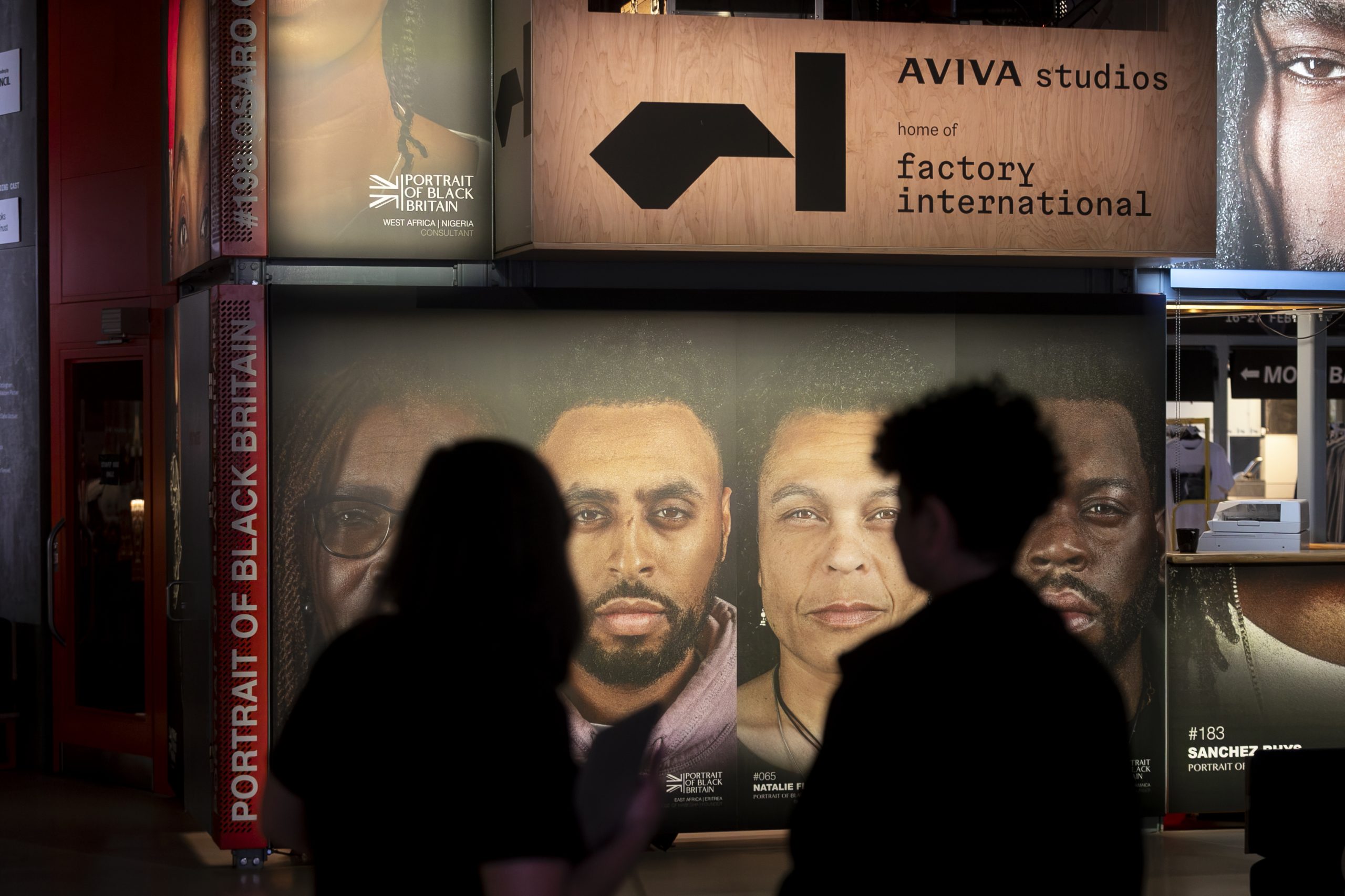
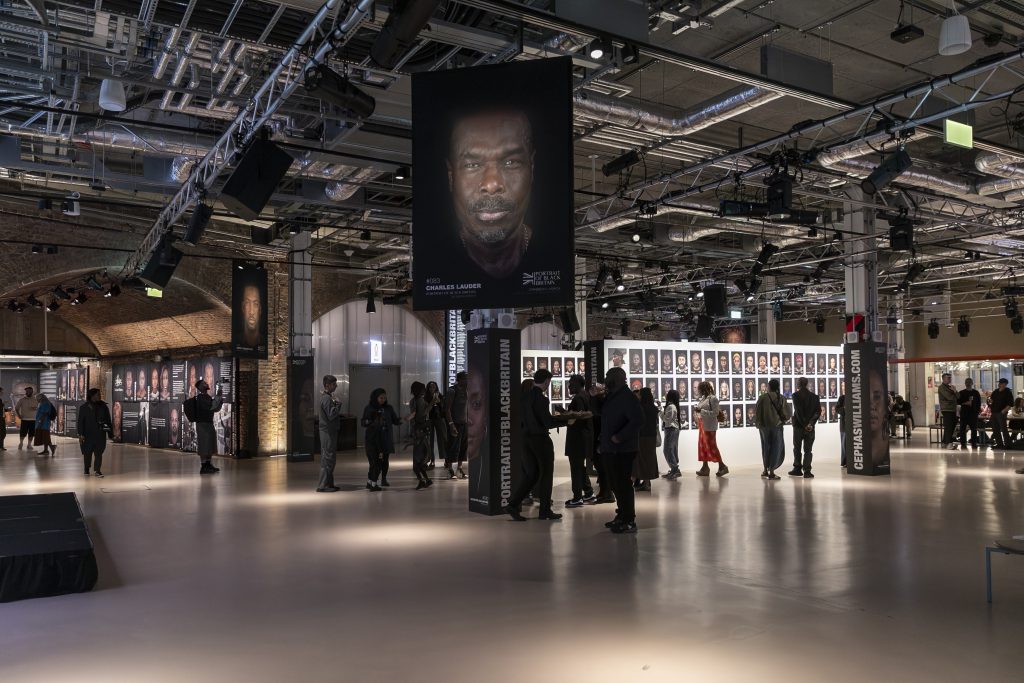
The approach to the exhibition space feels like stepping off a main city thoroughfare into a side street, the kind found in any urban district. These are the streets that don’t appear on the main tourist map, where local creatives advertise the city’s real cultural offerings via fly-posted adverts. Walking into that turning, and then into the exhibition at Aviva Studios, I was greeted by a similar sight. Large, concert-poster-sized photographic portraits wrap around the sharp-edged, concrete pillars of the venue. Then, more photographic portraits are arranged along stretches of brick wall like timetables, while others hang overhead like freshly laundered sheets.
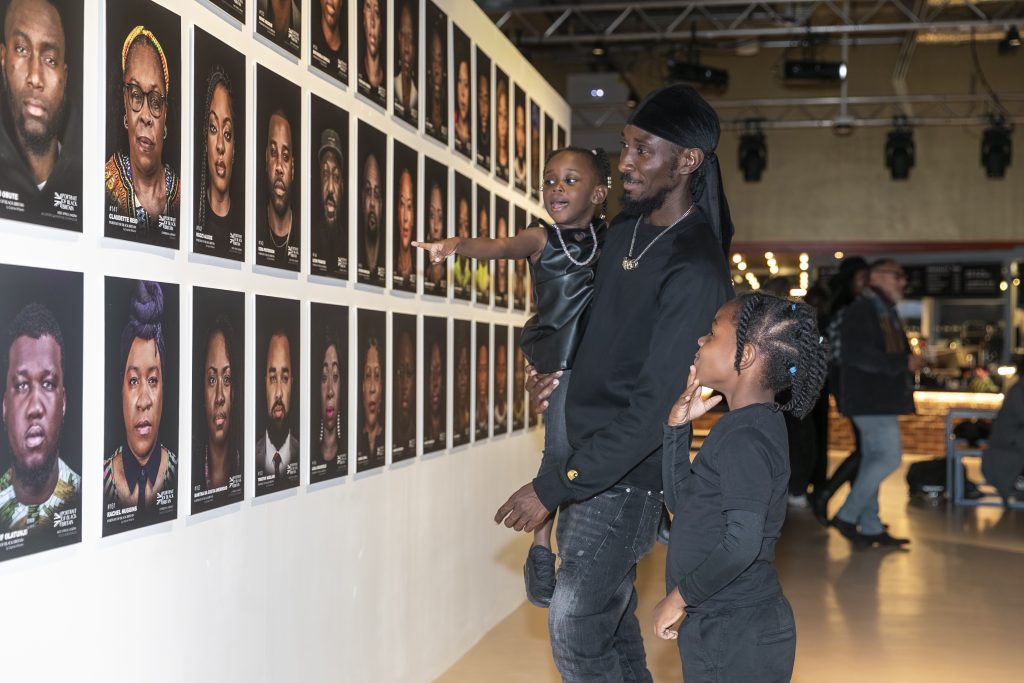
Then there are four banks of smaller scale portraits lined along both sides of two large display units. These photographs seem to draw the viewer into a sense of order and stillness, interrupted only by the sound of good coffee percolating in the café bar in the corner.
There are currently 228 portraits on display, with Williams aiming to reach a thousand of his close-up photographs. Already, this is probably as many Black faces as one might pass on the walk between Deansgate or Oxford Road and Aviva Studios. But here they are displayed without the usual mingling of people in the street. All the sitters live and work in the city, and for both Williams and the participants, that is the point. The other faces that make up the character of Manchester’s hustle and bustle are absent, creating an opportunity to notice the humanity of each sitter. Every image focuses on the face and eyes, filling the frame and leaving no detail to distract us.
Williams is both the photographer and the creative force behind the exhibition. This is his second major series of portraits exploring contemporary Black Britain, following 56 Black Men (2022), a project created in response to the negative and misleading stereotypes of men of colour in the media. For this series, all 56 subjects wore hoodies to explore how an ordinary item of clothing can trigger prejudice, shaping how the public perceives Black men and even making them feel intimidated.
Portrait of Black Britain develops this work into a much larger collection, bringing together portraits of people who are, in their own ways, role models within Manchester’s – and London’s – Black communities. There is, for instance, Kady Salahou, a paralegal and the second sitter in the collection; Owen Grant, who works in finance; and Solomon Wattley, who works in media at Virgin and O2. The portraits continue, with a substantial proportion of the participants running their own businesses. These are people whose lives are rarely represented in mainstream news, except perhaps when a stereotype takes precedence over the reality of who they are.
As Williams explains, the exhibition speaks to the idea that most people we encounter in public live ordinary, recognisable lives. Yet the way we see one another is often shaped by cultural representations that obscure this shared humanity.
The American author and essayist Ralph Ellison explored the power of imagery through the experience of Black Americans in Shadow and Act (1964). Discussing why anti-Black imagery was so readily accepted, he wrote:
“because of the existence throughout the United States of an audience obsessed with an inner psychological need to view Negroes as less than men. Thus, psychologically and ethically, these negative images constitute justifications for all those acts, legal, emotional, economic and political, which we label Jim Crow [in Britain this was called the ‘colour bar’] … Its role has been that of justifying the widely held myth of Negro unhumanness and inferiority by offering entertaining rituals through which that myth could be reaffirmed.”
Ellison’s words help explain one of the ways in which Williams’s work responds to the relationship between historical culture and contemporary perceptions. For me, this is what distinguishes the collection from straightforward documentation. The portraits do not simply record who is here; they also challenge the cultural narratives through which Black people have historically been seen.
What Williams has already produced, and continues to produce, is something new. I am not aware of another collection in Britain that documents Black life in this way and at this scale.
My own experience of studying portraits of Black Britons and other Black people in the Western world is grounded in research that took me seven years, on and off. I was trying to discover the origins of a Black British woman pictured in a photograph taken in Lancashire at the turn of the twentieth century. The research led me through numerous archives and museum collections, where I found mostly isolated representations of Black British people.
Now I find myself confronted by a collection of portraits taken, and still being taken, in the twenty-first century. The photographs are crisp and highly detailed, difficult to compare with the softer lines of drawings, oil paintings and sepia prints from my previous research. Yet, looking at these faces, I am conscious of the connection between the past and the present, and of how these images will become part of the historical record of the future.
Each portrait is subtly captioned with the sitter’s name and occupation. I would, however, have welcomed more information about some of the participants’ lives as part of the exhibition. I did have the opportunity to speak with two of them: Dorreta Maynard, who runs her own business, and Lekhani Chirwa, an actor and theatre-maker. I asked why they felt it was important to take part in the project.
Initially, their responses seemed to centre on the celebration of visibility: being selected for inclusion among their peers and having their presence in contemporary life formally recognised. Chirwa spoke about the empowerment of being seen without the social mask that traditional portraiture often constructs. There is something significant about being photographed without the familiar expressions and carefully curated versions of ourselves that dominate social media, where so many of us now encounter and present our own images.
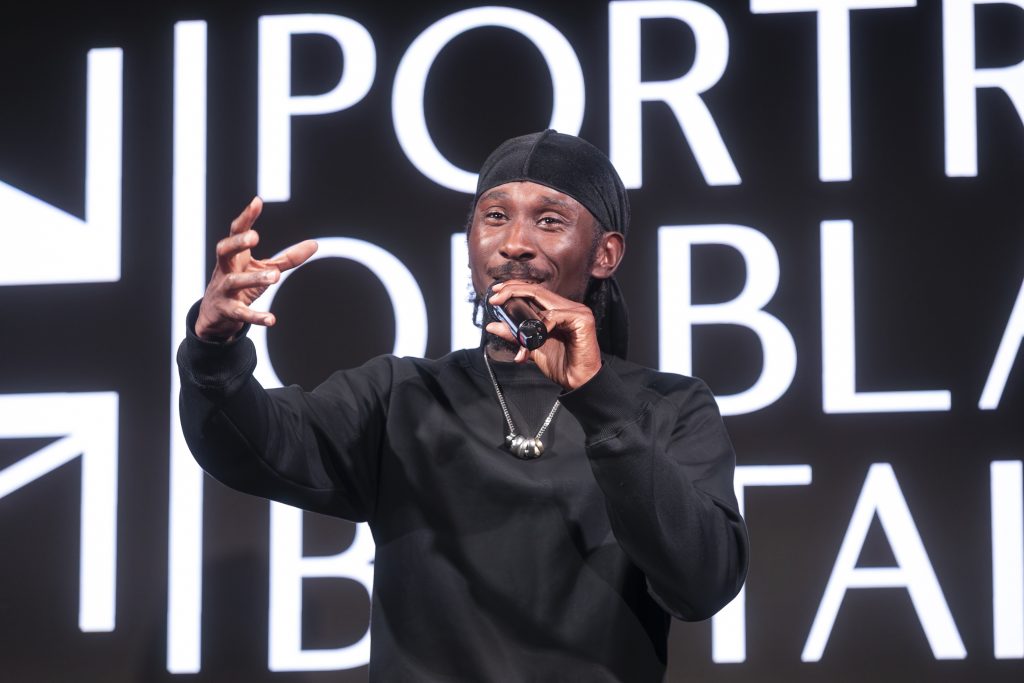
I also had the chance to speak with Williams, although our conversation quickly became caught up in the selection process. He was reluctant to explain in detail the criteria he used to choose his subjects. What was clear, however, was his ability to bring people together and inspire the confidence needed to create such a collection. More important to him was the project’s original purpose: exploring the role of culture in changing wider perceptions, and his commitment to making work that can contribute to cultural change.
As Black people, we all found it difficult to describe the cumulative effects of being underrepresented in public life. Yet this seemed to be the underlying concern connecting both Williams’s project and the participants’ decision to take part. What Williams has created is an archival collection that he felt compelled to make himself: a record of people whose lives are too often overlooked or misrepresented, and an assertion of their presence in contemporary Britain.
Portrait of Black Britain, Factory International at Aviva Studios, Manchester, 2 October – 1 November 2026.
Chantal Oakes is a writer based in Preston.
This review is supported by Factory International.
Published 30.10.2026 by Natalie Hughes in Reviews
1,201 words