
Standing outside ARC, Stockton Arts Centre, on a Friday evening is one of the best ways to get a snapshot of the arts in Stockton-on-Tees. People file in for a drink before the show, and the glass-fronted venue glows with light, warmth and the promise of culture: theatre, comedy, exhibitions, cinema and workshops.
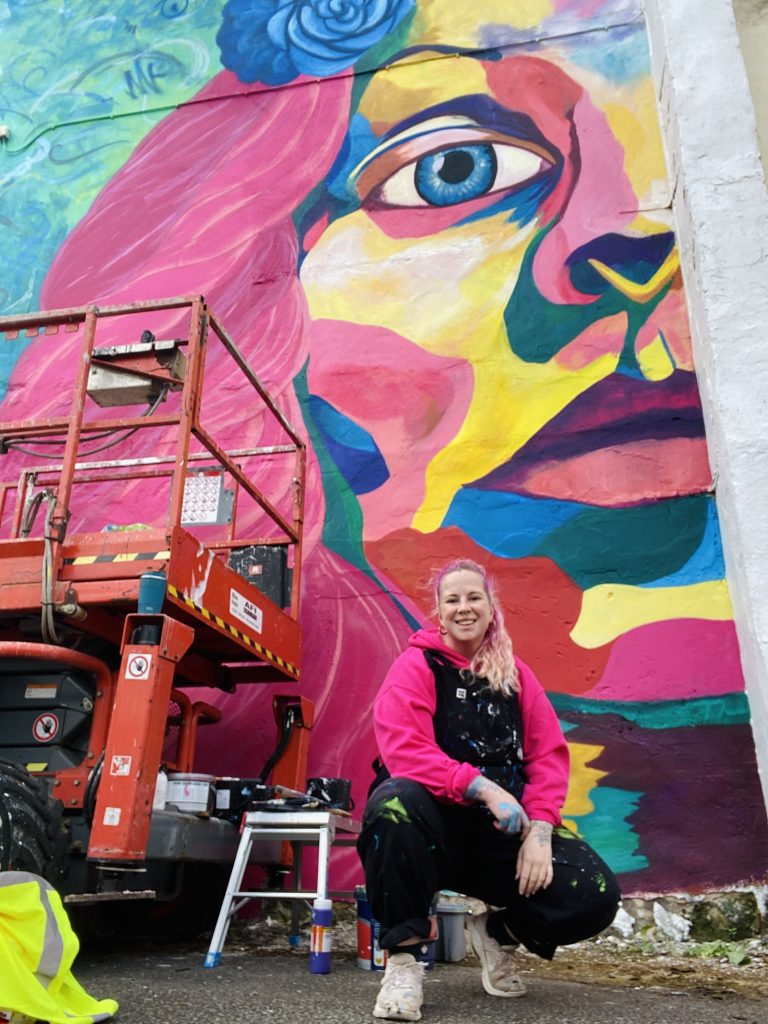
Just across the road from the entrance of ARC is the first large-scale mural I ever completed. Commissioned by Stockton BID as part of The BIG Art Festival 2024, Stockton’s first public art festival, the ten-metre-high goddess-like face peers down on passers-by. The mural adorns the side of the Change Grow Live building, our town’s main addiction recovery centre. Just a stone’s throw away from ARC, our cultural heart centre, are some of our most economically neglected areas, and this recovery centre serves that community.
Art, therefore, is present in the area of our town that needs it most. Whilst I was painting this mural, I had many comments from local residents, including those who were struggling with homelessness and generational cycles of deprivation, about how much hope having the building painted had given them. Before I started painting, I had many dismissive comments that public art is a waste of time here because it would be defaced with graffiti. Now, eighteen months after I completed the mural, that still hasn’t happened. Giving this building a colourful new face brought residents a sense of pride, some locals even beginning regular litter picking to clear the area around the wall.
I didn’t grow up in Teesside, having spent most of my early life in rural East Yorkshire, but Stockton has an air of creative possibilities that sets my artist soul alight. There’s an intangible character to Stockton that’s harder to quantify. For a small town, we have huge talent and potential in our creative communities.
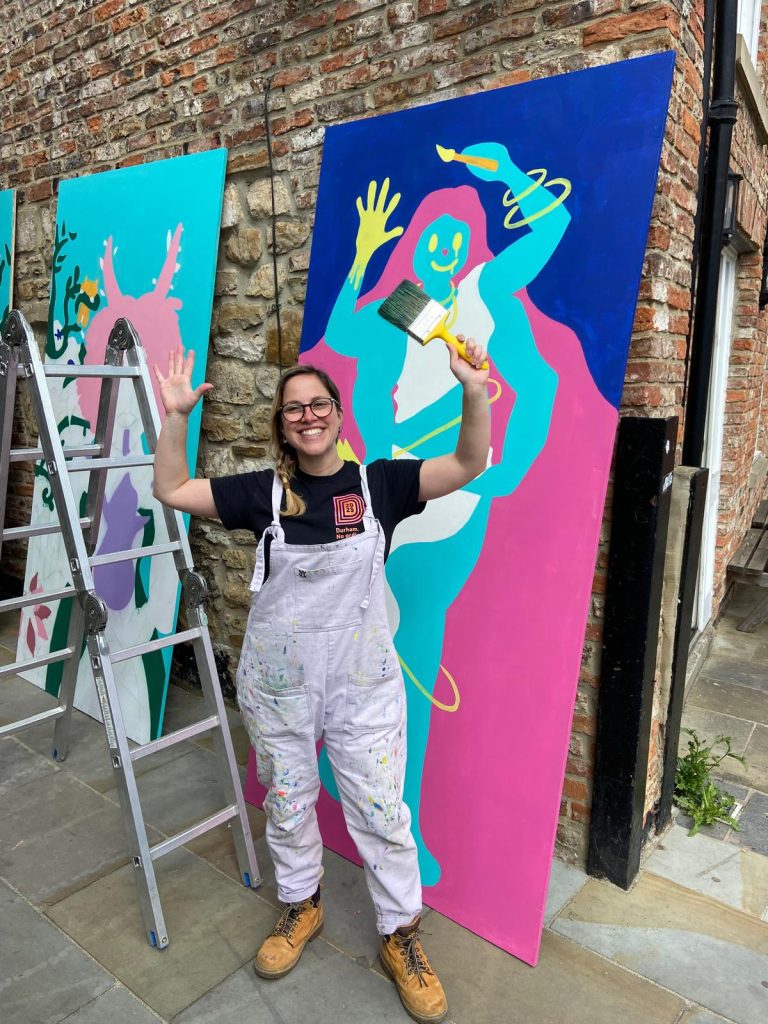
As part of the BIG Art Festival, I worked closely with the Art and Design department at Stockton Riverside College, helping to engage their students in a community project to create a mural in the town centre. The students worked with Durham-based artist Nocciola the Drawer to design a public artwork about their experience of their hometown. I wanted to understand how Stockton, which is often overlooked in wider arts discourse, is quietly and passionately preparing the next generation of artists. From my time working with the college, I knew that this was a good place to start in defining what makes Stockton so special.
Walking through the lively corridors of the college, where excited students move between classes, it’s clear that art is celebrated here. The annual end-of-year exhibition still lines the main corridor, a proud display of student talent from the art department tucked away upstairs. Every time I visit Stockton Riverside College, I find myself wondering, ‘What if I’d studied somewhere like this? Somewhere where the artistic spirit isn’t just allowed but fiercely protected?’
I came to my art career later in life, having been encouraged to keep my creativity as a hobby and get a ‘real job’ when I was in college myself. I ended up getting a degree in Education and I was a primary school teacher for nearly a decade. In all that time, I experienced a feeling of powerlessness teaching in an education system that prioritised data and exam results over children’s individuality and creativity.
I think this is why I feel such a kinship with Liz Dixon and Annie Game, the Art and Design tutors here at the college, both of whom I would now call friends. Liz and Annie are still teaching in that education system, and they are not giving up on our young artists, despite the odds.
‘I love this job because of them,’ Liz tells me, smiling across the table at her students. ‘As an art teacher, you don’t really get the chance to do any [art] yourself. My creativity comes out through them.’ Previously a self-employed artist, Liz brings real-world experience into the classroom. She’s passionate about raising aspirations and helping students imagine a future in the arts. ‘We’re not a big college,’ Annie adds, ‘so everyone knows each other. Anywhere you go where the art students are, you can spot them a mile off.’ Their approach is rooted in individuality and creative freedom. One student tells me, ‘Any idea you have, you can go to Liz and Annie, and they make you realise you can do even more than you thought.’
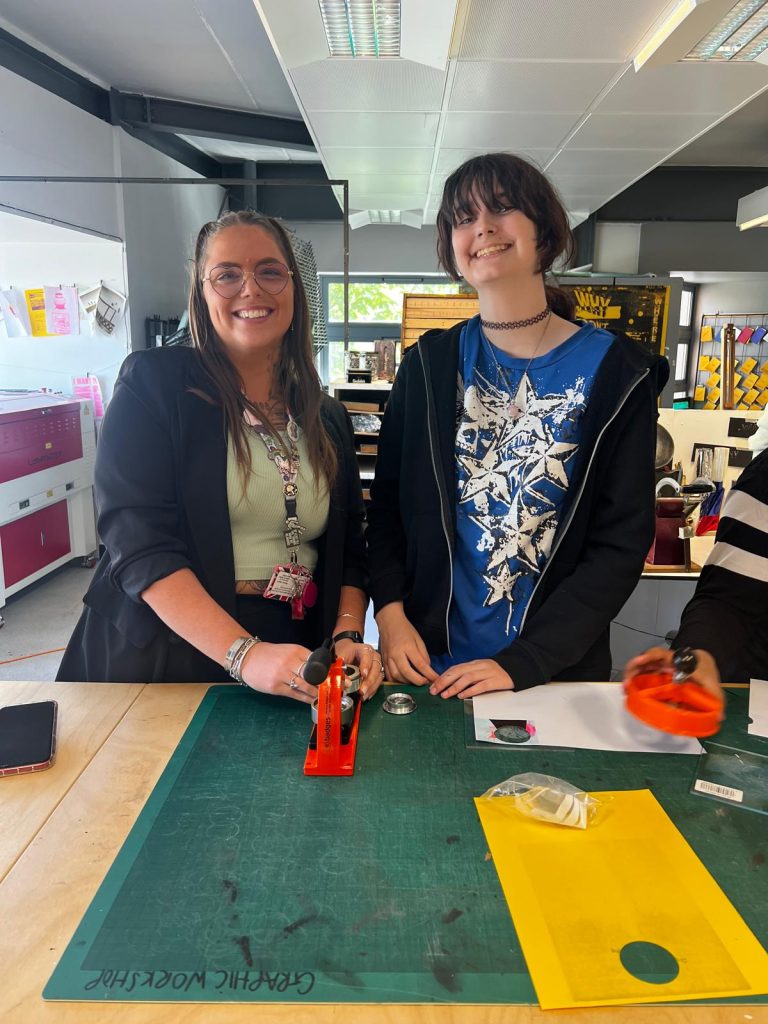
These tutors don’t just teach, they advocate. ‘We don’t give up on people,’ Annie says firmly. And the course itself reflects that ethos: a careful balance between creative exploration, collaborative projects and gentle guidance toward future pathways. For many students, this is a nurturing environment to ask, ‘Who do I want to be? What kind of artist do I want to become?’.
‘They come in having only made art in their bedrooms that no one’s ever seen,’ Liz says, ‘and by the end, you can’t shut them up.’ Ultimately, some of the most vital skills a young artist needs are confidence and the ability to self-advocate. ‘Some students struggle just to make it into college,’ Liz explains. ‘I work around the system to keep them enrolled if I know they’re meant to be here.’
Despite the support, brilliant teaching, and a carefully designed course, barriers remain. Anxiety, agoraphobia and low self-worth are common, and many students arrive with rock-bottom confidence. Past school experiences and low aspirations at home often compound this. ‘If I go to uni, I’ll be the first in my family,’ is something Liz and Annie hear all the time. And when funding is tight, even showing them what’s out there becomes a challenge; when students haven’t seen what’s possible, it’s harder to imagine it for themselves.
‘Can you imagine the course we could plan with a bit more money?’ Liz asks, turning to Annie. Field trips, exhibitions and artist-led experiences are often frustratingly out of reach. ‘We have to turn down so many opportunities,’ Annie adds, ‘because we just can’t afford to get them there.’
Engaging with schools and colleges is something I’ll always make time for as an artist. I regularly give talks at this college and others in the area on what my artist life is really like, on self-employment and how I make it work being an artist in Teesside. Somewhere in that room might be a younger version of me, waiting for someone to validate her creative dreams. If just one student goes home and tells their parents they met a local artist, that it’s actually possible to become one, then I’ve done my job.
Stockton has more going for it than people realise, especially when it comes to the arts. Our exceptional art and design education centres are just one part of the bigger picture. We have an excellent business offering and support for creative professionals, championed by the Tees Valley Combined Authority through their Freelancer Network. We have funded access to bespoke creative industry training through Enterprise Made Simple in Middlesbrough and numerous networking opportunities in the region. Artists are encouraged to take themselves seriously here and thrive.
We may not be surrounded by major galleries, but we have something better: people. People with that passionate northern grit. People who keep showing up. Our communities are what really makes Stockton special – whether that be enthusiastic attendees of creative workshops or openly supportive venues and business owners giving artists space to make their work.
In Stockton, we don’t give up on each other, and we’re not done fighting for our place in the arts.
Harriet Mee is an artist and educator based in Stockton.
This review is supported by The Collective Studio, an artist development programme at The NewBridge Project.
Published 28.11.2025 by Lesley Guy in Explorations
1,370 words