It’s not every day that you have the opportunity to meet with and interview a Turner Prize-winning artist. I had this opportunity twice in 2024. Lubaina Himid is an artist, curator and educator. Her work is widely considered a cornerstone of the British Black Arts Movement. Himid has created paintings, installations, exhibitions, sound and writing, challenging the historical erasure of the African diaspora’s contributions to art in Britain.
On 8 January I visited ArtlabContemporary Print Studio in Preston to meet Lubaina Himid where she has been an artist in residence, as well as a professor of contemporary art at The University of Central Lancashire. She has created art works here in collaboration with Magda Stawarska, with whom I met at the same time, to discuss their practice and take a look at the print room, a research facility where some of their works have been created. Stawarska is a multi-disciplinary artist exploring sound, prints and painting, and focussing on the prints accompanying the paintings by Himid. Artlab is a hub for incubating ideas and methods, developing innovative thinking about printmaking as a fine art discipline. Through artist residences, participating artists are invited to experiment with printing techniques with the printmakers at the studio, in this case Stawarska.
It occurs to me that Himid is probably one of the most established and widely known artists I have ever met for a piece of writing. We have a warm and friendly exchange and chat about the new work that will be exhibited in New York in May, as well as her previous works and career. I am particularly taken by her interest in collecting print media coverage over decades to recognise racism and misrepresentation in the press and media, especially as I have also researched this exact topic. In 1983 she bought The Guardian newspaper every day for a year to find only one black person was photographed in its pages. She continued collecting from 2006 – 2016, and began painting over images and advertisements featuring black people to elevate and highlight them. I connect with her passion for revealing truths and perspectives on a personal level, as I approach my work in arts and culture as an activist, consultant and researcher with similar intentions.

Himid tells me about a new series of acrylic paintings entitled Street Sellers (2024), that will be exhibited in New York at Greene Naftaliin May 2024. The paintings are of seventeenth-century members of Britain’s working-class street hawkers, selling a range of products from fish and eggs to chairs and musical instruments. ‘Horn Seller’ and ‘Chair Seller’ are my favourites. We look at them on a laptop; they are striking and very bold and colourful. Alongside each painting will be an accompanying sign: a work on paper printed to mimic a cardboard sign, embellished with painted motifs and phonetic letters that invite the viewer to read aloud. The words will be like a sales pitch, what the seller is thinking and saying about their wares. They will be double sided, so on the back the seller’s true thoughts will be revealed, sharing what goes unsaid, including their attachments to the goods. Himid and Stawarska take me on a tour of the print room at Artlab and show me the archival paper that the signs will be printed on, which indeed looks like cardboard from afar. It’s a collaboration between Himid and Stawarska, who has previously produced prints and soundscapes to accompany Himid’s work. Each of the ten signs is at the same time a silkscreen print and a painting. Somerset Tub Sized paper was silkscreened by Stawarska to look like cardboard and then overpainted with an object by Himid in acrylic, before being silkscreened again by Stawarska with phonetic text. After the tour, I bid them farewell and we plan another conversation following the exhibition opening in New York.

On 15 May we connect again online following the opening of the exhibition, which has been received very well. Some of the feedback includes that seeing the work is similar to the experience of walking through a market and seeing a range of goods on sale to buy. There is a performative element to the work because of the printed signs. They use phonetic language so one has to sound it out or say it in one’s mind to make sense of it. I may not have been lucky enough to see the paintings and signs directly whilst walking through a gallery, but the images shared with me digitally give me a very good impression of the spaciousness of the gallery, with the canvases on the walls, and signs spread out on the ground, freestanding in front of the wall displays.
By focusing on the Black working-class individuals who were integral to the economy in seventeenth century London, Himid addresses a historical oversight in art, where Black figures have frequently been excluded from depictions of that era. Her intention is to highlight their presence and contributions, asserting their rightful place in the historical narrative of the British Isles.
A central theme in Himid’s work, she tells me, is her engagement with ‘interrogating narratives on the desire to belong.’ This concept permeates her artistic practice, emphasizing the significant yet underacknowledged role of the Black diaspora in enriching Britain’s cultural landscape. Through her art, Himid explores what it means to belong and to be acknowledged, reflecting on broader questions of inclusion and identity.
Reflecting on her career, Himid notes that her initial drive to represent marginalised communities stemmed from a lack of visibility in the art world. Four decades ago, there was little representation of Black individuals in galleries, prompting Himid and her contemporaries to create art that filled the void. This mission remains vital to her practice today, as she continues to address issues of race, misrepresentation, and media bias through her work.
Himid describes her commitment to art as both a responsibility and a passion. For her, creating art is not just a means of expression but a way of life that allows her to address and unravel complex social issues. She believes that art should be powerful and relevant, engaging audiences and prompting them to reflect and act. Her work is characterized by a consistent exploration of new forms and techniques, often experimenting with colour and composition to enhance the political and emotional impact of her pieces. Through her art, Himid seeks to provoke thought and emotion, engaging viewers in a dialogue about history and identity.

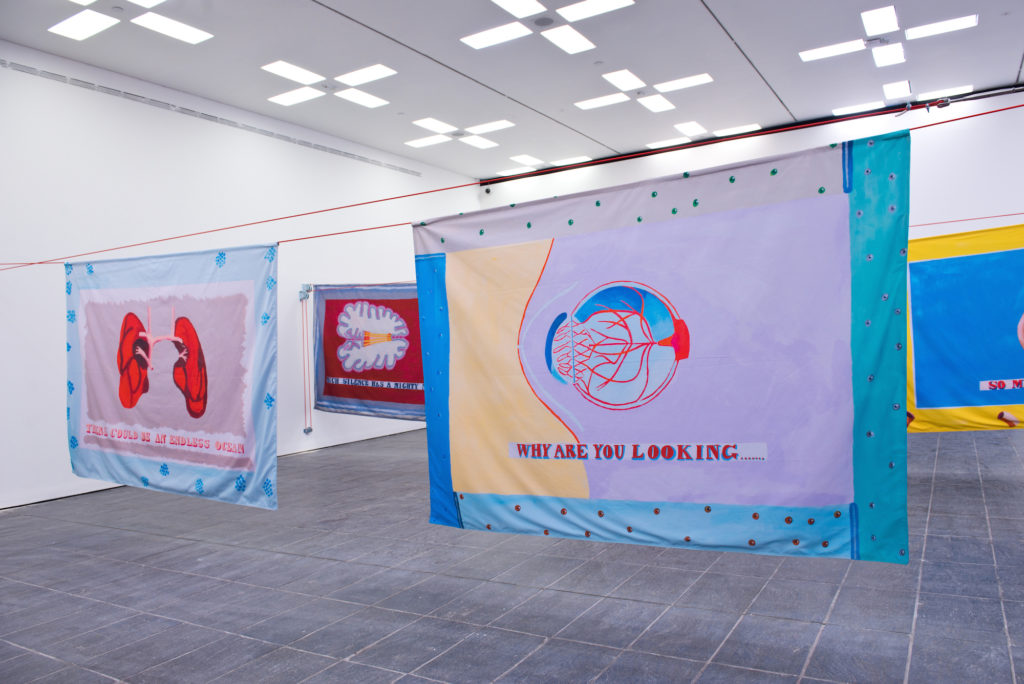
‘Naming the Money’ (2004) was an installation featuring 100 life-sized painted cut-out figures representing African servants and slaves in European courts during the seventeenth and eighteenth centuries. Each figure was accompanied by a name and a description of their original African identity and the role imposed upon them in Europe. Himid brings attention to the forgotten histories of these individuals, provoking thought and dialogue about identity, displacement, and the legacy of slavery. More recently, in ‘Make Do and Mend’ (2024) at The Contemporary Austin showcases, Himid presented paintings including new works that delve into themes of migration, colonial history, and the African diaspora’s contributions to Western culture. She incorporated unconventional and everyday objects into her installations and paintings including textiles layered with paint and collage, hand-painted cut-outs, assemblages, and interactive elements, to provoke movement and reflection.
In Street Sellers, Himid’s focus on the overlooked figures of seventeenth-century London’s Black working class illuminates a critical gap in art history. Her vivid reclamation of their stories and contributions challenges the erasure of marginalized voices, encouraging reflection from audiences. This endeavour resonates deeply with my own values and aspirations in the arts—namely, the drive to bring hidden narratives into the spotlight and advocate for accurate, inclusive representation. Himid’s mastery in achieving this through vibrant compositions and layered storytelling underscores her global prominence in sparking these vital conversations.
On a personal level, engaging with Himid’s work has prompted me to reflect on my own journey in supporting and advocating for underrepresented stories in the arts. Her dedication inspires me to consider how I might expand my efforts to address inequality, not just within the arts but also in broader cultural and societal contexts. At the same time, I am reminded of the emotional weight this work carries—the unrelenting challenge of confronting systemic inequities and the questions it raises about the creative possibilities that might flourish in a more just world.
I am also struck by the interplay between an artist’s intent and a viewer’s interpretation. Himid’s work invites audiences to engage deeply with its themes, yet I wonder how collectors and viewers will approach Street Sellers. Will their appreciation lie in the vibrancy of the colors and the striking characters, or will they connect with the nuanced, often painful histories embedded in the works? For instance, if a collector, unfamiliar with the historical context, views the pieces solely as decorative or exotic, does this diminish their significance? These questions remind me of the layered complexities of art’s impact and its capacity to provoke, inspire, and challenge. Himid’s work exemplifies how art can navigate these tensions, fostering dialogue that is as necessary as it is transformative.
This exploration was informed by a series of conversations with Lubaina Himid, the seventh in a series of written responses to the Women in Print artist residencies at Artlab Contemporary Printmaking Studio, UCLan, Preston. www.artlabcontemporaryprint.org.uk
Harpreet Kaur is a speaker, writer and researcher who bridges arts, culture, and technology, currently focusing on AI and creative innovation. Based in Manchester, Harpreet is a seasoned commentator and ecosystem builder, offering a nuanced and global perspective shaped by multidisciplinary, academic and nomadic experiences.
This exploration is supported by UCLan.
Published 12.02.2025 by Jazmine Linklater in Explorations
1,663 words