Perched lakeside in the idyllic Lake District landscape, Windermere Jetty Museum is devoted to the 200-plus-year history of people and boats in the area. Visitors can see motorboats, steam launches, speed boats and sailing yachts within the museum as well as their conservation workshop where specialist engineers and craft-people repair examples of these heritage vessels. Now, adding to this historical collection with her own contemporary findings is award-winning Northwest-based visual artist, Juliet Klottrup, with her contemplative exhibition An Archive.
Stemming from the artist’s ongoing commitment to capturing the region through her lens, Klottrup stationed herself at the museum to explore the displays, archives and conservation workshop. She engaged with visitors, local residents and those who work on the lake, capturing the experiences in analogue photography and landscape paintings.
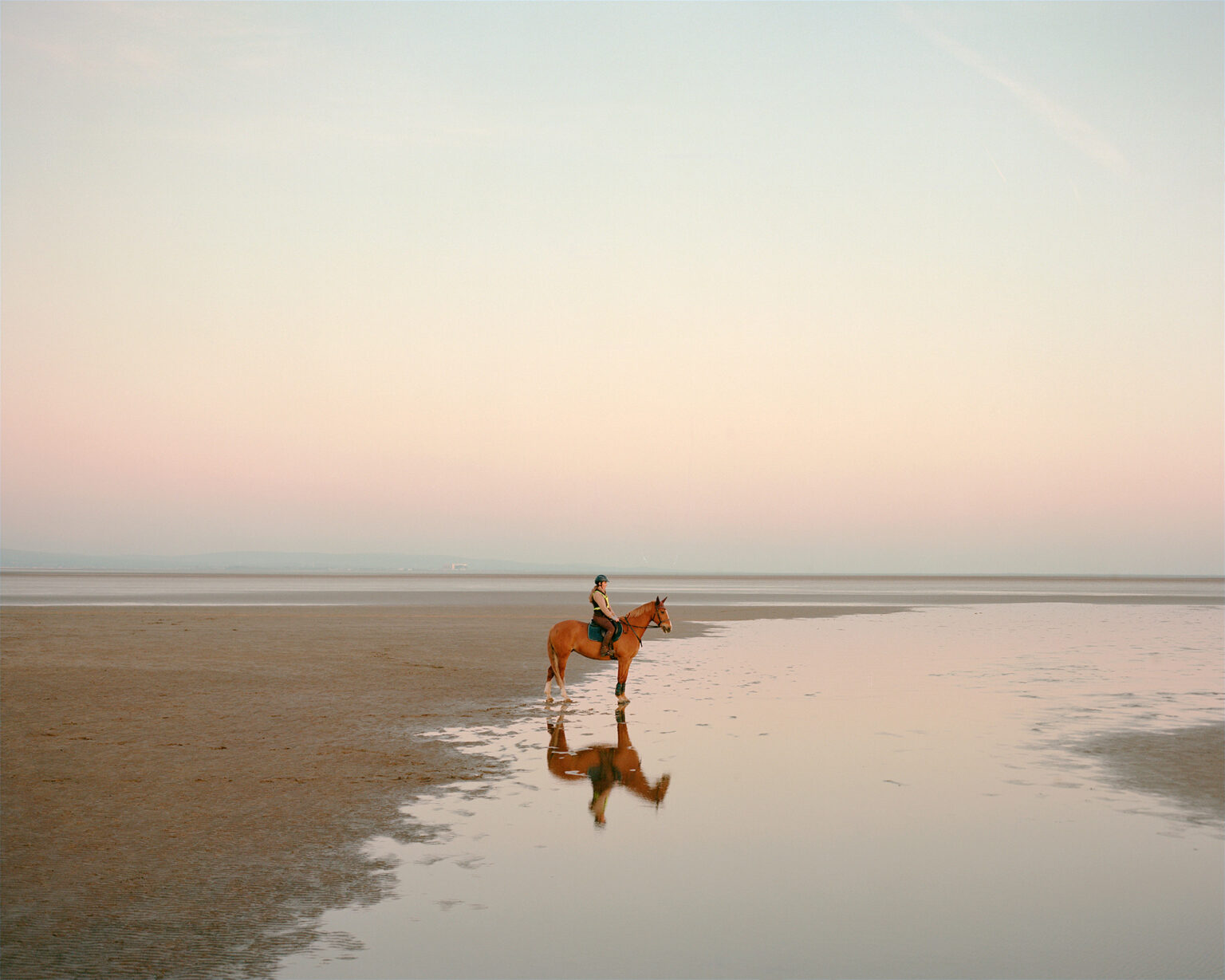
Set boldly against the stark white walls, Klottrup brings the light and colours of outdoors into the gallery. Shot on medium format film and printed on Fuji Crystal archive paper, the documentative photographs capture warm woodgrain-browns, bright pale skies and watery greys. Supplementing this with a bold tonal shift, the stylised paintings are awash with rich chlorophyll greens and radiant blues. They give the sense that the lake permeates the gallery with a comprehensible flow.

Adding to this, the meditative curation allows the visitor space to absorb and contemplate by not overfilling the space and instead maintaining a steady rhythm throughout. Many of the photographic prints are hung in clusters, emphasising the similarity of their subjects, framing connections and themes through proximity. As with the powerful trio of images, ‘Roger Mallison’, ‘Steam Launch Osprey, 1902’ and ‘Swallow Sailboat, about 1950’ (all 2025).
The first depicts a stoic older man, an engineer and steam enthusiast. Wearing a mariner’s cap and a full white beard, he leans against his 1930s car in front of the museum, cutting the image of a character filled with passion and knowledge. On its own, this photograph emotes. Yet when paired with the other two, both depicting heritage boats, all three become poignantly elevated. The grace and dignity on display in ‘Roger Mallison’ carries over to these vessels. Their beloved varnished wood and old-fashioned styles, so similar in charm to the proud man’s demeanour, are rendered characters in their own right. Klottrup is not simply documenting them in images, she has taken their portraits.
The same attention has been paid in the photos of the boat restoration workshop. ‘Stephen Beresford’ (2025), a traditional wooden boatbuilder and conservator at the museum, stands in front of an upturned boat with his hand lovingly placed on the hull, evoking Victorian family portraits of fathers standing proudly with hands on their wives or children’s shoulders. In another, titled ‘Stephen Beresford, Siân Morris, Fin Scott, Sid Beaumont, Stuart Norton’ (2025), five figures stand in the manner of a job well done before a white hulled and varnished wooden boat towering over them. This one is reminiscent of wildlife conservation teams photographed with the sedated rhinos they are working so hard to protect. The gratification on display from the workers exemplifies the immeasurable importance of the boat workshop and museum to their community.

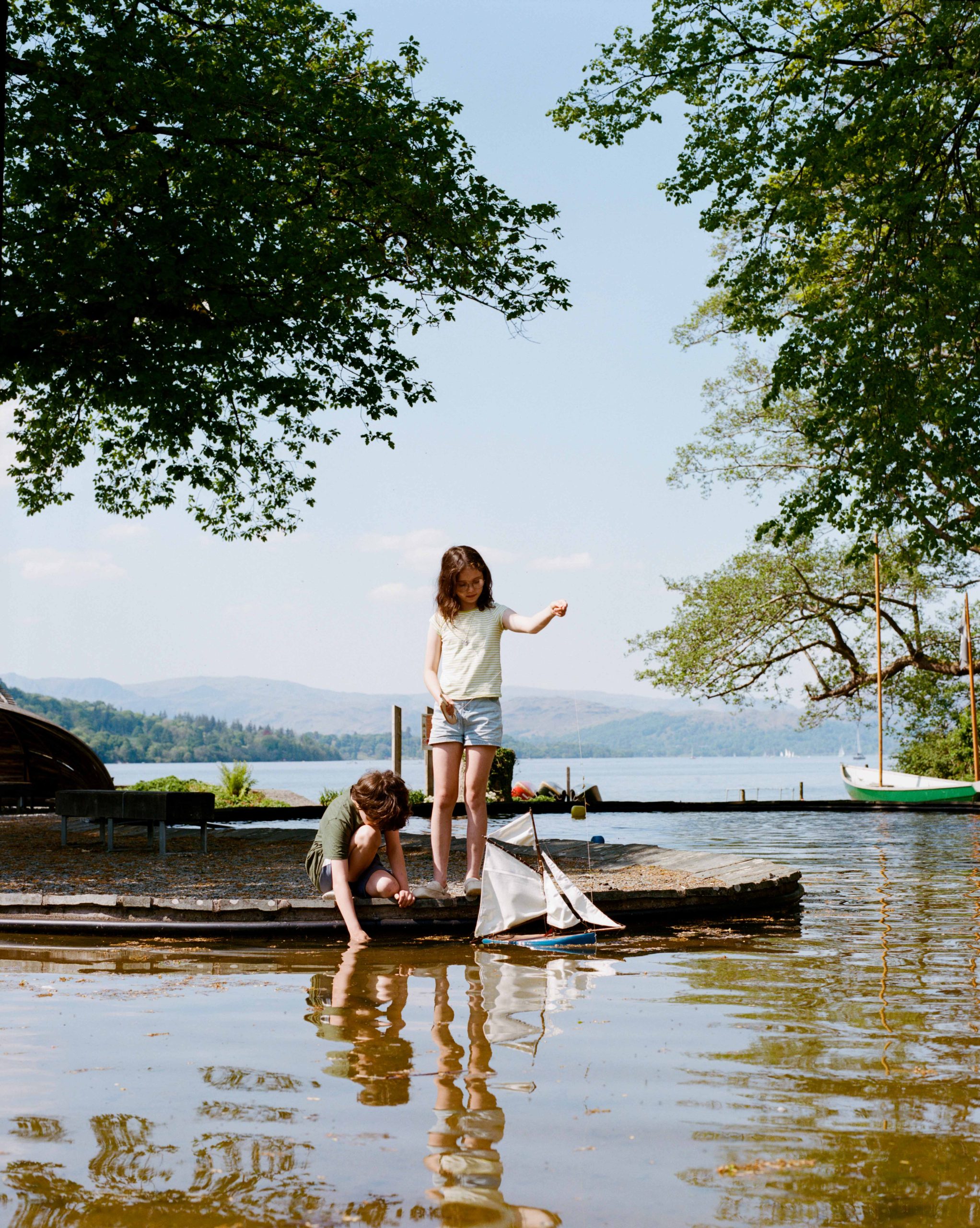
On the opposite wall, Klottrup leaves the boat workshop and points her camera at the leisure activities on the lake. Six photographs are hung in grid formation on the opposite wall. These include ‘Forge Festival by The Knotted Project’ and ‘Alice and Isaac’ (both 2025) and show people young and old under the bright skies fishing, paddleboarding, engaging in workshops and games. Although taken on various occasions, these images come together to create warmth, like memories of summer holidays. They are steeped in excitement and light, smiles and movement, with Windermere as the connective tissue.
Supplementing these arrangements are solo landscape photographs dotted throughout the show. Though fewer in number, these photos demonstrate the vast brilliance of Lake Windermere. Serenity and grandeur are studiously captured in what feel like moments of silent reflection. ‘Heritage boat trips’ (2025) has one of the heritage boats, possibly the Steam Launch Osprey, passing in front of one of the lake’s many islands while framed by the foreshore’s foliage. The pale-blue sky and water merge softly with Cumbria’s hills and mountains crawling into the distance with their timeless splendour. This could be a postcard from any time since the boat was made, over 120 years ago.
‘The Jetty, evening time in spring’ (2025) also holds this ageless ethereality. We are presented with the wooden jetty behind the museum standing firmly in the lake, as it and its predecessors will have for centuries. Windermere here is shown still as a millpond, under an open sky whose blue fades to yellow above the silhouettes of the mountains. That time of the evening, bejewelled with soft light and deep shadows, that makes you wonder how long people have stopped and admired this view.

Klottrup’s paintings also delve into the landscape’s enduring presence, switching the crisp documentative approach for an expressive, semi-abstraction. In the eleven paintings in total – three in the main gallery and eight in the atrium outside the museum’s café – it feels as if the artist has left the camera by the shore to dive headfirst into the lake. As if viewed from beneath the surface of the lake looking outwards, everything is wet and in motion. Forms shift like light in the ripples and waves of water, with moods shifting alongside them. The pairing of ‘Above the water’ (2025) and ‘Sailing, swimming, slowly’ (2025) creates vivid summer. Their waterlogged reflections of colour and light indicate forms slipping in and out of focus behind blurry eyes. The grass and tree greens, sky blues and greying-whites of clouds flood and saturate the raw canvas, whilst the unnatural hues of cars, buildings, hikers, tourists are marked by smudges and dashes of bold fluorescent yellows, pinks, reds and blues. They are filled with a sense of adventure and eagerness, whilst ‘Belle Isle’ (2025) is dark. Shadows are cast in deep blacks and blues like spilled ink, through which the soaked colours of the famous Lake District weather struggle to emerge. You can feel the low clouds threatening rain.
At first glance, An Archive feels relatively subdued. If you don’t give it the time it needs, it might not speak to you. But spending time in the space, soaking up all the imagery, you start to see what’s so wonderful about it. While it seems that all around negative world views are taking centre stage, Klottrup has chosen to celebrate the positive attributes of heritage and community, telling us to look closely and appreciate the good things. She treats her subjects with an infectious kindness and empathy. Focusing on this small area on the banks of Lake Windermere to produce an exhibition of such exploratory depths and scope, serves as a reminder that there are such examples all over the country: of tightknit neighbourhoods engaging in their local history, participating in the ongoing stories of where they call home.
Juliet Klottrup: An Archive, Windermere Jetty Museum, 11 Oct 2025 – 31 May 2026.
Kyle Natham Brown is a writer and artist based in the North of England.
This review is supported by Lakeland Arts.
Published 05.11.2025 by Jazmine Linklater in Reviews
1,232 words