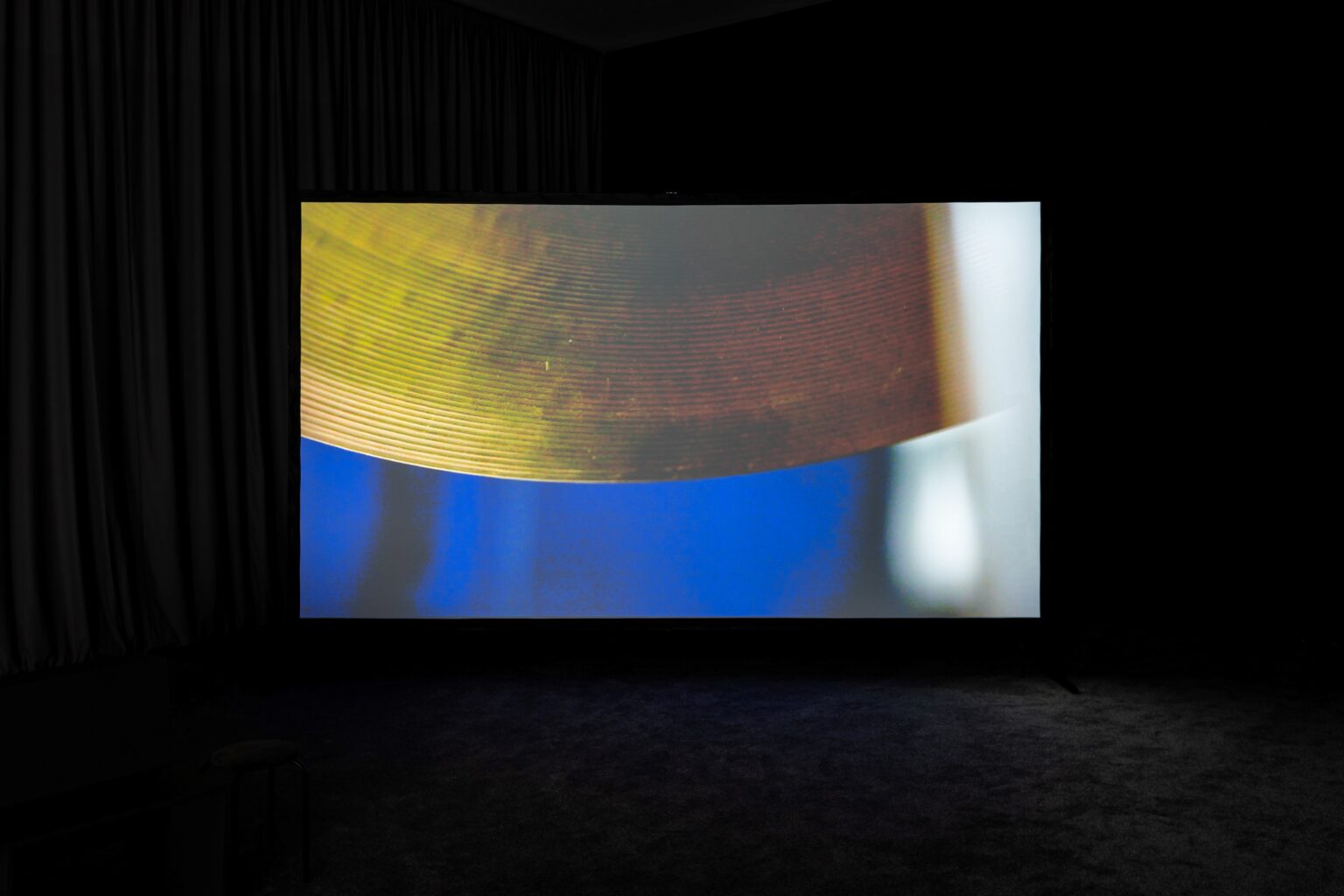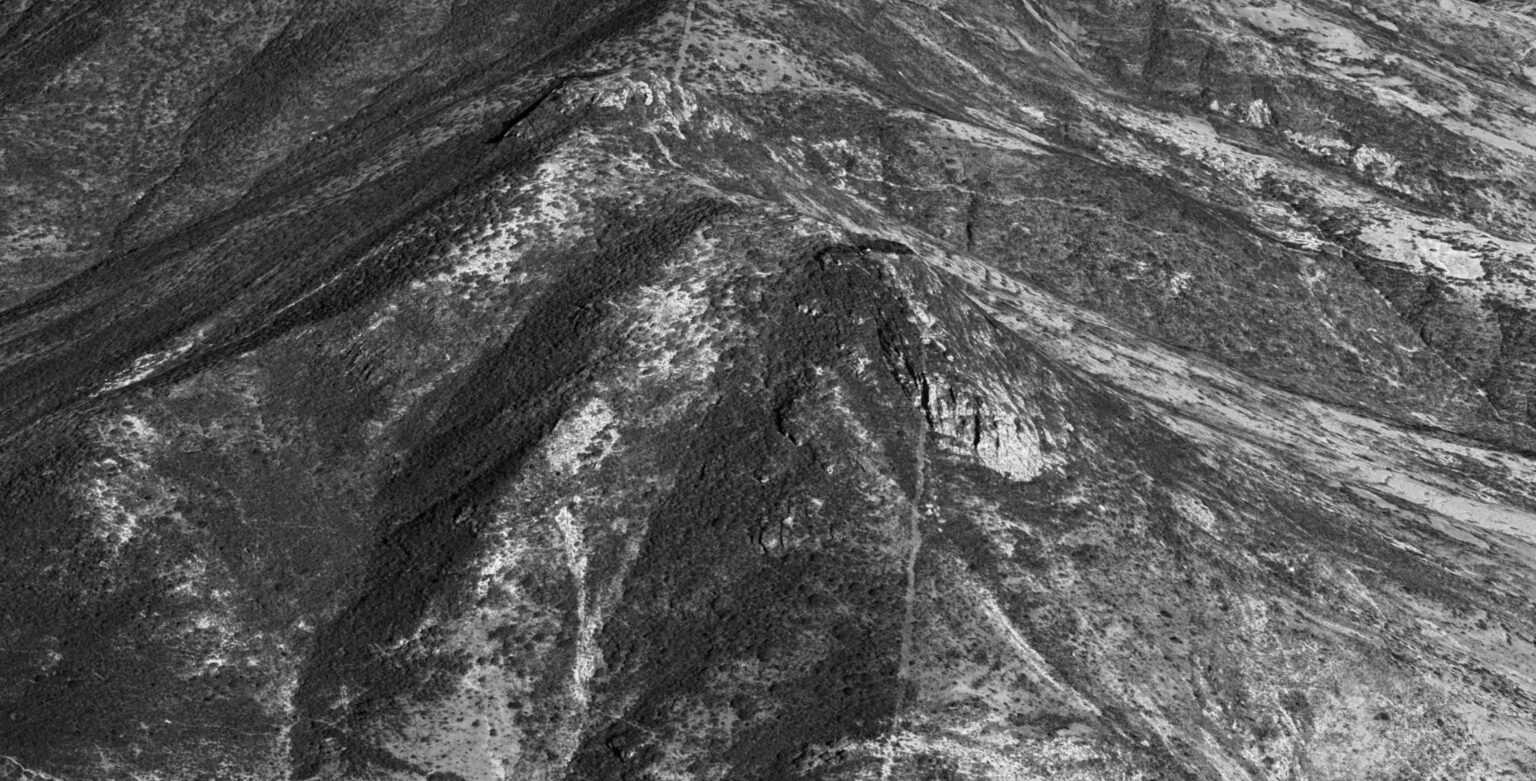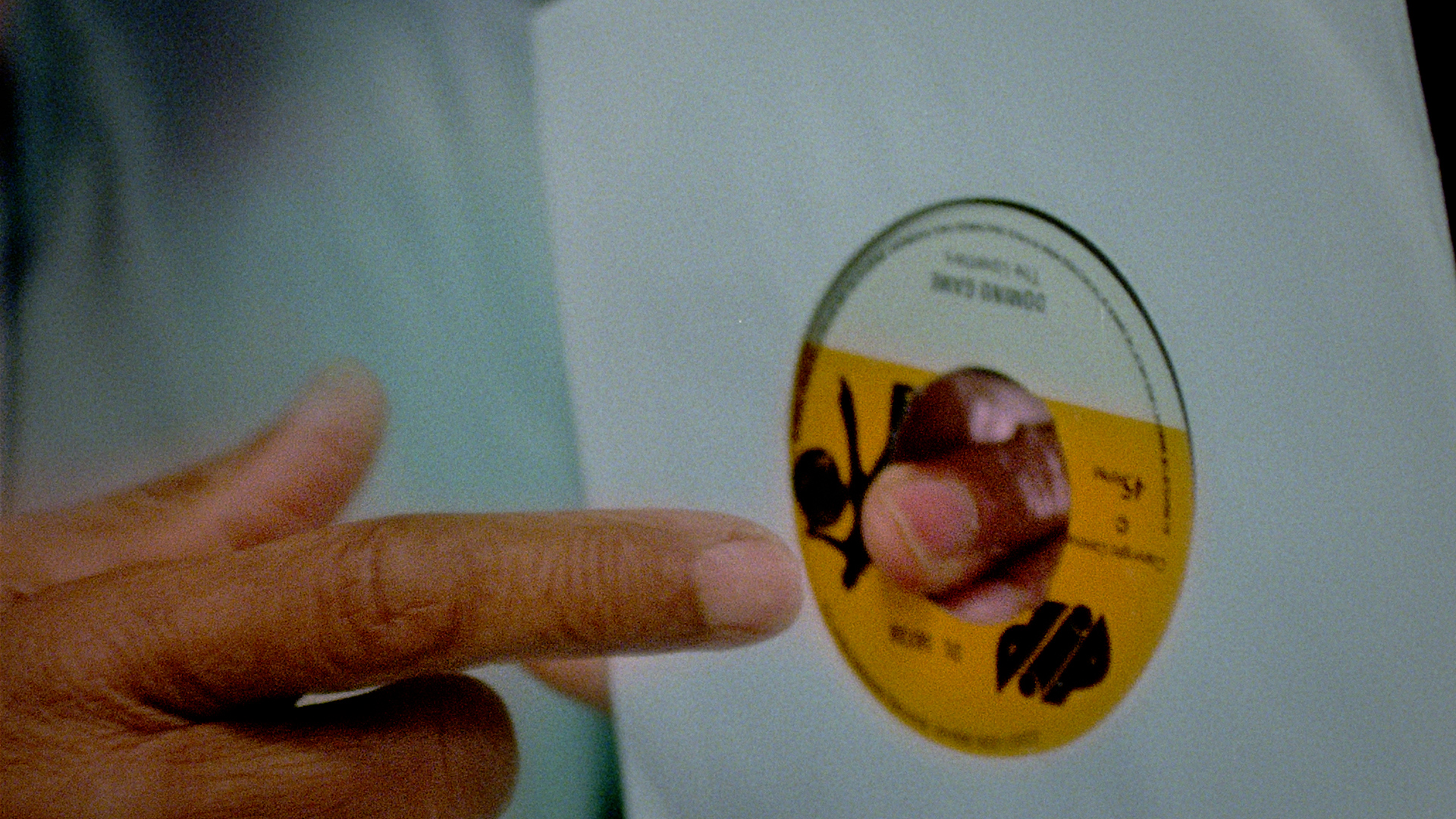
Rhea Storr’s most recent audio-visual work Subjects of State, Labours of Love at Site Gallery presents a dual portrait of the Sheffield and District African and Caribbean Community Association (SADACCA) and Caribbean Associations in Wolverhampton including the Heritage Centre. Its two chapters, divided between the two cities and presented across three screens, are made up of footage of the physical spaces of the Heritage Centre and SADACCA and accounts from members of their communities which trace their complex formation over multiple generations. Stories about the changing use, development and preservation of these spaces convey their vital cultural and political significance and uncover what Storr describes in her introduction to the work as the ‘labour that is required to sustain physical space’. In the process, these stories also represent the historic social, economic and political conditions in relation to which, for example, the Heritage Centre emerged as a ‘safe space’ and provider of night schooling. They also engage the changing needs of the two communities and the question of the future of these spaces.
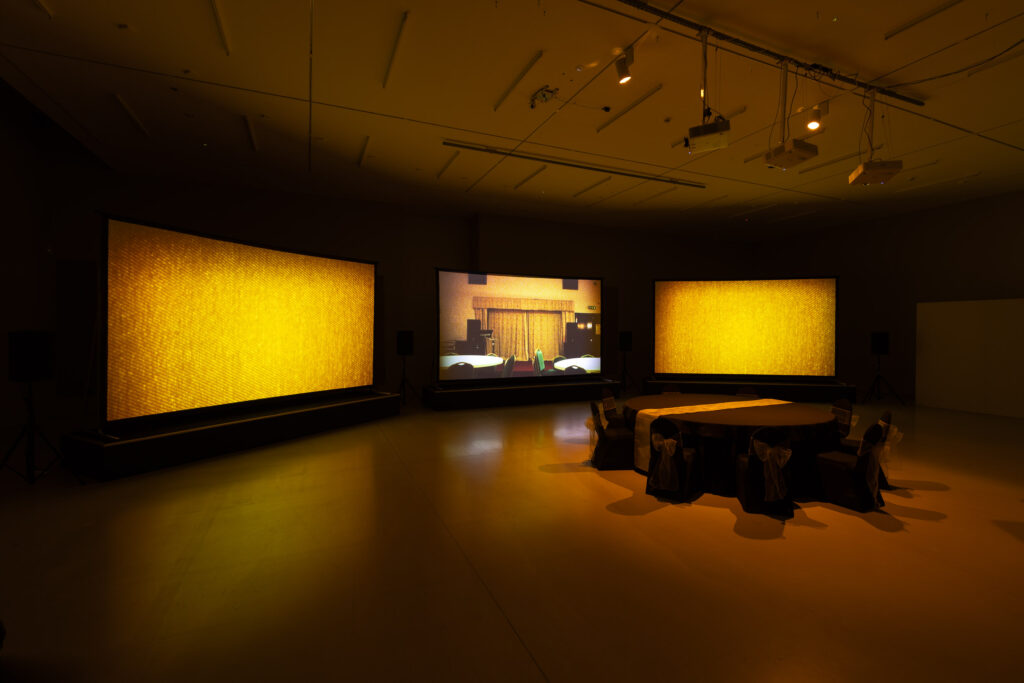
A new commission by Film and Video Umbrella, Site Gallery and Wolverhampton Art Gallery, Subjects of State, Labours of Love draws together not only the two British Caribbean communities, but also the two art galleries (each of which will host the work) in conversation. While the work is led by the accounts of its contributors, it draws us repeatedly to the physical details of the spaces. It dwells on signs of use and adorning marks of achievement and identity, and, through a mix of empty space and non-diegetic sound, evokes transience and possibility. Such attentiveness to physical space is key not only to Storr’s exploration of the politics and histories of these communities, but her treatment of the form of audio-visual installation and the context of exhibition. At Site, the work occupies the main gallery and is illuminated by yellow-toned lights. Each of the work’s three screens stands on a stage-like platform, and together they are arranged in a curve before a round table surrounded by chairs. Behind it and to the sides are two additional rows of chairs. The table and chairs are covered in black fabric. Across the table stretches a gold runner, while around each chair a gold organza bow is tied. The table is not unlike the tables we see in the footage of the Heritage Centre, in a room which Storr’s introductory audio description tells us ‘sits silent, waiting for an event’.
Storr’s introduction plays on loop through headphones in the Site Gallery foyer. As visitors familiar with Storr’s work will recognise, the introduction recalls the essayistic voiceovers of some of her other works and alludes to a tradition of essay films and their auteurs. In Subjects of State, Labours of Love, the voiceover is an element which has been displaced by the speech of the contributors. Staged at the threshold, Storr’s introduction and the descriptive quality of its text produce it as a gesture through which she negotiates the authorising effect of an auteur and her relation to the work. It is Storr’s voice we hear on the headphones. Yet, the introduction positions Storr both outside and before the work, a form of distancing amplified by its content and the subtle complication of the task of description it performs. Listeners will note that the introduction characterises a hall in the Heritage Centre as ‘waiting’, and at another point in the description of a hall in SADACCA juxtaposes tenses: ‘later on men will play dominos there on small, square vinyl top tables; they give each other sly looks as they figure out the game.’ Description is thus tied to perception, to positionality and memory, and presents the task of writing about a time-based, audio-visual artwork as one of translation and interpretation. Attending to the introduction’s play of dis/identification and immediacy allows us to trace a subtle differentiation between Storr the person and Storr the audio-visual artist or ‘auteur’, one which parallels the distinction between person and author. It also leads us to the relation between artwork and visitor, and poses the question: who or what is being represented and before whom?
The work replies through its fragmentary form and reflexive gestures, one example of which is the not-always-synchronous relation of sound and image. In the case of most of the contributors, the first time we see and hear them, their image and sound are not synchronised. Sound and image slide past one another and refuse to fix each other, thwarting any claim to total, unmediated access that might be made on the basis of the audio-visual medium, or the documentary value of the content. Similarly, the multi-channel form of the work and its fragmentary representation of the spaces across three screens also resists totalising perspectives. Such details emphasise that it is through mediation that the Heritage Centre and SADACCA are brought together and presented to us in another space. The round table in the gallery recalls the various tables we see in the work, ones around which the participants gather for discussion or to play dominos, or for special events. A call and response between text and context, this referentiality and the seating made available prompt us to treat the gallery as a third social space, configured in relation to those depicted on screen. The gallery is not merely a screening site but a space of encounter. We are invited to take a seat or gather around a table and, positioned thus, perhaps recall the testament of a mural outside SADACCA which reads: ‘we’re here because they were there.’
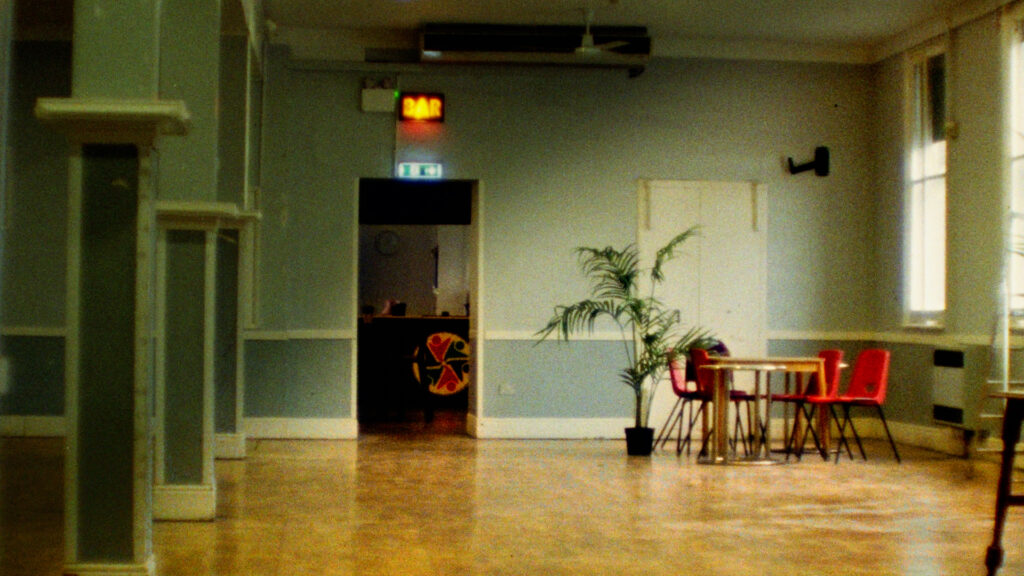
The gold runner and organza bows in the gallery bounce us back to the scenes of the three screens and to details such as the black and gold decoration of a hall in the Heritage Centre and the image of a yellow textile filmed up close and magnified so that slightly blurry knit fibres fill the screen. These yellow frames appear intermittently throughout, often on multiple screens and sometimes on two screens flanking an interview on the central screen. They call our attention to the constructed form of the work at the same time as focusing our attention on a subject. Mediation is also posed in medial terms through the translation from 16mm film (on which ‘Subjects of State, Labours of Love’ was shot) to digital film, and from a single-channel film recording to a multi-channel installation. The work’s displacements and transformations emphasise mediality and bring us to recognise that it offers neither a simple reproduction of interviews nor a nostalgic turn to analogue medium. Rather, these translations in medium, process, and form indicate an interest in contingency and in finding aesthetic strategies for articulating the past in the present. Ultimately, they offer a work which thinks through installation and, in its representations of communities and spaces, performs a place-making which actively engages exhibition visitors in the ‘labours of love’ which Storr honours and extends.
Ghada Habib is a writer and researcher based in Leeds.
Rhea Storr: Subjects of State, Labours of Love, is on at Site Gallery, Sheffield, 14 Feb 2025 – 25 May 2025
This review is supported by Site Gallery.
Published 02.04.2025 by Benjamin Barra in Reviews
1,223 words