Yorkshire Contemporary, the Leeds-based arts organisation, has in past lives existed as The Tetley (2013-2023) and Project Space Leeds (2006-2012). Alongside co-curating the 2025 Turner Prize, Curator Michael Richmond and Assistant Curator Sophie Bullen have been spearheading a year-long artist development project, Practice: Leeds, part of the organisation’s wider Practice programme. Practice: Leeds has offered support to three emerging artists through mentorship, peer reflection sessions, one-to-one sessions with curators, and a research and development bursary, as well as other opportunities like a group workshop with artist Simeon Barclay. Practice is based on the artist accelerator initiatives run previously by The Tetley, such as Tetley’s Associate Artist Programme (TAAP) and Promoting an Artists’ Network in the Crisis (PANIC!), from which we have seen the rising trajectories of artists such as Emii Alrai, Nikta Mohammadi and Michelle Duxbury.
I met with the artists Rhian Cooke, Matilya Njau and Thahmina Begum to find out about their practices, their experience with Practice: Leeds and what’s next for them. Quite unusually in an increasingly corporate conveyor-belt art world, the artists were not encumbered by forced outcomes. This freedom and space allowed them to find their own paths.
Rhian Cooke predominantly works across film and installation, but within these uses a variety of techniques including animation, hand puppetry, stop motion, drawing, collage, long-exposure photography and sculpture. To the viewer, these interwoven mediums are sometimes obvious and sometimes mysterious. She layers fabrics, animates bike helmets to move like robots, plays with hand shadows, and projects images onto sewn-together colour catcher sheets.
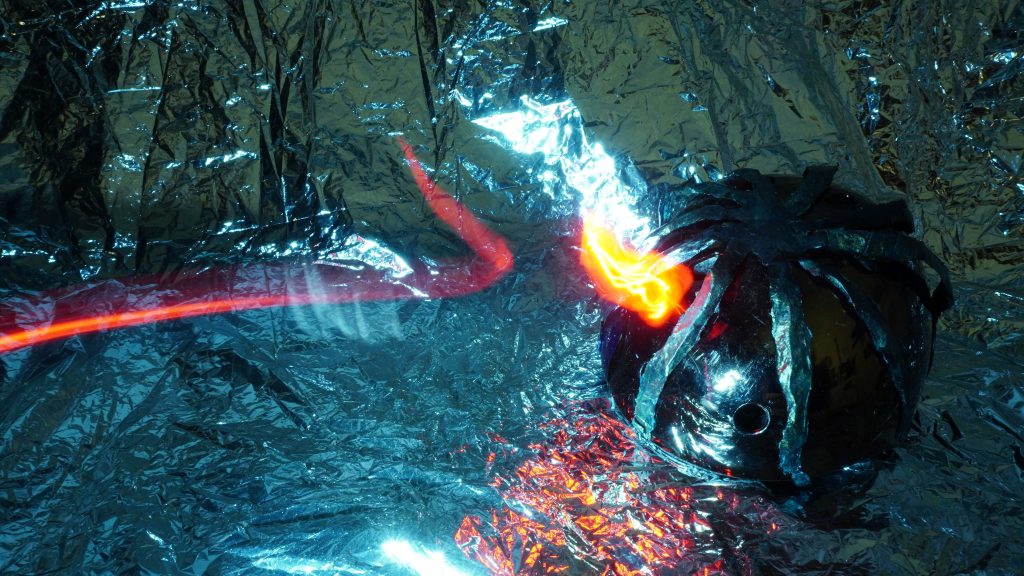
Her sources of inspiration are varied and eccentric, yet have an intricate web connecting them: George Michael’s music video Fastlove; a documentary about a badger called CT; Yu-Gi-Oh! playing cards; contemporary artists Michael E. Smith and Georgina Starr; the iridescence of oil on tarmac. For Cooke, they all represent energy in one way or another. Light energy, mental energy, turbulent energy.
The most significant project that Cooke worked on during Practice: Leeds was a film commission for Leeds Light Night titled Wow Now (2025). Ideas for this project were already underway, but with the extra support provided by mentorship and her research and development bursary, she could expand her filmmaking process and materialise fragments of artistic desires that had been simmering for years. With the bursary, Cooke commissioned Leeds-based experimental dream-pop band Bug Teeth to create an eerie, electric soundtrack to her film. This was her first time working with musicians in this way.
Some artists’ studios are clean and sterile; some are like an Aladdin’s cave of treasure or an appointment-only antiques shop. Cooke’s space is one of the latter. She is based at Patrick Studios, East Street Arts, Leeds. While we discuss her work, the conversation frequently goes off on tangents as I come across intriguing and peculiar objects – at one point, what I assume is a large, ribbed scallop shell turns out to be papier-mâchéd hair clips.
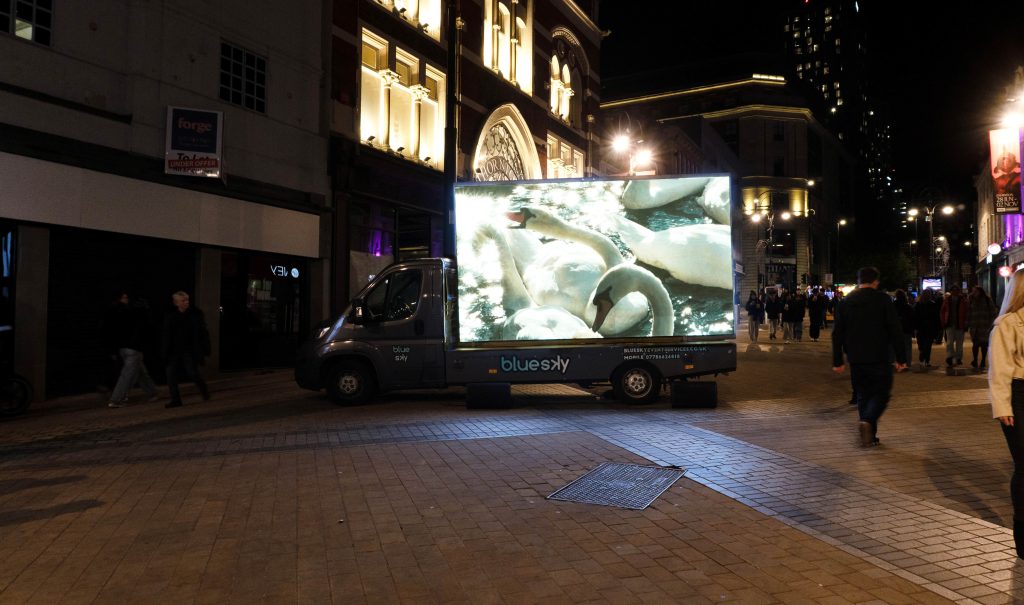
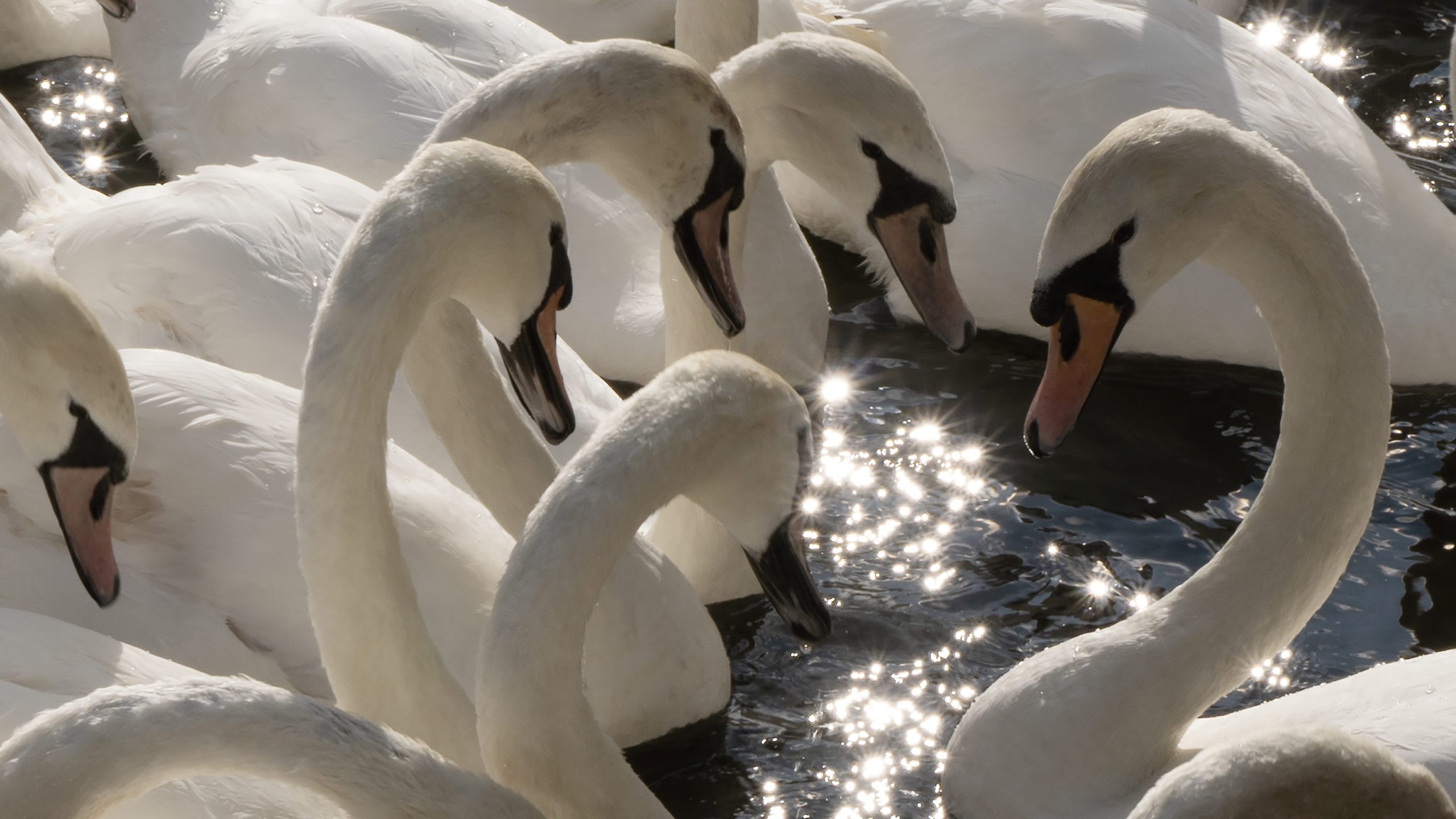
Cooke is a collector – of objects and, more importantly, ideas. Found materials are important to her practice; even if they are never used for an artwork, they serve as a library of memories and associations from which to pluck from. Oil spill photographs that feature in Wow Now were collected for over a year, and the initial inspiration for the film came to her many years earlier watching the swans in Roundhay Park. These swans end up being the main characters of the film work: we watch their beauty and synchronized movements devolve into violence and aggression. With this project, Cooke was able to explore past her previously quite sculptural films in order to portray a more surreal and dreamlike world – and in the process, perhaps began to think of her work as surrealist.
Matilya Njau has a social practice as a horticulturalist, community gardener and facilitator. At the root of her practice are of course plants, but also people – her first foray into horticulture was teaching herself herbal medicine to cure her friends’ ailments. She spends most of her time outside; her ‘studio space’ is the open countryside, the community garden, or in proximity to any living and leafy thing. So instead of a studio visit, we chat over peppermint tea and coffee at Vinyl Grounds Cafe.
Njau sees herself as a medium between humans and plants: she forages, observes, learns from, translates for and talks to them. Through the plants, she connects to her ancestors. She designs, builds and plants gardens as ritual or performance. Working with a group of children from local SEND schools, Njau was commissioned by Yorkshire Contemporary in 2025 to design a sensory garden for the Rowland Road Play Patch, a community-built adventure playground created at Rowland Road Working Men’s Club. There is a tunnel made of hazel twigs, a mud kitchen, plants to touch and smell, and an ink station with dyes hand-made from elderberries and nettles.
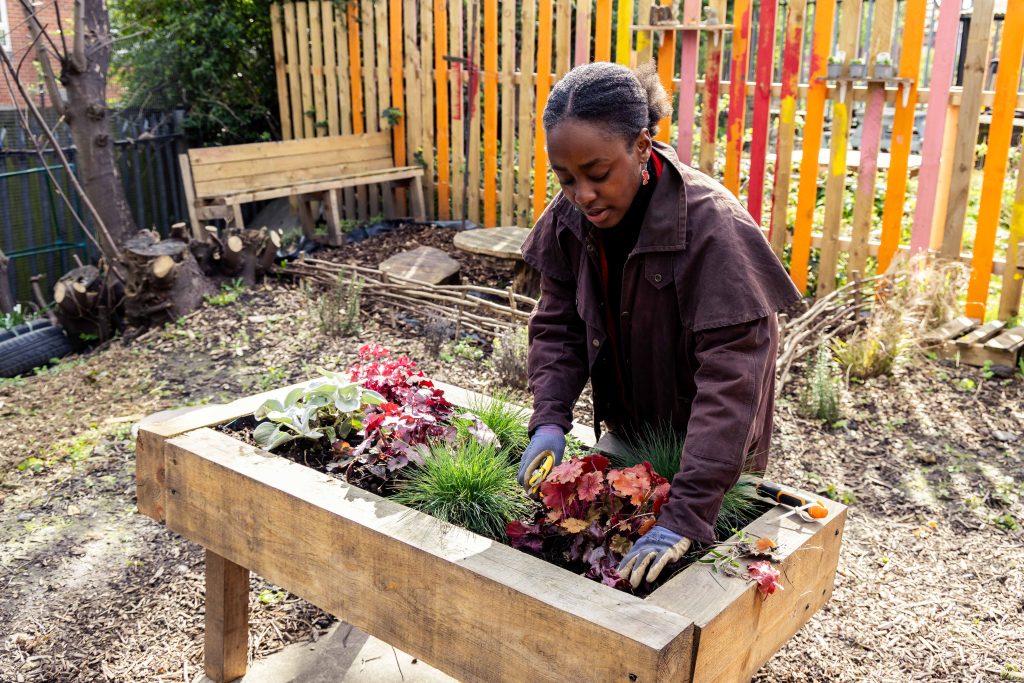
Buried within her, Njau feels, there was always an artistic fervour, but alongside this, also a hesitancy. One of the most significant outcomes of Practice: Leeds for Njau is that they helped to uproot this, helping her gain the confidence to call herself an artist and to think about sharing the previously personal parts of her practice, such as watercolour painting. Since she was a young teen, Njau has used watercolours privately to process difficult feelings, and now this aspect of her work might be shared through the medium of zine-making.
The Mugumo tree, or sycamore fig, is a massive, thick-trunked tree native to Kenya, with a huge web of long, strong branches. Njau’s ancestral Kenyan tribe, the Kikuyu, has a deep spiritual and familial connection to the Mugumo, as does she. The Kikuyu and other communities normally each have a Mugumo tree on their plot of land, and at the base of the tree is where each family or community bury their dead. They believe the souls float up and live within the branches of the tree. The Mugumo is family; it is alive, sacred, and must never be touched. Visiting a Mugumo tree in Kew Gardens, London, with its base suffocated with plants foreign to it, with its precious ancestor-harbouring branches chopped, was a deeply affecting experience for Njau. This is a perfect example of the invasive and pernicious legacy of British plant hunters. Systematically and violently, they captured and uprooted indigenous plants from British colonies and brought them back to the UK to die, or live in an anxious, displaced state.
Part of Njau’s Practice: Leeds development was being able to begin her project ‘Plant-cestors’, exploring the relationship between plants and lineage, as well as the links to empire and colonial botany. Her selected plant-ancestors are the Mugumo tree, finger millet, and Sale (the Chagga name for the Dracaena plant). The unofficial outcome of Njau’s programme will be to embark on a research trip to Kenya. She comes from a radical family of artists and plans to learn more about both her grandparents’ writing and artistic practices, their plant magic and folklore. She also plans to visit the East African Herbarium (a colonial offshoot of Kew Gardens, now run by Kenyans) and to commune with her plant-cestor the Mugumo tree in its natural habitat.
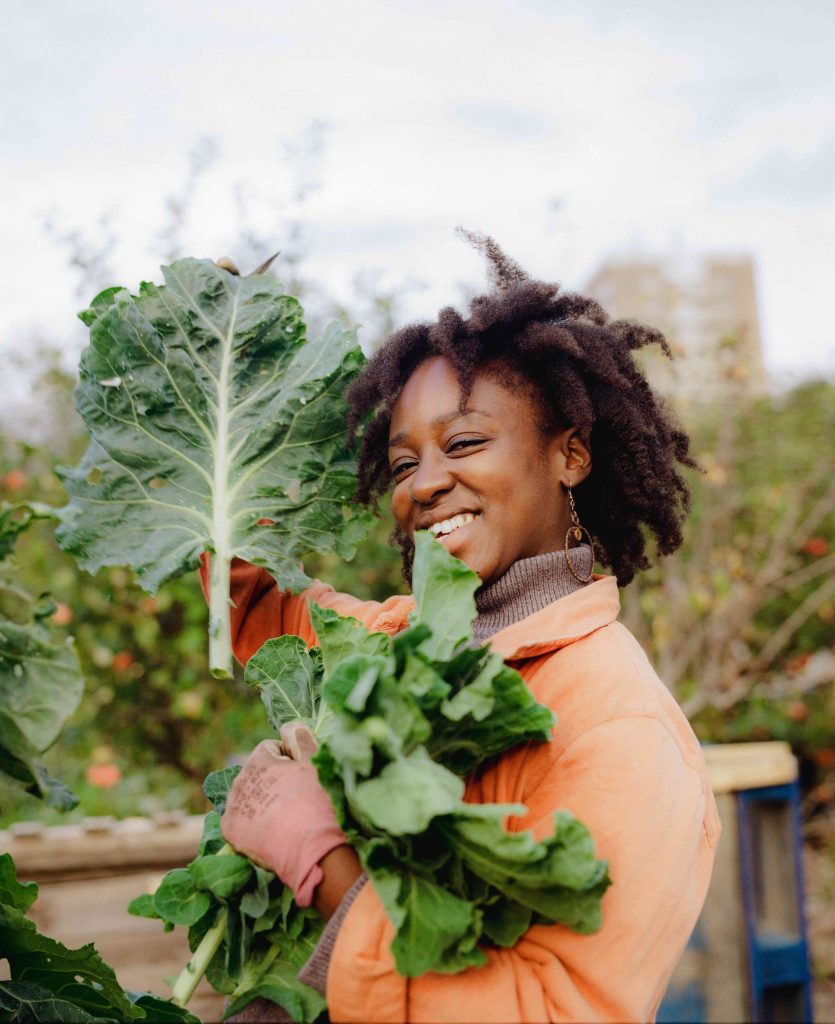
Thahmina Begum is an artist-researcher and qualified art psychotherapist, specialising in racial and intergenerational trauma. She works at the intersection of visual art and mental health. Amidst Eid celebrations and post-Ramadan reflections, Thahmina and I chatted over the phone.
Begum is passionate about what art can do for your health, its transformative nature. She has witnessed closed-off and withdrawn participants suddenly start talking about their memories and experiences through hands-on creative expression. She highlights the critical importance and success of non-talking forms of therapy, particularly within ethnic minorities. The aim of her workshops is to integrate within Leeds communities and act as a source of preventative care. She is making therapy seem accessible to the many, especially those who might not see therapy as an option, within a professional culture dominated by the white middle class.

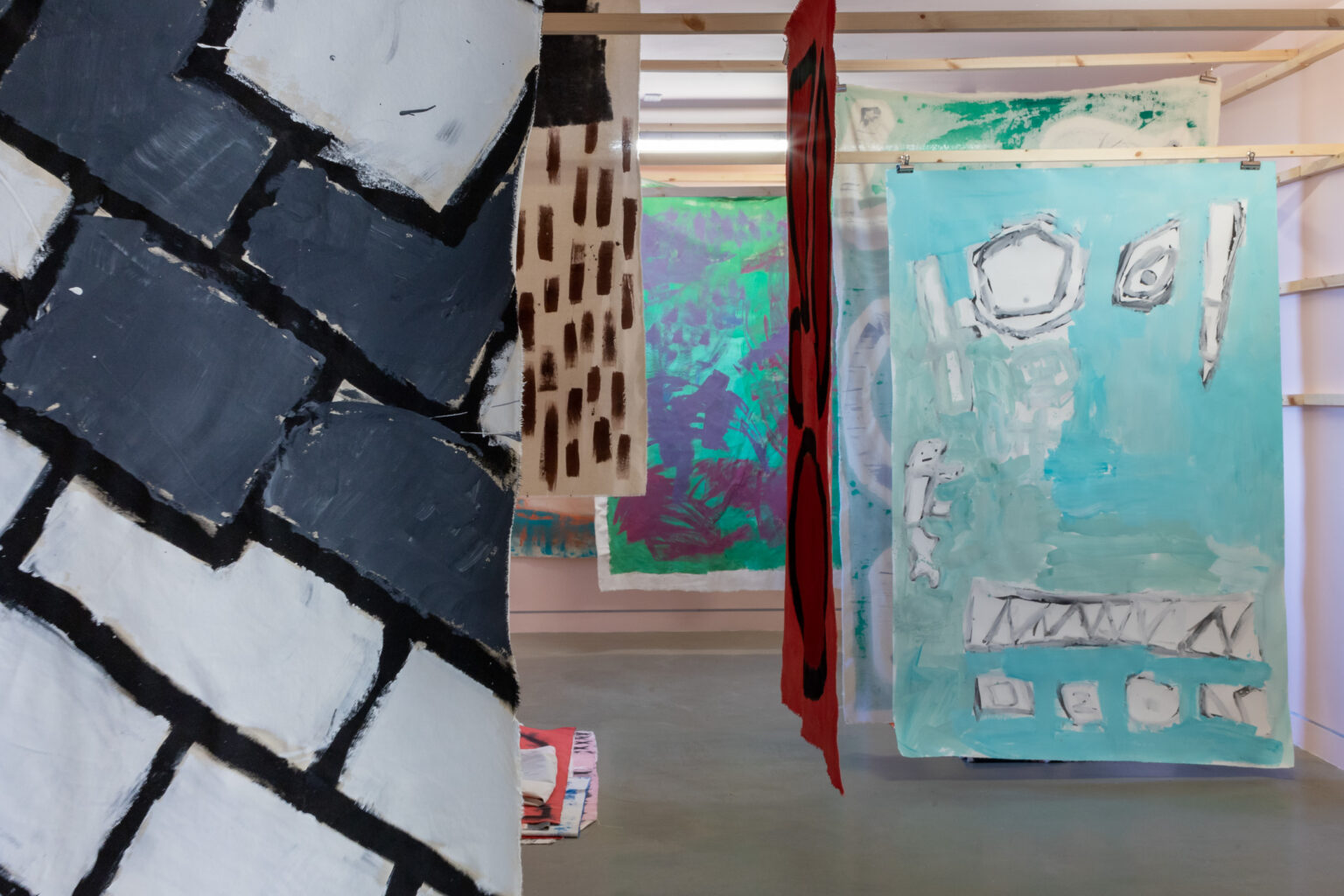
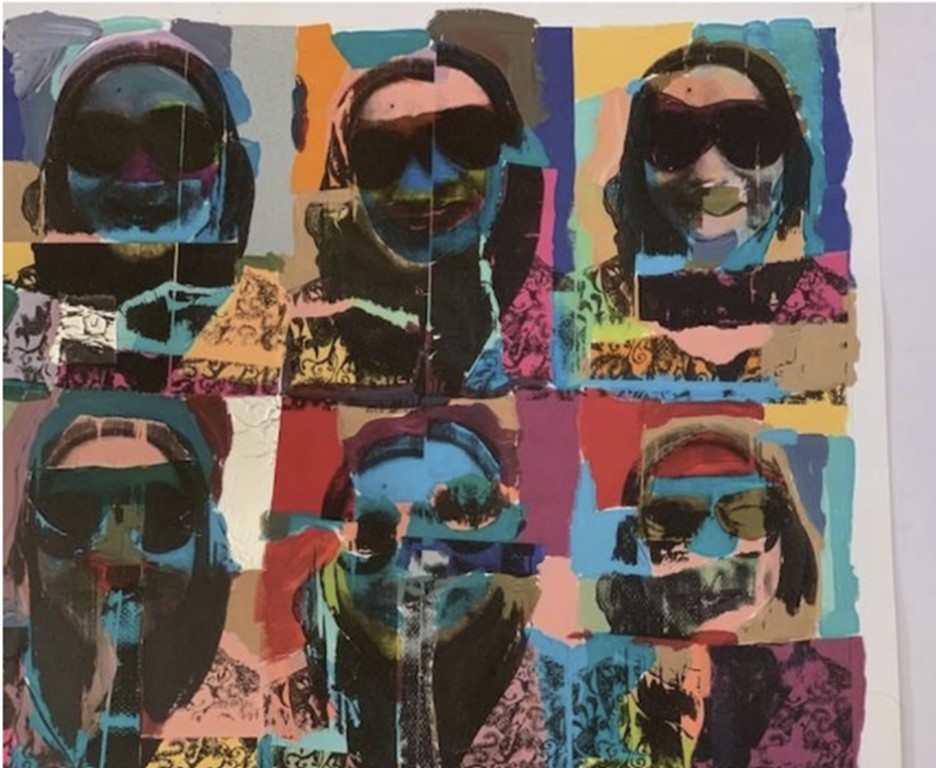
Her visual art practice is both painful and joyful. She started her career working with printmaking but has always considered her practice to be interdisciplinary, now working within sculpture and installation. Exploring themes of belonging, cultural legacy and hybrid identities, Begum wanted to use the time granted to her through Practice: Leeds to delve into her family history. In the 1950s, Begum’s father worked at a glass factory in Leeds. She grew up waiting to see the creations he would bring home – small vessels, jars, bottles. She had a natural urge to follow his path, and with her bursary, was able to attend workshops with an artist working in recycled glass.
She never saw her family as artists per se, but as holding an intrinsic, non-conventional creativity and craftsmanship. Begum recollects making samosas with her mother and sister and cheekily stepping out of the assembly line to create something distinct using the pastry, perhaps her first sculpture. Begum is now leaning into these resurfaced memories, creating sculptures examining ‘food as legacy’. With the rise in fascism and anti-Muslim, anti-immigrant sentiment, celebration of cultural diversity through Begum’s artwork and her mission of preventative action in her social practice is highly pertinent.
Practice: Leeds marks a huge development in her practice, and her first ever solo exhibition opens on April 17th at East Street Arts, Leeds. Excitingly, Begum has also begun working with Hospital Rooms on a commission in Barnsley, which will be revealed in summer 2026: a perfect combination of her creative and clinical practices.
Overall, Practice: Leeds has boosted confidence in these artists, widened their networks, and championed them to develop their work without the pressure of prescribed outcomes. Njau valued discussion between the artists, calling the programme ‘transformative’, while Cooke said the best thing about the project was that it was ‘shaped around us’. Begum specifically commented on the peer reflection sessions and how the artists could learn from each other. She connected with the similarities in Njau’s social practice and contrasts in Cooke’s more traditional studio-based practice.
From an outside perspective, the most successful aspect by far seems to be the masterfully paired mentor relationships nurtured by Yorkshire Contemporary. Rhian Cooke was paired with Carly Whitefield, Head of Programme at the LAS Art Foundation in Berlin, who works at the intersection of art, film and technology. Matilya Njau was paired with Marleen Boschen, the Adjunct Curator for Art and Ecology at Hyundai Tate Research Centre: Transnational and a research fellow at Royal Botanical Gardens, Kew. Thahmina Begum was paired with Tim Shaw, the co-founder of Hospital Rooms.
In what has seemed like a bleak few years of closures to galleries, studios and community spaces in Leeds, Yorkshire Contemporary’s goals are hopeful, passionately pursued, and most importantly artist-centred. The Practice programme will be changing its format next year, building relationships with a greater number of emerging artists across West Yorkshire and partnering with organisations regionally and nationally. Through nurturing exciting emerging artists, Yorkshire Contemporary advances the city’s strong creative ecosystem and builds on the history of provocative and pioneering artists who have trained, created and exhibited in Leeds.
Farah Dailami is a writer and curator based in Leeds and Wakefield.
This piece is supported by Yorkshire Contemporary.
Published 20.04.2026 by Benjamin Barra in Explorations
1,928 words