The word ‘least’ often has negative connotations, implying comparisons against which a situation, person or object comes up short: something might be less valuable than or physically smaller than something else, or less preferable. Another diminutive word, ‘things’, is similarly unassuming. ‘Things’ suggests objects or situations that are non-specific, perhaps not worth giving name to.
Yet at Manchester Art Gallery, these two words combine to act as pivots around which to explore ideas about collections, care, value, scale and belonging, in a project that has turned the gallery’s focus to some of its smallest visitors and exhibits.
‘Things of the Least’ is a three-year collaboration between the gallery, Manchester Metropolitan University, Birmingham City University and Sure Start, bringing together babies, artists, early years practitioners and academics to turn the gallery into a site of action research.
Its title is taken from a letter from Mary Greg, a collector and philanthropist, unearthed by Liz Mitchell from Manchester Art Gallery, who focused on the Mary Greg collection as the subject of her PhD. The letter, written to a fellow collector, sets out Greg’s belief in treasuring ‘the things of the least’. Mary Greg’s life spanned the mid-nineteenth to mid-twentieth century. Born into the wealthy industrialist Hope family in Liverpool, she married Thomas Tylston Greg of the Greg family, owners of Styal Mill to the south of Manchester. Both Thomas and Mary were avid collectors. Whereas Thomas collected ceramics, which were lent to the art gallery and eventually donated following his death in 1920, in the early twentieth century Mary amassed thousands of ordinary objects. These range from the ephemeral, such as feathers, to those with an obvious function, for example matchboxes and writing implements, which she later donated to the gallery.
Some of the Mary Greg Collection is visible in vitrines and spaces throughout the ground floor at Platt Hall in Rusholme, south Manchester. However, like any public collection – and particularly one of such scale – much of Mary Greg’s collection is in storage, and inaccessible to the public most of the time. Many of the objects resemble curios more than what we might conventionally regard as art objects. Often collected in multiples, they don’t demonstrate the scarcity or rarity we might associate with typical collecting. They also reflect gendered ideas around what has historically been deemed important. Many of these objects relate to pastimes or occupations considered domestic or ‘feminine’, for example thimbles, clothes pegs, or childhood: the collection includes games, toys, miniatures and early picture books on board.
For ‘Things of the Least’, artists worked alongside researchers to explore the collection and develop a prototype ‘play kit’ for use with children under three years of age, recognising the potential for young children – along with visitors of all ages, and from different cultural backgrounds – to relate to recognisable objects such as those collected by Mary Greg, which were designed to be handled and worn close to the body, or used in everyday settings.
The age between 0-3, is a crucial phase in a child’s development. In the early months, they transform rapidly from babes in arms, unable to support themselves unaided, to becoming aware of themselves and their bodies, then others and their surroundings. By the age of three, children are active toddlers able to make choices and assert their fledgling independence.
Anyone who has spent any time with a small child will have observed that they are drawn towards the strange, small and humdrum: exactly the type of objects collected by Mary Greg. Babies and toddlers, too, are avid collectors, clinging to found detritus such as sticks, pebbles or discarded bottle tops. In their hands, things are divorced from their use value: anything, in the hands of a child, has the potential for joy, learning and wonder.
The artists who worked on ‘Things of the Least’ have taken things from the Mary Greg Collection as the basis for inspiration and transformation. While many of the objects are too small or too fragile for public handling or display, the artists have translated them into likenesses or uncanny replicas: new artworks created for ‘Things of the Least’ preserve something of their essence while playing with scale, materials or texture.
These can be experienced at an interactive exhibition designed from the child’s eye view. Rather than expecting young visitors to conform to the norms of gallery visiting and behaviours, the exhibition is designed to focus on the interests and habits of babies and toddlers, recognising small children as subjects of interest and generators of knowledge in their own right, rather than merely as future adults.
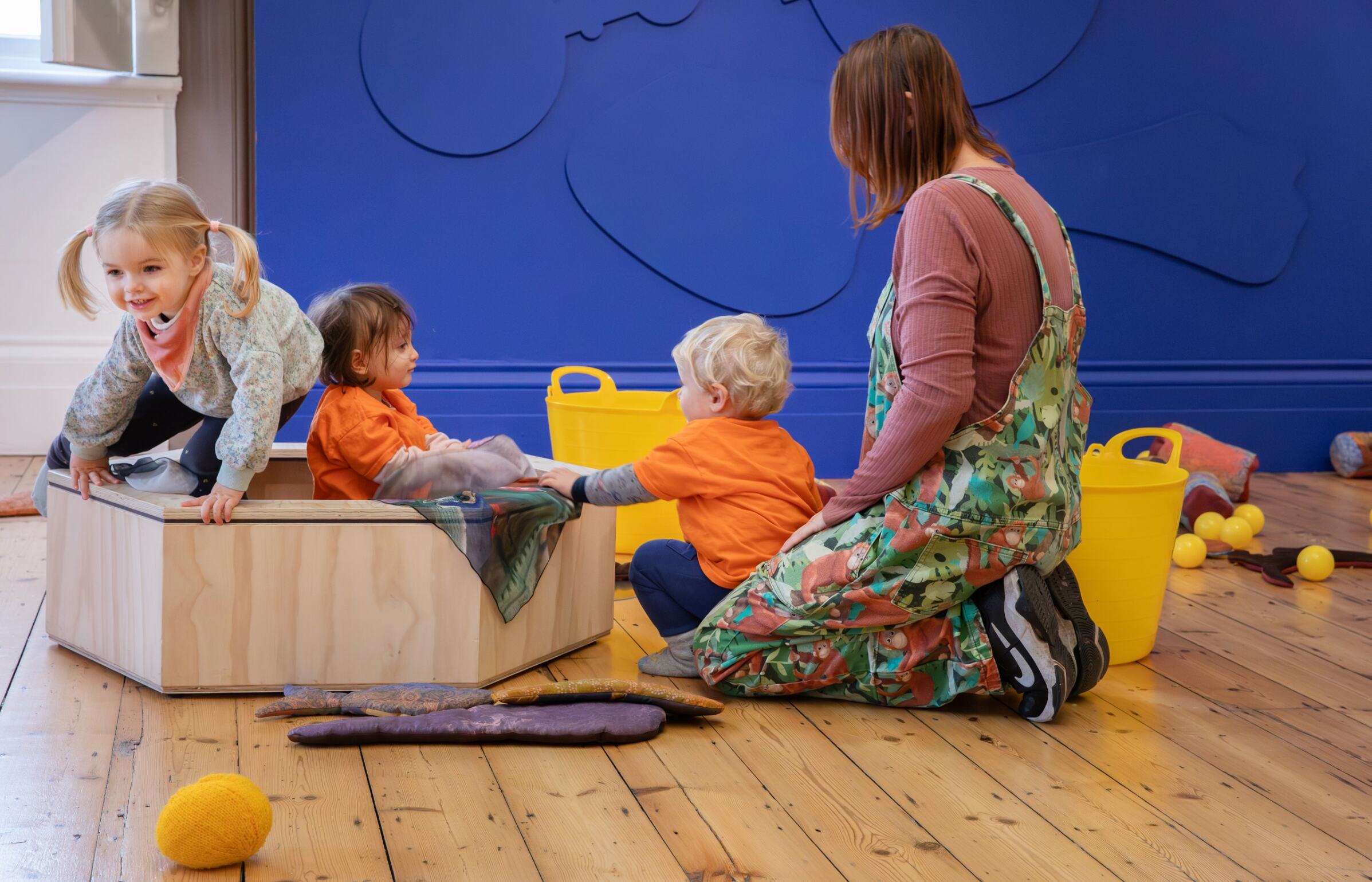
The development of the exhibition was the focus of an interdisciplinary research team including educators, researchers and artists, who worked with children and their families for over a year to produce the core exhibitions concepts. Graphic Designer Ashleigh and fabricator Dan Simkins from Kunstruct were brought in midway through the process to work to refine and realise their designs. The result is a set of structures that resemble a construction site, in the process of completion, or a stage set that awaits actors to bring it to life. Just as the things in the Mary Greg collection were designed to be used and handled – to be scooped, rolled, turned in a lock, worn on the body and played with – ‘Things of the Least’ is activated by small visitors. Upending conventional ideas about the optimum conditions for viewing art, the best time to visit is a busy weekend afternoon, when the gallery becomes a social space alive with children exploring and interacting, individually, together and in parallel with each other.
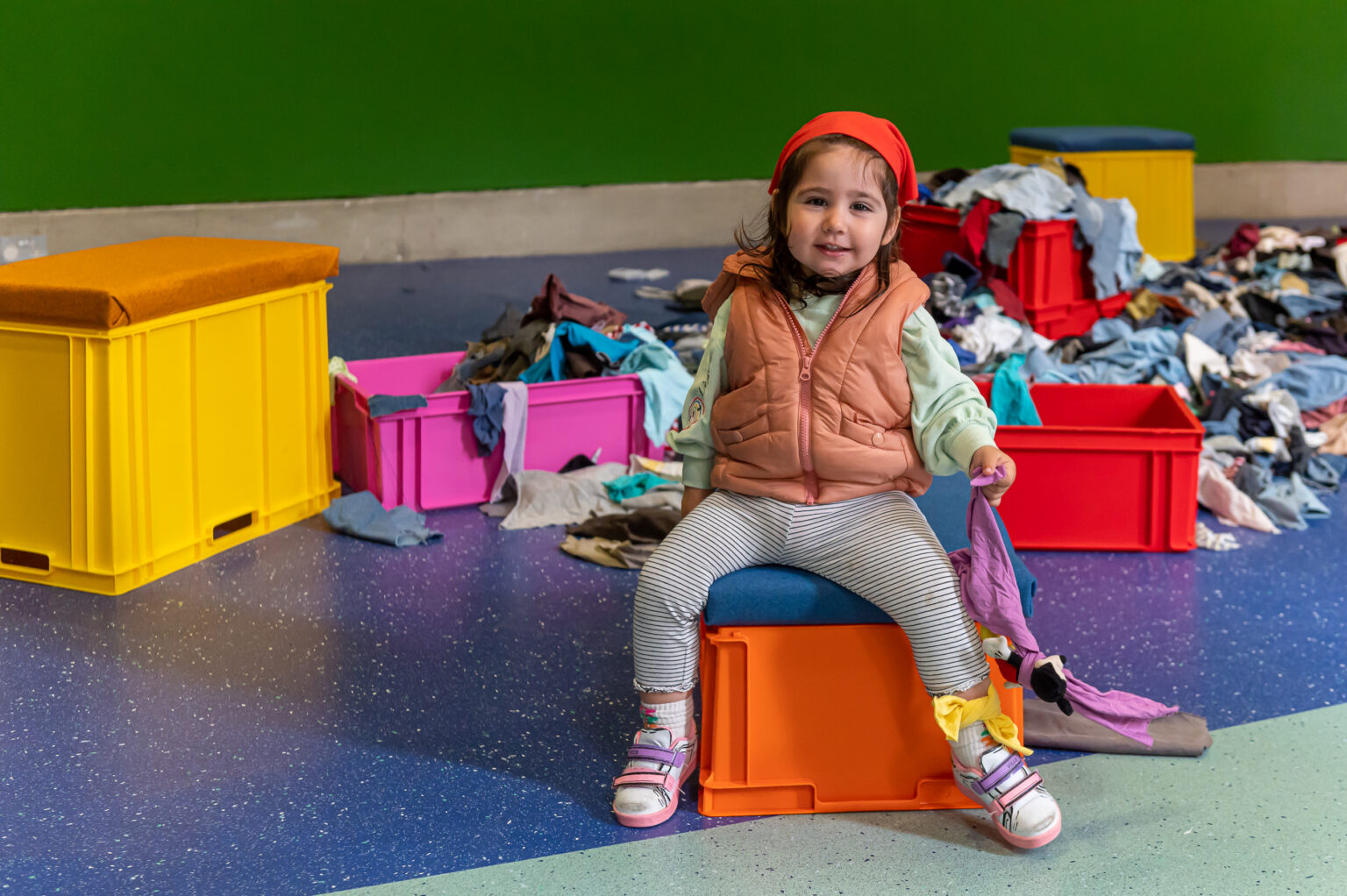
Objects are displayed low to the ground and children see themselves reflected in low-level mirrors. Video work is accessed by navigating curtains and crawling through tunnels (through which we, as adults are unable to fit). The process of engaging with the work is open-ended: a pile of cushions can be used to rest, to build, to enclose, to hide.
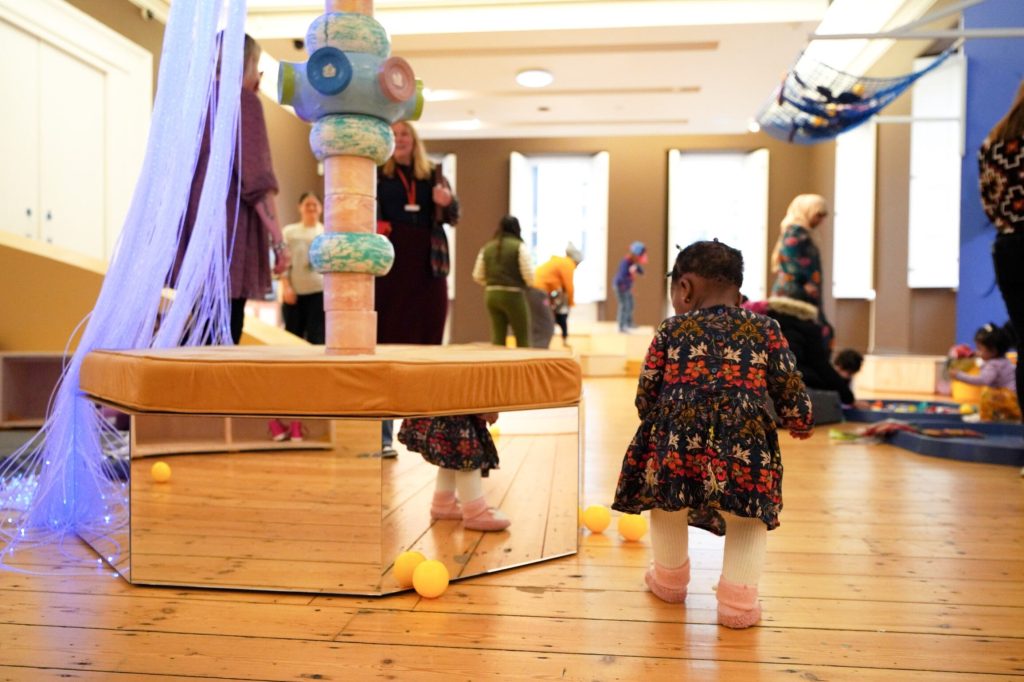
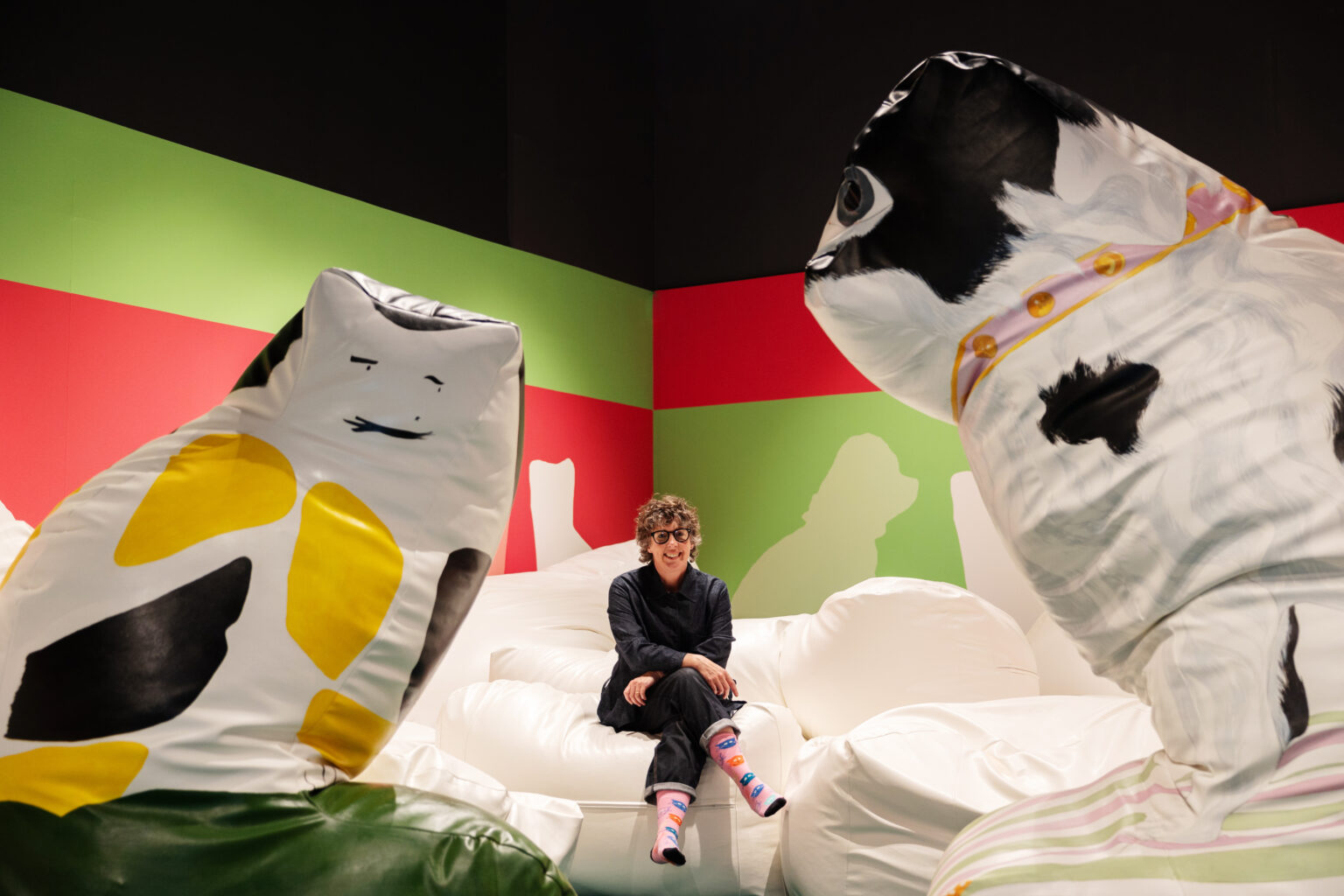
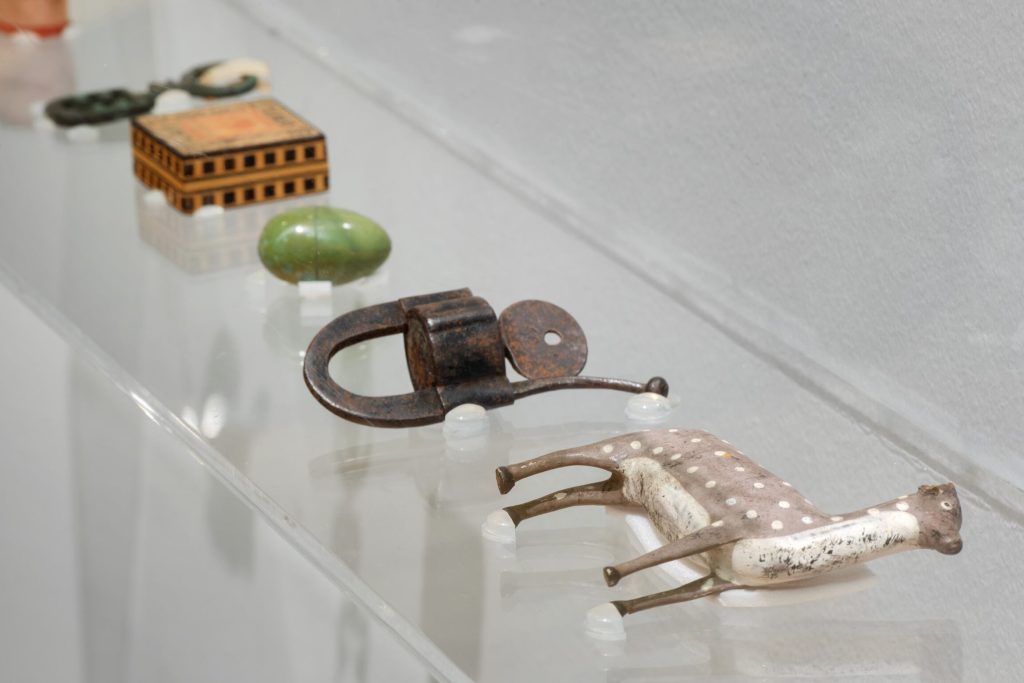
It looks as if someone has emptied the contents of their pockets in one area of the gallery. Safely contained behind Perspex, some of Mary Greg’s things are incorporated into a play structure comprising hexagonal steps, which are designed to be climbed over. Gold-coloured balls and clothes pegs, created by the artist Naomi Kendrick, nestle alongside keys, bottles, spoons and clay pipes collected by Mary Greg, scattering things that shine and sparkle into a collection that is often drab and dull in appearance. A net suspended from the ceiling collects small, soft shapes sewn by artist Jackie Haynes following her research into the collection, resembling fish, spoons or keys. Visitors to ‘Things of the Least’ are challenged to throw them into the net, before the gallery attendant periodically releases them back into the gallery. Watching over the scene is a giant bird by Charlotte Dawson, which scales up an object in the Mary Greg Collection that the team would have liked to have displayed but which was too delicate to display. The bird, too, has become a collector, secreting silver thimbles, scissors, keys and spoons in its nest.
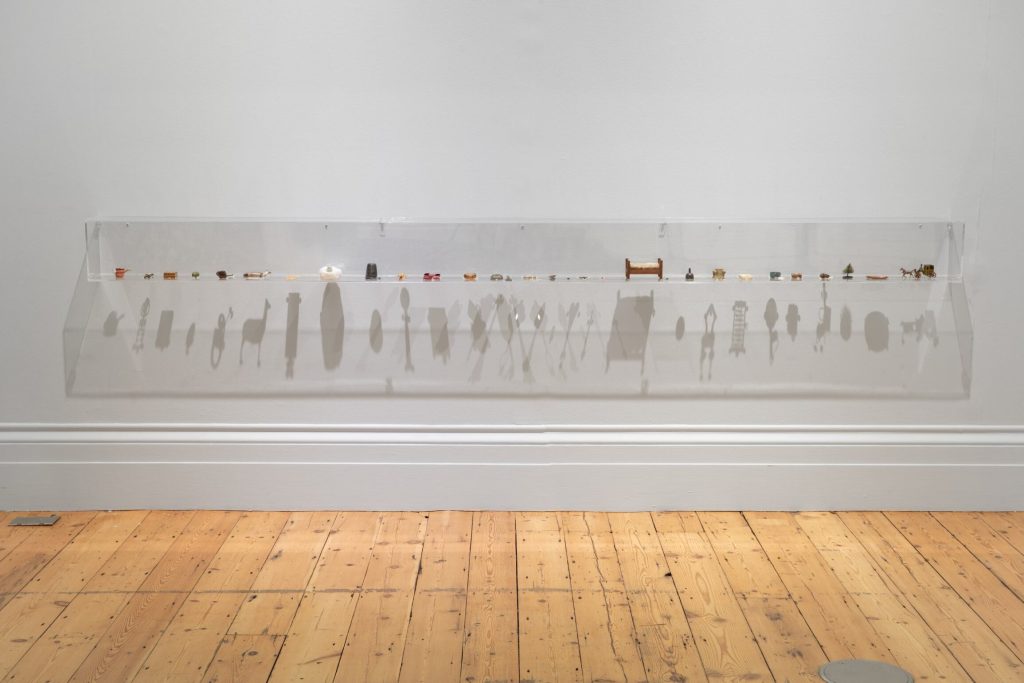
Other objects from the Mary Greg Collection are transformed by their selection and juxtaposition. One row of things, lined up in a long glass case mounted on the wall, superficially appears to bear the most semblance to conventional museum displays. Lacking interpretation labels or titles (in common with the rest of the displays in ‘Things of the Least’), however, any attempt at explanation is eschewed. A miniature horsedrawn carriage and tiny saucepan sit alongside a pipe. A key and a candle nestle next to toy animals and doll’s house furniture. A thimble finds its place alongside a pocket watch, magnifying glass, miniature alphabet and tiny watering can, together with other objects of indeterminate use. This seemingly random collection of things, which don’t mean much when removed from their contexts, create a dramatic parade of silhouettes underneath the cabinet, giving a unifying effect and suggesting characters in a shadow play around which visitors can use their imagination to create their own surreal narrative.
These objects, and the ways in which they might be experienced and presented in a gallery setting, were tested and developed by the team of artists and researchers over a period of two years with early years children at regular ‘stay and play’ sessions at Manchester Art Gallery and Platt Hall. Fittingly, for a project focused on the intimate objects of domestic life, Platt Hall was built as a grand Georgian home for one of the city’s cotton traders, before becoming one of Manchester Art Gallery’s satellite sites in the suburbs and for many years housing the gallery’s costume collections. In a departure from the wealth, privilege and exploitation of people and resources associated with industrial families such as the Gregs – Thomas Greg’s family fortune was, like many others in Victorian Manchester, intertwined with profits from the trading of enslaved people – today Platt Hall is being reimagined as a community resource. The surrounding communities are among the most culturally diverse in the city: the stay and play sessions were targeted at families attending Sure Start centres in the vicinity, as well as recent arrivals to the country being housed in temporary accommodation.
A film by Belle Vue Productions, filmed at these sessions and shown in the gallery, gives a flavour of the research and development process, demonstrating how babies and toddlers learn and explore the world through experimentation with and exploration of everyday materials and repurposed objects. Children peer through cardboard tubes, roll, build and stack, strengthen their bodies and test their co-ordination through the repetition of movements.
These movements have been directly translated into what we see in the exhibition, which foregrounds the way in which young children engage with things through their bodies and senses: babies feel their way through the world rather than thinking their way through. A sense of movement comes across strongly: animations taken from Mary Greg’s collection of praxinoscope reels (an early type of moving image projector) show children in old-fashioned dress blowing bubbles and rolling logs, caught in a loop of repeated actions. Shown alongside them is a video by Josie Flynn created during the development of ‘Things of the Least’, when the artists spent time at Platt Hall getting to know the collection and observing children’s play sessions. The film follows the trajectory of a silver ball through the spaces of Platt Hall, moving up and down stairs, inside and out, on a seemingly autonomous path that is suggestive of the toddler’s impulse for exploration and their desire to get everywhere.
Another contemporary artist, Josie Hepplewhite, has translated children’s interactions with objects and others during the research phase of the project into video pieces, in which she spins, twists and lies on her back on the floor extending her arms and legs, as if discovering and testing them for the first time. Young children learn through copying; when visiting ‘Things of the Least’ with my two-year-old daughter, she lay down too and started doing the same. A poem by researcher Ruthie Boycott-Garnett, which is incorporated into the exhibition and accompanying publication, further emphasises children’s active relationship to things, collecting together a series of verbs such as ‘roll’, ‘squeeze’, ‘carry’ and ‘collect’.
This isn’t just an exhibition for small visitors, though: it rewards adults too. The visitor pieces together impressions of things through the incomplete and partial: outlines and shapes suggestive of objects (perhaps a keyhole and its corresponding key), glimpses caught from above or below, or peering round corners, revealing more to you on each visit. The casual visitor might miss small details like window stickers inspired by pattern borders from Mary Greg’s books unless their eye drifts towards the sky outside during an idle moment. A busy parent might fail to notice the labels on the play cushions, which incorporate riddle-like words and phrases taken from play sessions (‘When is a spoon not a spoon?’, ‘Detailed ridges of a cured walnut’), unless sitting down for an extended rest from chasing a toddler around the galleries and up and down several sets of stairs.
This act of piecing together meaning and understanding feels closely aligned with the early years process of acquiring language and the ability to communicate. Babies communicate at first via crying, then via key words, movements and gestures, from which their caregivers intuit their wishes, before gradually becoming fully conversant with sentences. Appropriately, for a project which has brought together preverbal children with new arrivals to the country and people who speak English as a second language, an interest in which we communicate, through language and through things, is at the core of ‘Things of the Least’.
The exhibition shows what’s possible when institutions pay attention to the small and marginalised, whether that’s showing care towards people or towards things that might otherwise be deemed of least value. The things Mary Greg amassed demonstrate how a collection can encompass artefacts that are unique and ubiquitous, ordinary and fragile. Taken individually, Mary Greg’s things might seem unremarkable, but together they form an extraordinary collection relating the domestic and childhood that shows that objects change depending on our viewing point and relationship with them. ‘Things of the Least’ asks galleries and their visitors to think again about what’s worth holding on to, what they consider precious, who and what belongs in a gallery and how they should interact with collections.
Things of the Least, Manchester Art Gallery, 24 October 2025 – 30 November 2026, funded by the Arts and Humanities Research Council.
Natalie Bradbury is a writer and researcher based in Calderdale.
This review is supported by Manchester Metropolitan University.
Published 06.05.2026 by Jazmine Linklater in Reviews
2,338 words