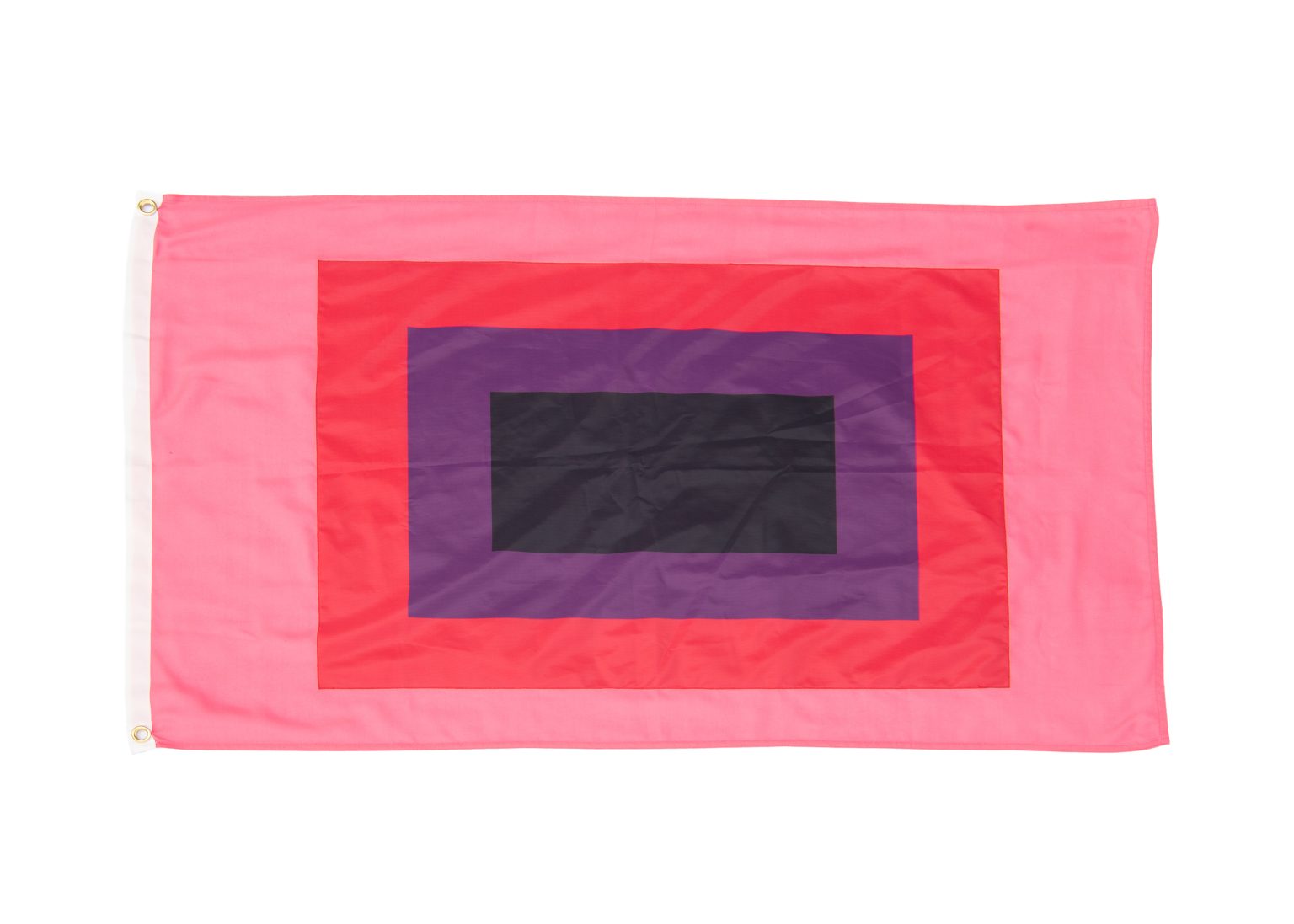
Curated by Connecting Threads, the inaugural edition of the Tweed River Festival took place in Peebles, in the Scottish Borders, from 31 October to 2 November. The festival included workshops, talks and screenings involving twenty artists, including six artists in residence – Anna Chapman Parker, Emily Cropton, Georgie Fay, Sam Gillespie, Jessie Growden and Miwa Nagato-Apthorp – who began work on projects in response to the programme’s theme of ‘Watery Commons’ in the summer. Each artist was then paired with a writer – Milo Clenshaw, Daisy Hildyard, Justin Hopper, Mai-Anh Vu Peterson, Sarah Shin and Marianna Tsionki – who contributed a text for an accompanying publication, also titled ‘Watery Commons’.
GREET
Each day of the Tweed River Festival begins with a ritual greeting of this body of water. We leave the Peebles Burgh Hall which acts as a ‘hub’ and gather in a semi-circle on the nearby green that borders the Tweed’s northern bank. After some movement to warm up body and mind, we are invited by ‘animateur’ Rhiana Laws, part of the festival team, to introduce ourselves to the river – literally, to tell it (him, her, them? Both personhood and gender will be debated briefly in one of the discussion groups at the end of the first day) our names.
PROTECT
When we remove water from the river, does the river mind, does the water mind? Festival attendees are asked to hold this question as we are each given the flask of river water of which we will be the ‘guardians’ until the end of the day when it will be returned to three large jars of river water in the hall.
Repeated on each day of the festival, this act of guardianship becomes a new ritual that, though short-lived, fosters a connection – and perhaps a responsibility – to the river that was not previously there for all. The publication that accompanies the festival, Watery Commons, opens with a 2002 diary entry from the late activist Rachel Corrie which reads, ‘I look at this place now and I just want to do right by it.’ This idea runs through the very core of the idea of ‘the commons’, as writer Emma Balkind reminds us in her essay, ‘Situating a watery commons’. Originating in the Latin noun ‘munus’, meaning both ‘gift’ and ‘duty’, the word ‘commons’ points to a collective responsibility.

Often it is the more-than-human that feels like it is playing the biggest role in protecting these waterways. In her essay, ‘Crossings’, Mai-Anh Vu Peterson writes about the willow trees that grow along the Tweed, calling them ‘river guardians’ that ‘play a crucial role in connecting ecosystems and fostering riparian woodlands’, their abundant shade protecting the temperature of the water in summer and, in turn, the (much depleted) salmon the river is famous for.
‘We have five-year plans, but we need 50, 100-year plans’, says Derek Robeson, conservation manager for Tweed Forum, who leads a walk up Eddleston Water, one of the tributaries of the Tweed, as part of a parallel event organised in partnership with Culture for Climate Scotland, Scottish Borders Climate Action Network (SBCAN) and Creative Arts Business Network (CABN). This kind of long term, or ‘cathedral’ thinking is echoed in Jessie Growden’s film ‘Bodies in Water’ (2025), screened on Saturday night at the Burgh Hall, where three narrators occupy three different points in time – future, present, and ‘in between’ – in order to question and challenge gender norms, and our current treatment of the more-than-human in the light of our current crises, as well as to encourage people to think about more hopeful futures. Hope protects and must be protected; hope is a river guardian too.
CARRYING/HOLDING
Baler twine, wax, willow stalks, bedsheets: these objects are passed around the group as artist Emily Cropton does a performative reading of Daisy Hildyard’s text, ‘Five typologies of the Lower Tweed’, from the publication in the gallery space above the town library. She talks us through these materials for carrying, for craft; how they can become a basket, a net, a vessel. The river holds all of these and more, as its vast catchment area takes in farmland as well as village, field as well as green. Inspired by the theory that the first tool was not a weapon but a bag, proposed by anthropologist Elizabeth Fisher and made popular by Ursula le Guin’s famous essay ‘The Carrier Bag Theory of Fiction’, Cropton explores what it means to carry the water with us in a literal sense. She draws a link between the loss of biodiversity and heritage crafts and explains how she has revived certain crafts in her studio through her diverse practice.
When honouring past traditions, it is hard not to fall into the trap of romanticising or trivialising the labour that went into them when they were industries, however small, before they became ‘heritage crafts’. Often the artist comes across as dipping in where their interest takes them, reviving these histories but also approaching them from a position of comfort and privilege rather than one of necessity. Cropton’s performance, grounded in thorough research, reminds me of the importance of remaining critical of the complexity of one’s own position in relation to the workers that perfected these crafts.

RECIPROCITY
Histories of labour, trade and extraction are also present in the work of printmaker Georgie Fay, who focuses on raw materials and goods – from peat, lead, indigo and geese to a pair of boots, linen, butter and cheese – that once regularly crossed the Tweed. Listed in a medieval ledger found in the Berwick Archives, these objects become a starting point for thinking about reciprocity. Trade becomes gifting in her project, which involves the production of screenprints and cyanotypes to be given away over the course of the festival, with the proviso that the recipient will pass it onto someone else. This is reinforced by a writing workshop with Vu Peterson who reads us passages from Robin Wall Kimmerer’s Braiding Sweetgrass (2013), encouraging us to see every natural resource, every commodity, as a gift from another living thing, from the earth, and to think about how we can reciprocate these gifts through ‘everyday acts of practical reverence’.
MORE THAN
In Growden’s film, a hand reaches underwater, pale and marble-like in the strange green-brown light, growing to gigantic proportions in contrast to the Lilliputian scale of the minnows it disturbs; in Miwa Nagato-Apthorp’s song ‘Bear and Deer’, a tradesman is transformed into another species after performing an act of kindness; in Vu Peterson’s essay, the river is considered as a being that can have rights. Across the festival programme and publication, the ‘human’ is decentred to allow room for the more-than-human to come to the fore. In our discussions over the weekend, in the memories we are asked to share of the bodies of water ‘we carry within us’, other species and beings appear regularly – salmon, kingfishers, seaweed, all as much a part of the commons as we are. ‘The water itself is generous in that way,’ writes Milo Clenshaw in the publication, ‘holding whichever body comes its way’.
In Anna Chapman Parker’s practice, drawing becomes a way to resist the enclosure of time imposed upon us by capital and the myth of productivity. To draw is to slow time down, to demand ‘that time stretch out’, as Marianna Tsionki writes in her essay. Participants of Chapman Parker’s workshop are invited to trace the contours of phytoplankton in order to attend to the most minute of the more than human species that sustain life on this planet (phytoplankton produce 50% of the world’s oxygen), those that are ‘too fragile, too easily ignored’.
POLYVOCALITY
Other species, other voices. Artists Sam Gillespie and Miwa Nagato-Apthorp recognise that it is a confluence of voices and cultures that make up a river and its catchment. In Nagato-Apthorp’s song-sharing workshop we are invited first to hum and then to learn the words of a folk song, first in Scots Gaelic and then one of her own compositions in Japanese. Staggered starting points allow the sound to build in tiers towards the roof of the Burgh Hall, as we rise and fall together in melody and lyrics that stay with me long after the festival is over.
Gillespie explicitly speaks of his project, ‘The Dreaming Tweed’, as a ‘polyvocal collaboration with the environment’ of the River Tweed, bringing in local folk tales and mythology as well as casting his voice further to include those suffering in the ongoing genocide in Gaza, with the words, ‘may you be free, from, the river to the sea’. He sees this as a way of holding grief but also as an act of solidarity, joining one voice to many, calling attention to injustice and occupation and allowing the river’s course, from source to mouth and beyond, to encourage a connection between local and global.
‘The Dreaming Tweed’ also includes the voice of Bint Mbareh, a Palestinian sound artist who leads a workshop on Sunday. She introduces us to games that ask us to consider how synchronising our voices and gestures could allow us to become unknowable, to invite anonymity in, explaining how this can be a valuable protective strategy for those fighting a common oppressor. She also talks about how ‘each sound is an echo of the past passed onto the future’, an idea that is later put into practice by a performance from the small children who had learned a song, composed by Katie Forbes with children from a local youth group, that emphasises these connections between past and future, land and water.
ACCESS
Chapman Parker was first drawn to phytoplankton because of their name – phyton, meaning ‘plant’, and planktos, meaning ‘wanderer’ or ‘drifter’. She was ‘curious to find out more about what wandering might mean in terms of a healthy freshwater ecosystem’ and how questions of access to land and water might play into this. Gillespie too began his sound work with a long distance walk along the Tweed, while Georgie Fay attempted to cross the river at its lowest points, focusing on the section from Coldstream to Berwick where it becomes not only a waterway but also a border with England. Each approach echoes the practice of ‘beating the bounds’, described by Emma Balkind as a ritual that denotes common from private land. In the publication, Chapman Parker also points out that while the right to roam is enshrined in Scottish law, many landowners still try to keep walkers out. As an antidote to this enclosure, she turns to nineteenth-century poet John Clare’s description of a river as ‘uncheck’d’, the Tweed becoming a ‘vivid symbol of free movement’ in the fuzzy borders created by its spates and floods, bogs and reedy banks.
As well as access to land and water, the festival also provokes a consideration of access to the arts. The artists and audience appear to be mostly middle class (myself included) and whenever we are outside, we encounter people who also interact regularly with the river but may not have heard of the weekend’s events or felt invited to participate. I find myself missing their stories, their thoughts on what else a river can hold. However, the festival is just one part of a wider programme that also includes various community projects as well as schools and youth groups, and hopefully those stories will feed into the project there.

COMMONING
In the introduction to the publication, the theme of the ‘Watery Commons’ is grounded in the words of cultural theorist and hydrofeminist Astrida Neimanis: ‘We live in a watery commons, where the human infant drinks the mother, the mother ingests the reservoir, the reservoir is replenished by the storm, the storm absorbs the ocean, the ocean sustains the fish, the fish are consumed by the whale.’ This quote is read to festivalgoers on the first day and the words ‘watery commons’ appear in many of the prompts for discussion that opened and closed each day. However, the concept of ‘the commons’ itself is never fully defined in these moments, and this feels like a missed opportunity. Perhaps knowledge is assumed, perhaps the history and theory of the idea feels too burdensome, but I think it is worth reminding or informing participants of what we have lost and what we must defend. While not spoken, Balkind’s idea that the commons must be defended through ‘physical acts of resistance and remembrance’ is put into practice through the festival’s introduction of new rituals and the engagement through workshops but it often feels fragile or temporary when not backed up with the history of enclosure and privatisation.
EDDIES/CYCLES
The linearity of the river cutting across the green, the map, belies its wide catchment area and its part in the water cycle that allows it to become rain and sea and stream too. At the end of the festival, we are invited to join a final procession to the river to return the large jars of water to its flow. While we are not quite a river of people, we form a strong and joyful trickle led by Gillespie in Pied Piper mode with his flute. As the water is poured back in, we are invited by Rhiana Laws to think of this not as an ending but an eddy, and the festival feels like that, a whirl of water gathering at the banks, a momentary pooling of voices, of ideas, of memory, before the river rushes on.
Maria Howard is a writer and artist based in Glasgow.
This review is supported by Connecting Threads.
Published 28.11.2025 by Lesley Guy in Reviews
2,338 words