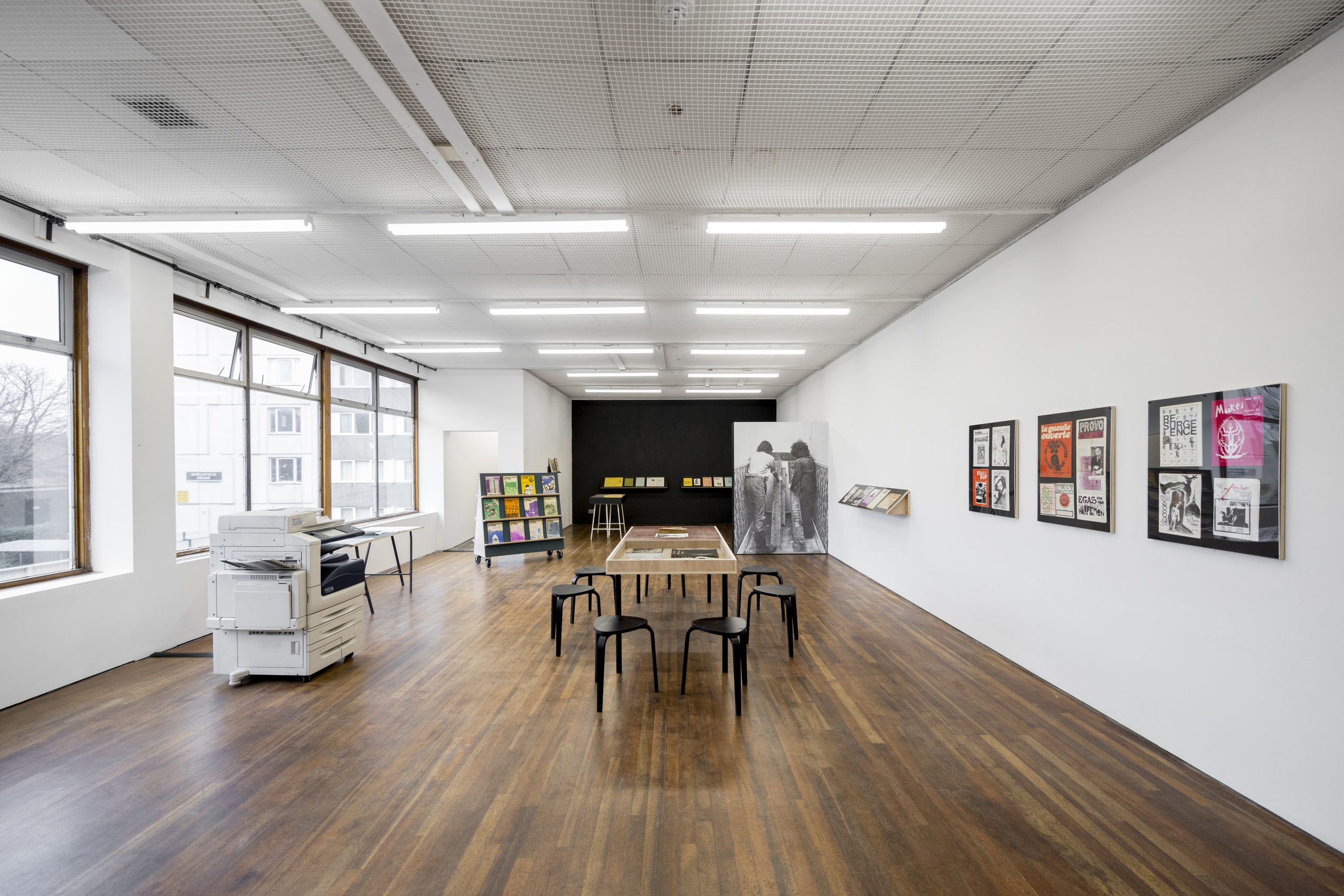
For Solidarity x Document H.E.T. Alternative Publishing and Community Undercurrents (H.E.T. stands for Hollow Earth Transmission) at The NewBridge Project is part of their ongoing For Solidarity initiative, and raises some timely questions with regards to how the mobilisation and distribution of resources is facilitated in emancipatory political practices. Being based around the ever-expanding archive of graphic artist and printmaker Niall Greaves and his involved interest in print culture and self-organised activity, the exhibition presents an array of material spanning the 1970s to 1990s, which foreground alternative forms of community and resistance from the period directly preceding the introduction of web 1.0.
Split into four sections titled ‘Communication’, ‘Organising’, ‘Community Action’ and ‘Arcadian Visions’, the overarching theme running across the entire exhibition is one of people’s historic search for individual and collective autonomy. The print material lining the walls of the exhibition space covers topics ranging from housing struggles and education to communal and sustainable living, ecological justice, spirituality and abolitionism. Despite individual publications being more specific in their focus, they are nevertheless bound by a collective interest in cultivating alternatives and offer an insight into how this was possible in the days preceding the arrival of the internet.
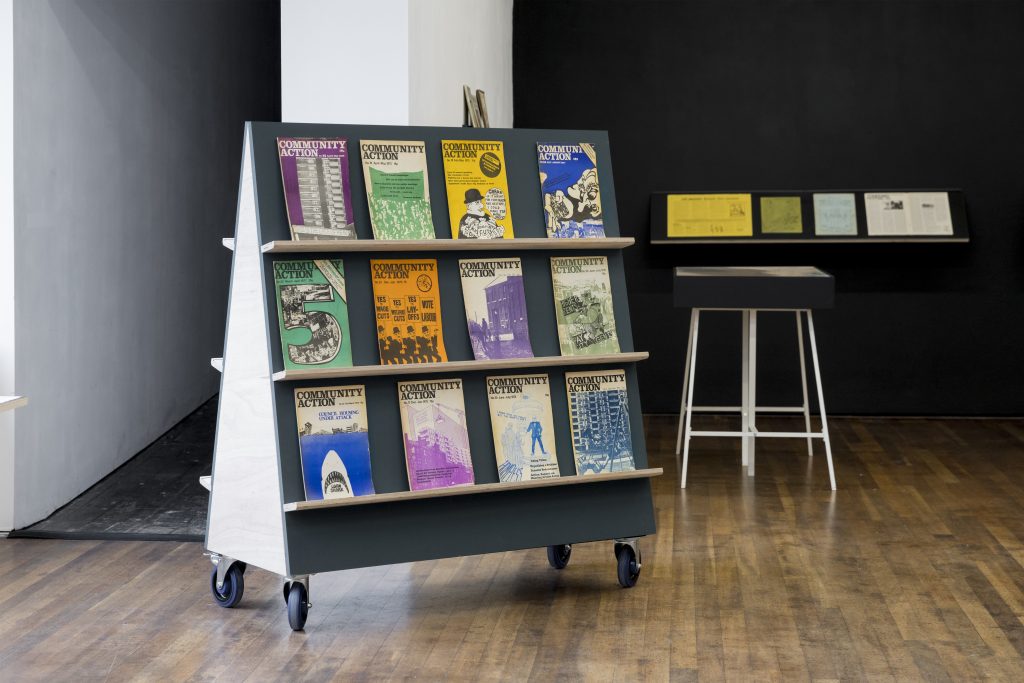
On entering the exhibition, I was immediately met with the prominent visual and material language of these alternative worlds. Bold designs and biting political imagery adorn many of the publications on display, some rendered in high contrast black and white, others showing highly saturated primary colour covers, all with evocative names like Community Action, Freedom and Resurgence – titles which confirm the political sentiments of their authors. Aside from the striking imagery of these designs and their aesthetic forms, the exhibition affords us the opportunity to enter these worlds, rather than observing them from afar. Selected articles are interspersed with the covers of publications, inviting a deeper reading into the material on display and providing us with additional context to the specific issues that were being discussed at the time. There are articles which explain the creation of Britain’s first commune, alongside those that begin to describe the ethos behind the ‘back-to-the-land’ movement, both situations that were a direct response to the dominant ideologies of their time – a call to build alternatives. Further to these, two key pieces, which foreground how this print culture encouraged agency within the community, offering practical guides on how to begin to build such alternatives, catch my eye. Select pages from Print: How You Can Do It Yourself (1986), provide information about available printers and publishers for alternative material, coming with the explanation that ‘although people are now able to print their own ideas, rarely do they actually take advantage of the modern equipment that makes this possible’. Nearby, a page from Crowbar #47 (1986) provides practical information on how to construct your own FM transmitter and start your own pirate radio station, signalling a need for myriad routes of dissemination beyond print. Rather than passive containers of information, these publications encouraged action by attempting to empower individuals to build their own resources.
In the process of constructing and maintaining alternative worlds, the need for resources is tantamount. For Solidarity x Document H.E.T. centralises its focus on how the mobilisation and distribution of resources was achieved in this era of print culture, where how-to guides and alternative news sources were combined with lists of bookshops, advertisements for printing services and lists of contacts, building a network through these nodes of activity. A copy of the The Last Whole Earth Catalog (1971), which lies placed open on top of the central vitrine, invites the audience to flick through its browned pages to uncover reviews of books and guides covering everything from critiques of the growth agenda to weaving techniques. Further to the focus on the more theoretical offerings, the catalogue contains practical reviews of wood saws and mallets, jewellery toolkits and floor looms, providing basic advice for those wanting to do-it-themselves and fulfilling its central promise of highlighting ‘what is worth getting and where and how to do the getting’.
Nearby, there is a copy of Alternative England and Wales (1975), which offers detailed resources for those wanting to uncover the clandestine activity of alternative culture across the island. Given the North East location of the exhibition, I flip to the contacts page for Newcastle, which suggests that although there is ‘no good general information place’ in the city, if one was to stroll into the now bulldozed Handyside Arcade, or one of three listed ‘freak pubs’, ‘you should be able to find out what’s going on’. In the pre-internet era of alternative culture, it may have been more difficult to track down information, but it is the legacy of such publications that show how this was possible, the praxis of cultivating and maintaining networks mediated by these self-organised print cultures.
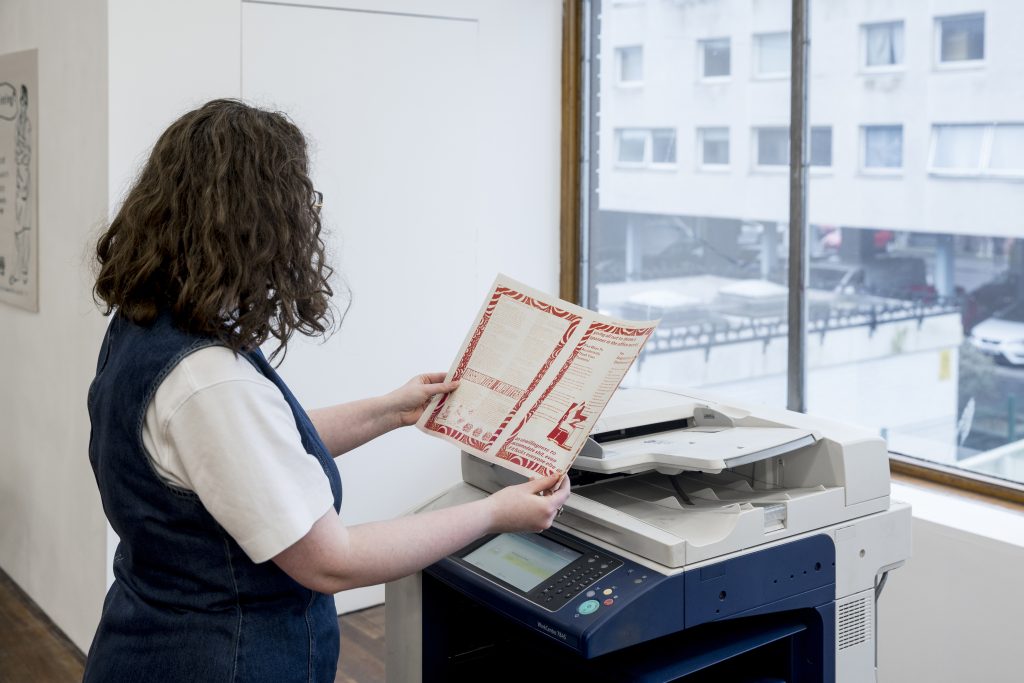
Supplementing the exhibition is a free to take away printed booklet, Document H.E.T. No. 2, featuring interviews with those involved in some of the publications shown in the exhibition, alongside additional context on the importance of alternate forms of organisation and selections of print material from the archive. The real work of this exhibition lies not solely in the presentation of archival material and bringing it to an audience who might otherwise have no knowledge of this culture, but in how this material is activated in the contemporary. Prominent in the exhibition space is a Xerox WorkCentre 7345 combined with a table of copied ephemera – a clear call to action. Following a set of simple instructions, audiences are invited to create their own zines from the various photocopies of publications covering the adjoining table, creating assemblages of the varying causes featured in the exhibition to build a new document of the whole, a physical embodiment of the myriad networks which constitute these alternative worlds. Likewise, the public programme for the exhibition includes book launches, workshops, screenings, gatherings and socials that ensure the intention of the exhibition permeates out from the building that contains it with the hope of encouraging further forms of world building and solidarity in cultures which span print and more.
In the current climate, For Solidarity x Document H.E.T. is part of a bigger discussion about the availability of information. Information is a controversial yet fundamental resource, essential to those on all sides of the political spectrum. Rising right wing populist rhetoric is bolstered by algorithmic confirmation bias and independent publications are becoming increasingly subsumed by the dominance of platform capitalism. Now more than ever there is a real need to be able to cultivate and maintain alternative worlds built on solidarity and resistance.
The blurb for the exhibition signals how the material is borne of the pre-internet forms of self-publication and distribution, but I suggest that the impact of these collections is in how they might invite us to question their translation into the current era. Of course, print culture lives on and remains a key facet of self-organisation even into the present day – zines offer affordable, vital forms of publication, distribution and solidarity across many marginalised groups. However, in the online world, the same principles can be applied. Whereas sharing and providing information might be largely the domain of the techno feudalist platforms that control much online interactivity, there are still waves of individuals and collectives looking to build alternative resources, as the networks of those highlighted in For Solidarity x Document H.E.T. did before them. Encouraging a shift away from these dominant platforms might come in the form of peer-to-peer networks, the construction of new, democratic platforms or a yet unrealised alternative, but the capacity for individuals to organise themselves and share resources for the common good is one which continues to this day.
Craig Stewart Johnson is an artist and researcher based in Gateshead.
For Solidarity x Document H.E.T. will be at The NewBridge Project, Newcastle from 7 March 2026 – 1 May, 2026
This review is supported by The NewBridge Project
Published 31.03.2026 by Lesley Guy in Reviews
1,351 words