In April 2026, privacy campaigners from Big Brother Watch lost a High Court challenge that aimed to limit the Metropolitan Police’s use of live facial recognition technology across London. The campaign group claimed that the police had broken human rights and privacy law by scanning faces in public without consent. Reporting in a May Guardian investigation shows the Met scanned more than 1.7 million faces in the first part of 2026, an 87% jump on the same period the previous year. The Metropolitan Police itself announced plans to more than double weekly deployments from four times to up to ten times a week; towns that had never seen this kind of surveillance technology before including Surrey, Bedfordshire and Thames Valley, are now getting their first live facial recognition vans, as the Home Office rolls out fifty vans nationwide. Now, a self-regulated biometric check stands between a person and their right to be an anonymous part of a crowd. It is against this political backdrop that artists Leonie Bradley and Catherine Cartwright’s work is staged.
Powered by a residency at Artlab Contemporary Print Studio (ACPS), a University of Lancashire-based research facility for contemporary printmaking, Routes of Disconsentexhibits work from both their individual practices and collaborations made while in residence together. Exploring state surveillance, movement and the growing use of facial recognition technology, this exhibition feels more timely with each breaking news headline. Whether it is the rolling back of civic freedoms, the rolling out of new police powers or the rise of AI, you’d be forgiven for feeling hopeless faced with these realities. Whilst the work reflects this, it also reclaims something in the process: data. Data that has been taken without consent, mined from protests and protestors alike.
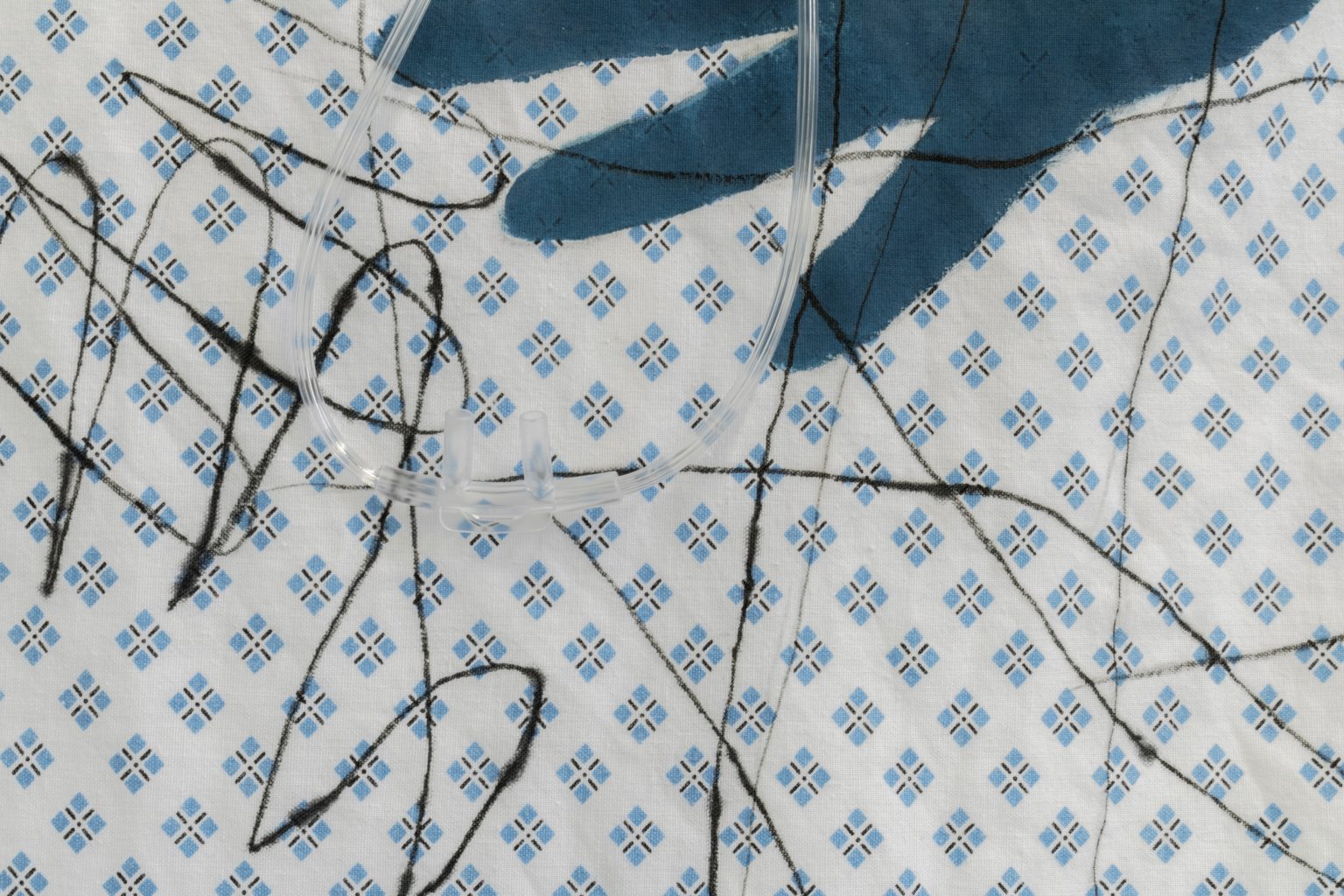
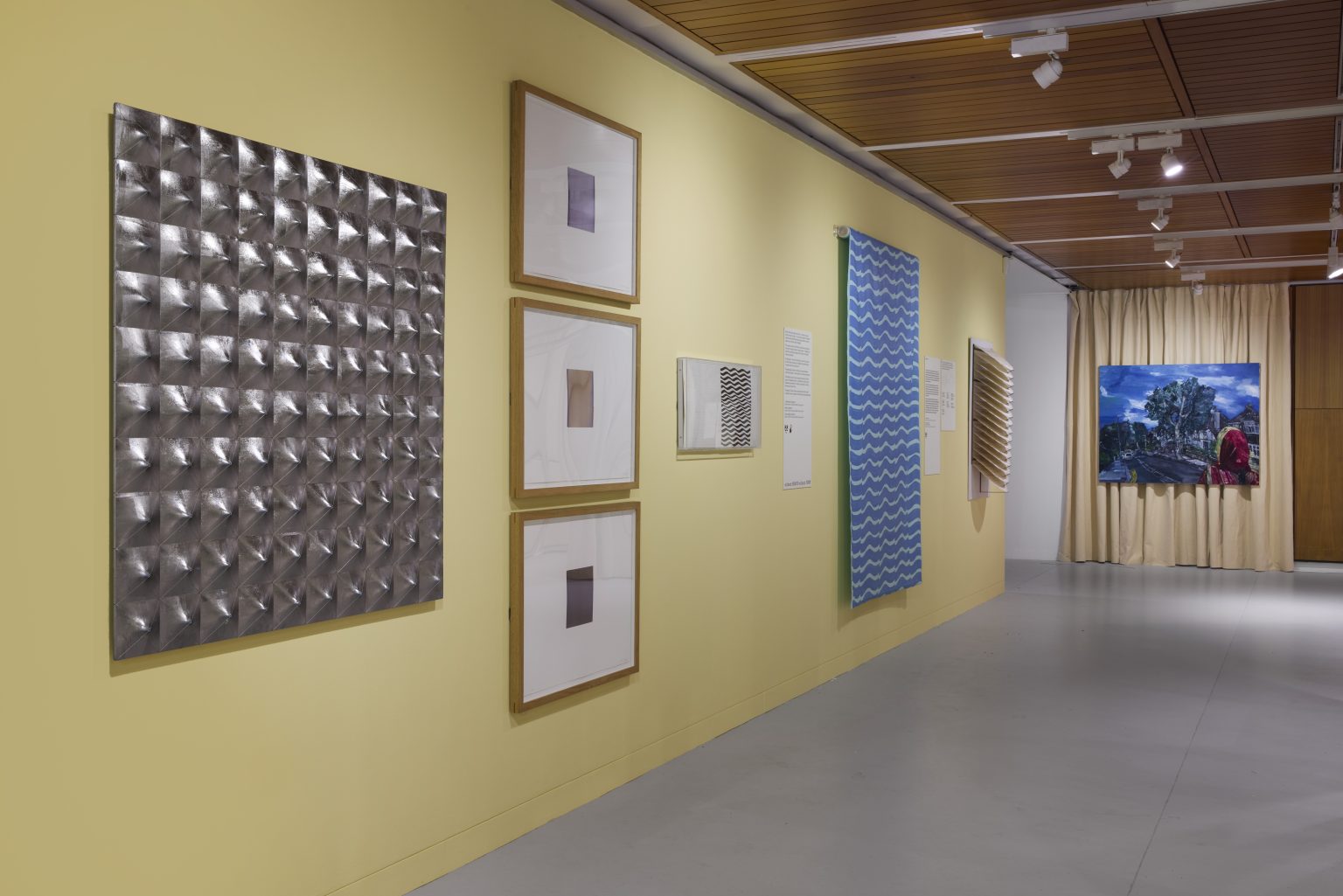
What first appear like abstract sculptures reveal themselves to be large patterned data sets. ‘Unseen’ (2026) by Bradley is one such piece. It’s made up of two thin wires spanning the far wall. This is the artist’s mapped-out walking route of the city centre, one that is designed to avoid city council CCTV. It directly connects with the exhibition’s wider interest in both pattern recognition and mapping political protests. The information has been collected by the artists and repurposed into new methods of artmaking and printing. Maps, patterns and data logs serve as raw material to expose the state’s extraction of personal data and to reclaim it. It’s a personal protest carried out by the artists.
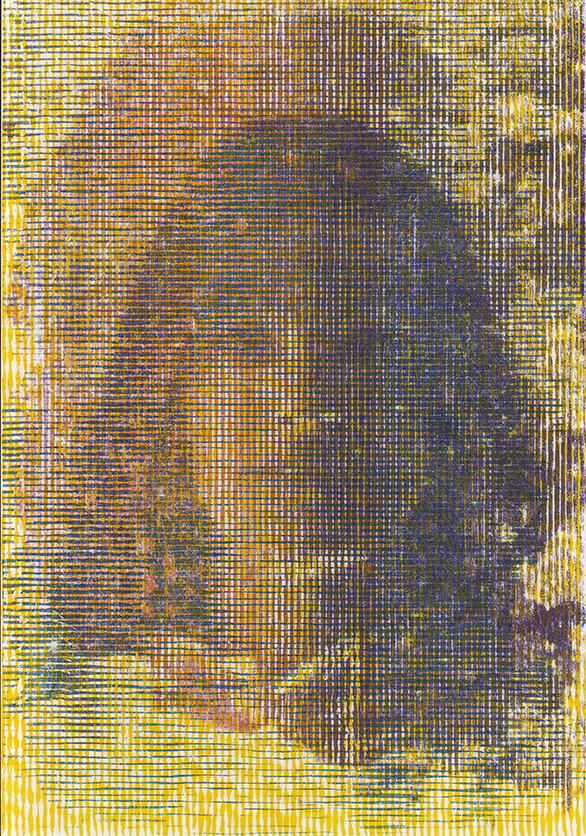
Where Bradley deals with the external architecture of surveillance, Cartwright is drawn to something closer to home. Utilising a photographic woodcut process in works like ‘Privacy Portraits’ (2026), Cartwright creates a series of intimate family portraits that defy digital recording through a process called Moiré interference. Here, the texture of the print creates interference patterns with a camera sensor’s pixel grid, a playful way to subvert the attempt to record. With a PhD in trauma-informed community art, Cartwright handles the subjects in her work, close family members, with care. In their own way, both artists are able to walk the fine line between academic critique and personal storytelling.
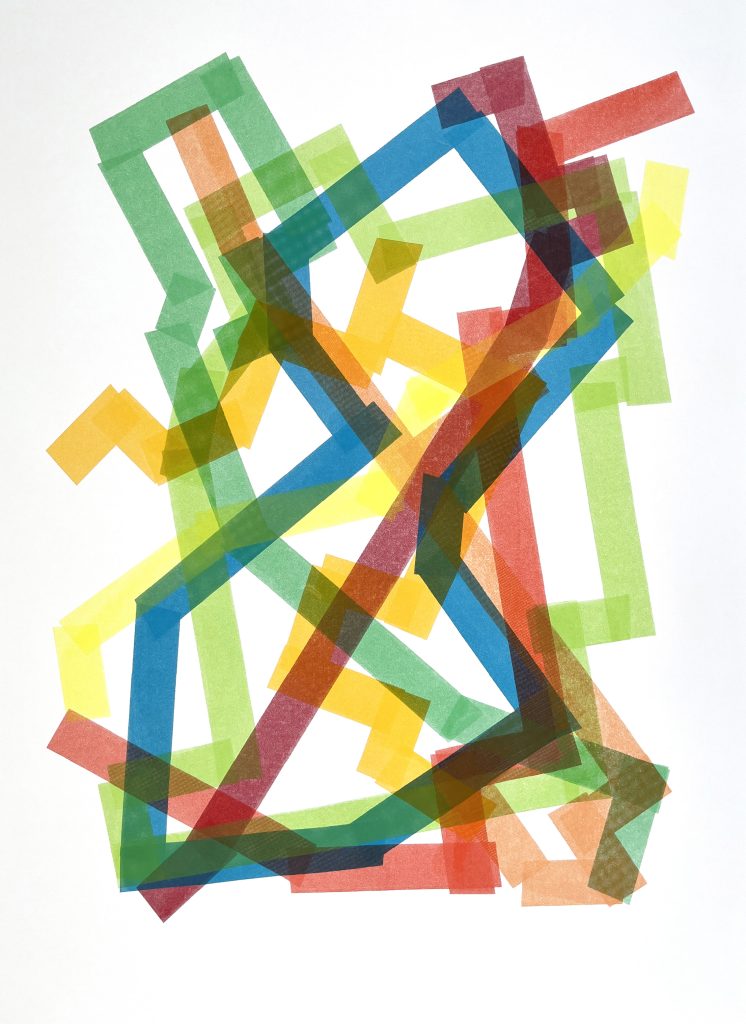
Although Bradley and Cartwright maintain separate practices, there are clear continuities between their works, having consciously and intentionally worked, researched and developed alongside one another for a number of years. The culmination of the residency, and the defining collaborative works of the exhibition, are ‘Routes of Disconsent’ (2025), a large screenprint, and ‘FaceScreen: Routes of Disconsent’ (2025), a short performance film. These two pieces act as the glue of the exhibition. ‘Routes of Disconsent’ catches the eye on entry. It’s a barrage of overlaying shapes and coloured blocks that, at first glance, looks like an abstract painting. This screenprint, made at ACPS, maps political protests routes across the country. Working at this scale is a technical feat as screenprinting demands precise registration across every layer, the margin for error only grows with size. Where other works give off a sense of foreboding, ‘Routes of Disconsent’ feels less like a warning and more of a vibrant celebration.
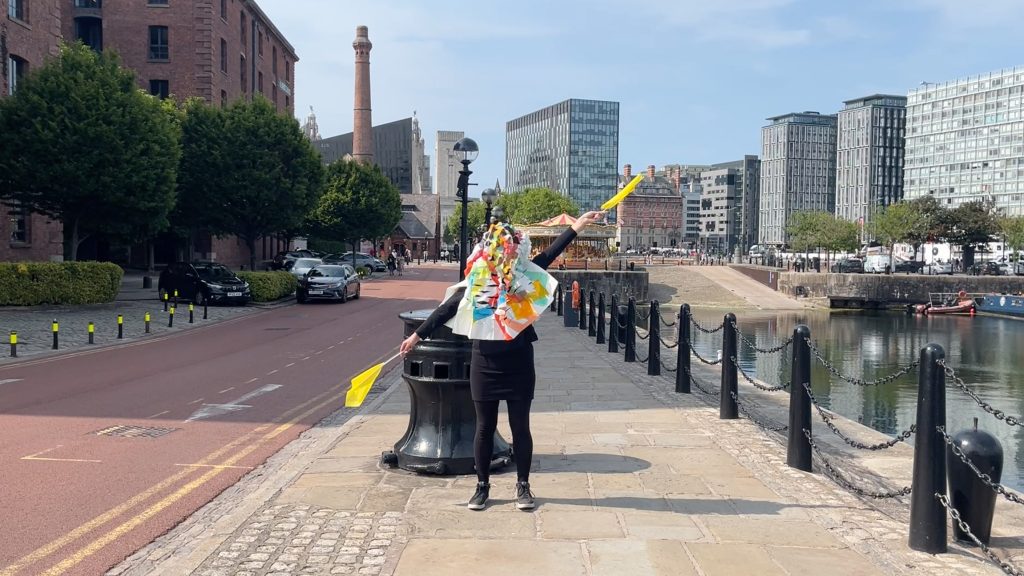
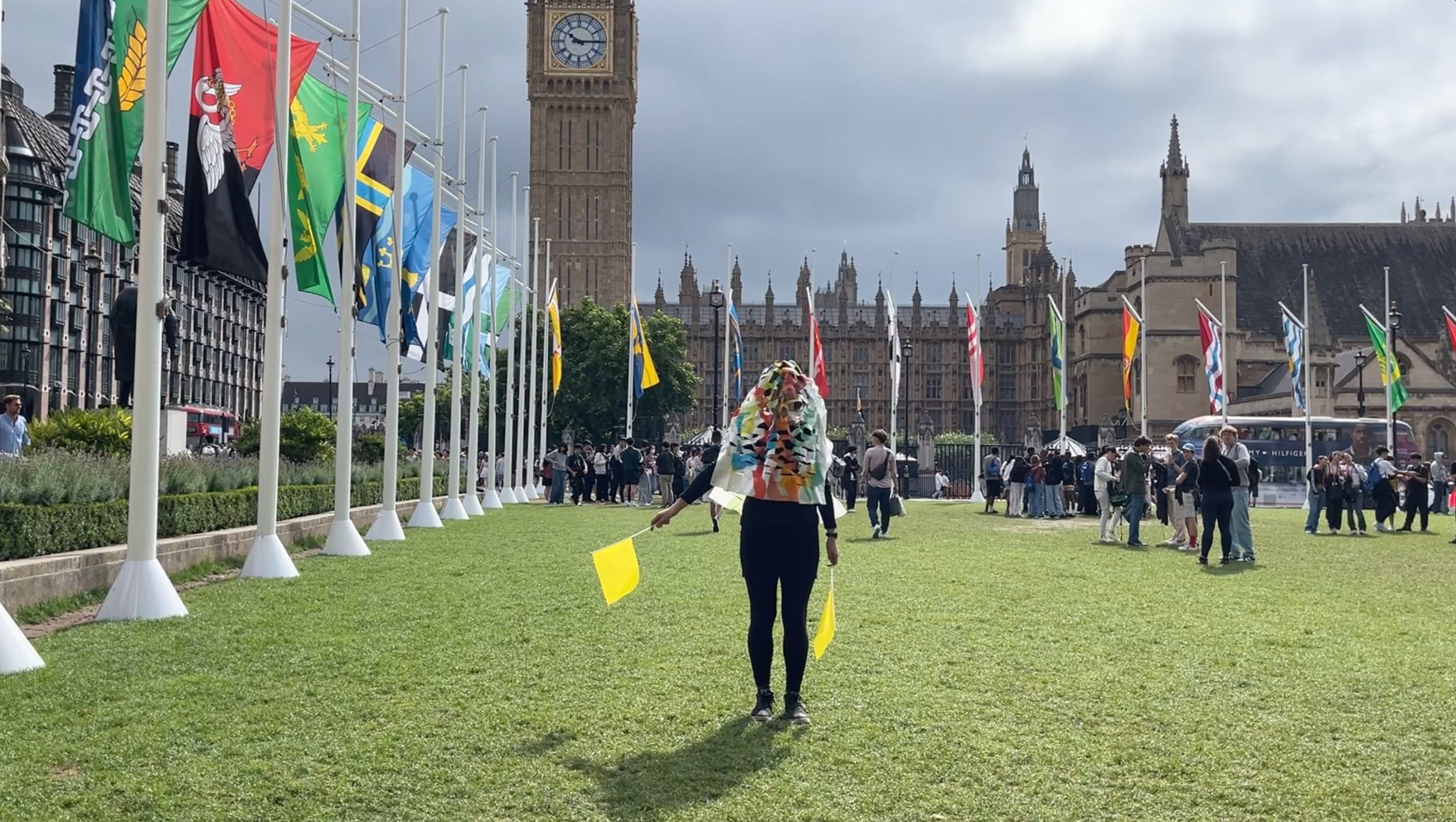
Then there is ‘FaceScreen: Routes of Disconsent’ (2025). Using their own communications in semaphore, a performative alphabet using hand flags to convey messages, it captures the artists performing across different cities. With each semaphore communication, the artists spell out Article 11 of the European Convention on Human Rights, which defines the freedom of Assembly and Association. In these different cityscapes, we see the two artists signal each other, motioning with yellow flags in rehearsed communication. Most eye-catching is the city of London, filled with a backdrop of flying international flags. Though made a month before the 2025 summer of St. George’s flags across the U.K., it depicts a distinctly British political landscape. Each performer wears a screen-printed face covering, stitched together and made by the artists. It mimics the anti-facial recognition tech used by protestors, computer vision dazzle, as well as hinting to WWI military ships that were painted with colourful designs, a process called dazzle camouflage. Thanks to these wearables, the artists perform to the camera and CCTV in anonymity.
There is an ongoing struggle in Routes of Disconsent; a constant push and pull between the political and playful, the digital and analogue. It is a show that embraces the roots of analogue artmaking while confronting a distinctly digital world, an algorithmic issue and increasingly automated tools. This is not a straightforward rejection, but something closer to a tension: a reclaiming of identity and data that we all give up, knowingly or not, with or without permission. The exhibition feels energized. It reads less as a finished statement and more as a flashpoint within the artists’ continuing research. Routes of Disconsent provides a glimpse into a body of work that is still very much an ongoing journey, set against a world that grows more dread-inducing with each passing day.
Leonie Bradley and Catherine Cartwright: Routes of Disconsent, The Birley, Preston, July 2026.
James McColl is a writer and artist based in the North West.
This review is supported by ACPS.
Published 24.09.2026 by Jazmine Linklater in Reviews
1,019 words