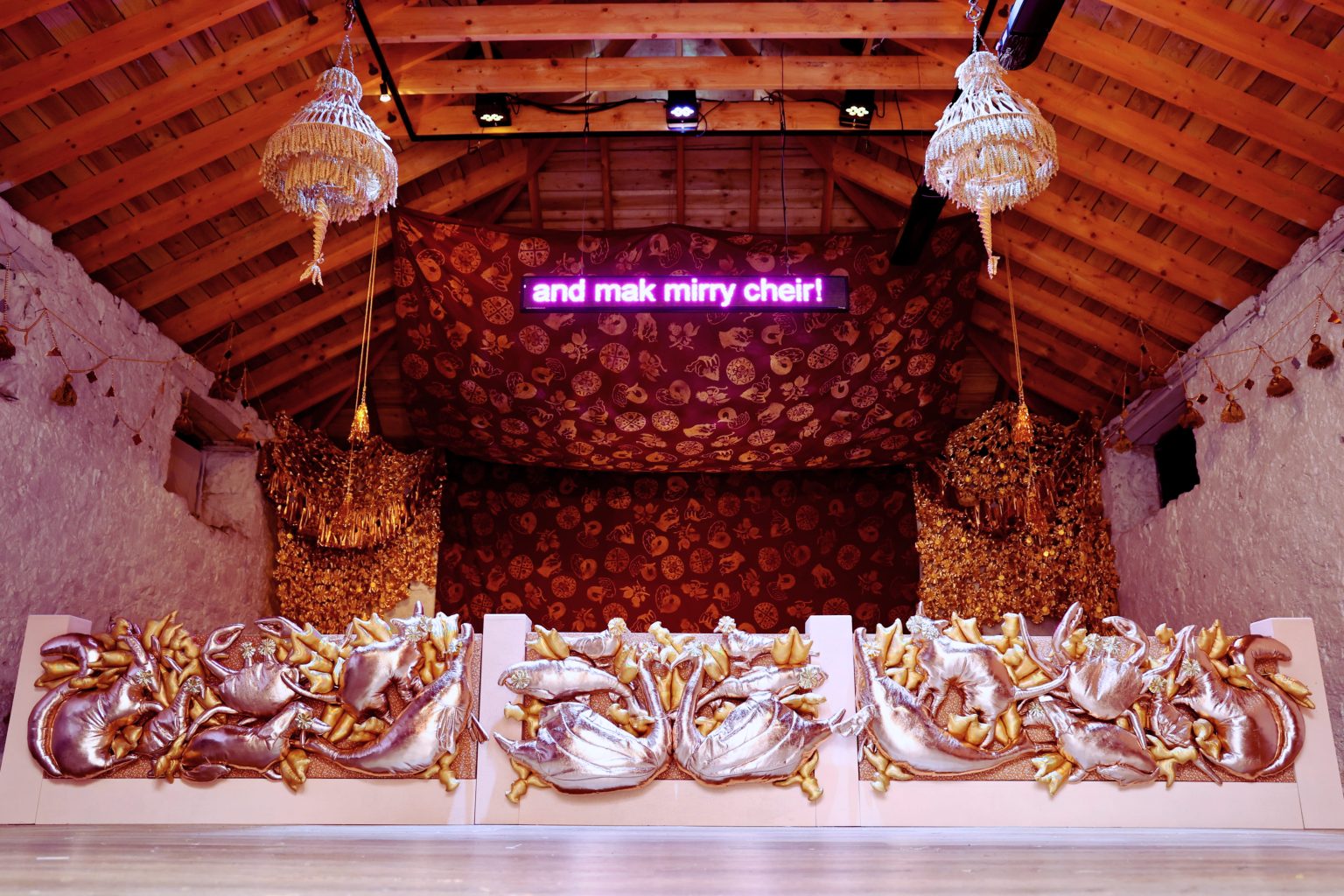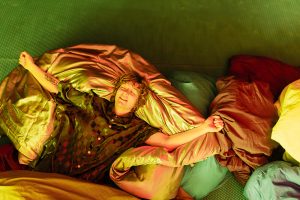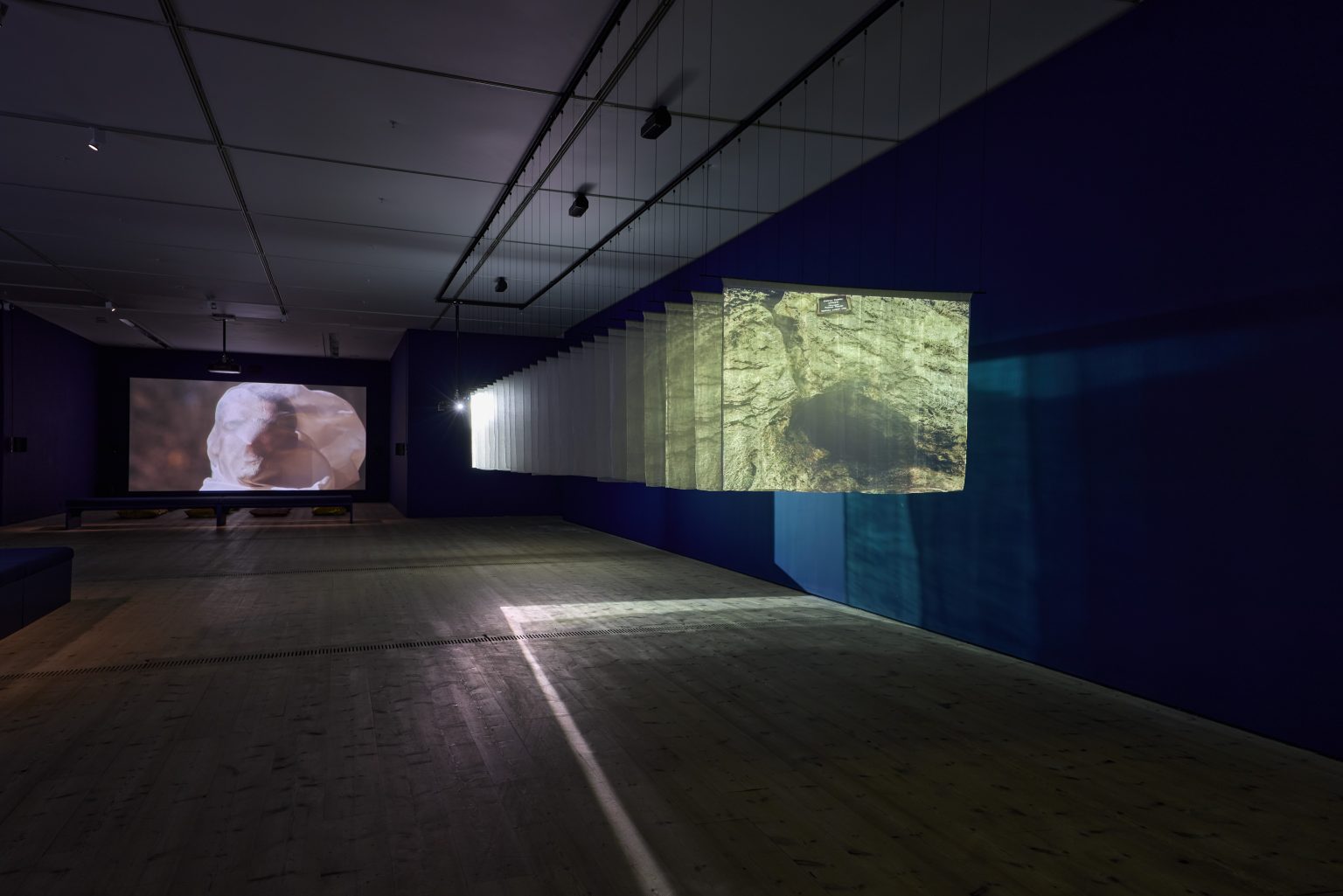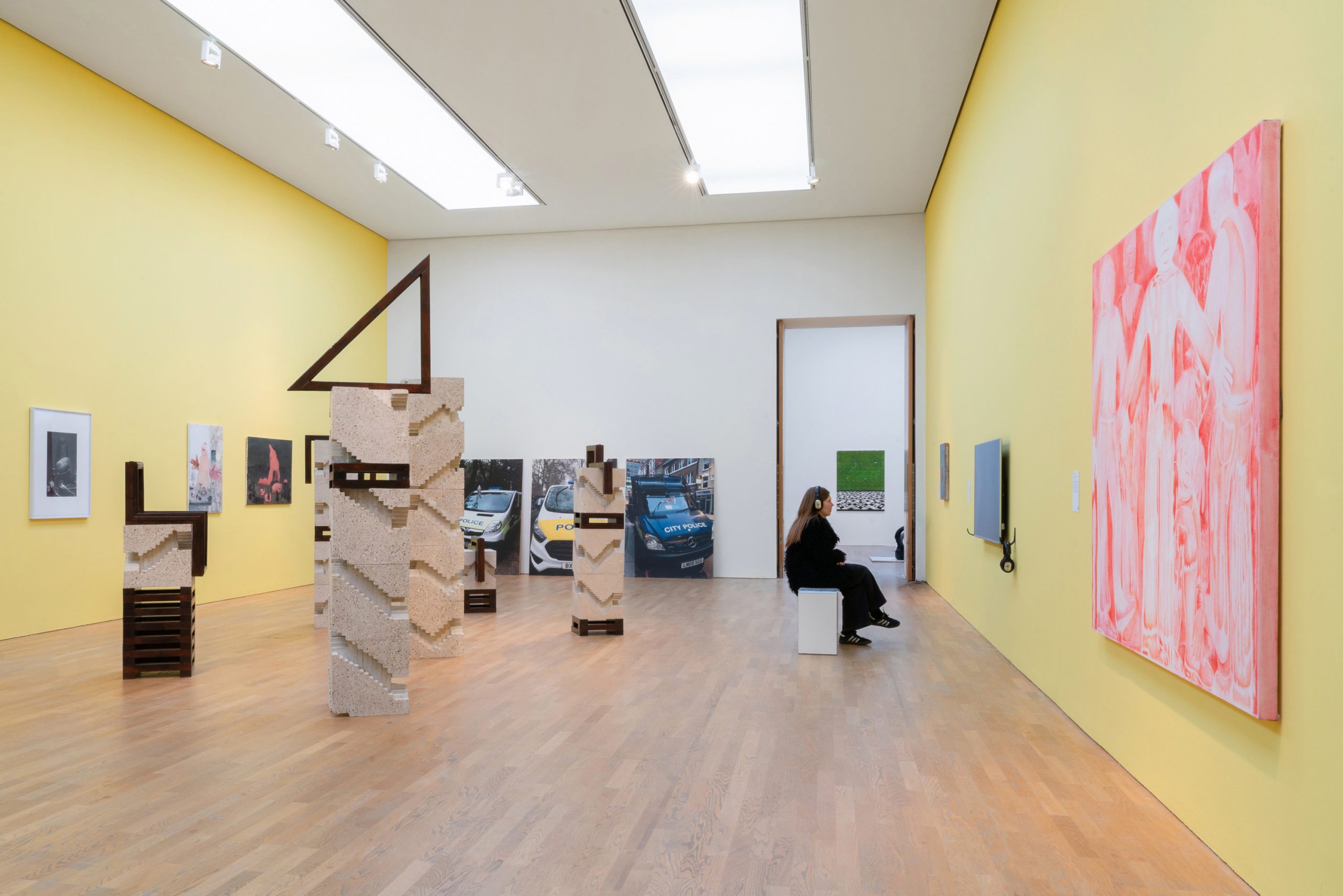
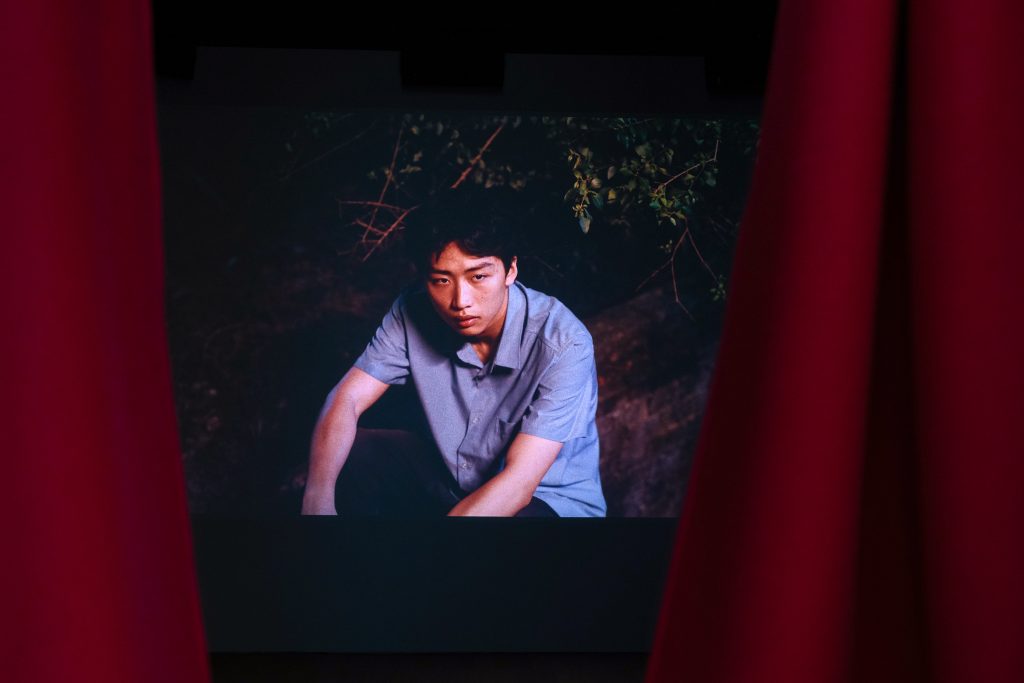
New Contemporaries selects; it does not curate. Harsh? Maybe. Selection is only the first curatorial act—the harder one is what happens when unrelated practices have to share a building. And it is freeing to be handed a blank sheet and asked to make a show from work that was never chosen with a throughline in mind. The organisation’s own throughline is Access—a big word, daunting and thrilling to work with. Twenty-six artists were chosen from around 2,500 open-call submissions by the artists Pio Abad, Louise Giovanelli and Grace Ndiritu, and the exhibition then travels—South London Gallery in the spring, Middlesbrough Institute of Modern Art (MIMA) for the summer, the first time the show has come to Middlesbrough. What arrives at a host venue is a checklist rather than a thesis. What the building does with it is the whole question. The strongest work is moving image. Kat Anderson’s ‘John’ (2019) and River Yuhao Cao’s ‘The Glass Essays’ (2025) are the two I would travel for, and between them they represent the most accomplished and vision-clear filmmaking I have seen in a group exhibition in a decade.
One other work stayed with me. Yimin Xiang’s ‘The Trophy’ (2024) is a print of a metronome, nearly black, dead carnations lying at its foot. Where the pendulum’s eye should be, there is a smiley face. In 1923 Man Ray clipped a photograph of an eye to a metronome and called it ‘Object to Be Destroyed’. After American photographer Lee Miller left him, he made the eye hers. It was destroyed in 1957, so he built it again and called it ‘Indestructible Object’. Xiang is a printmaker interested in how images travel, and he has swapped the eye that watched the artist for the face that sells things—credited to Harvey Ball, 1963, and never out of circulation since. At senior school I was taught to paint like Lichtenstein, drip like Pollock and photograph like Man Ray. You learn ‘the greats’ early and they stay. ‘The Trophy’ knows that. The carnations do what flowers do in a still life. They keep time.
Knowing it is the thing. Recycling is not a flaw in contemporary art; it is close to its condition, and much of what makes new work legible at all—we read it through what it resembles. Eliza Wagener’s ‘Untitled (Encounter/Tormentor)’ (2025) carries the same inheritance, borrowing the visual language of late Philip Guston. What interests me is which artists know they are doing it. Wagener does. Xiang does: swapping one eye for another says something about how looking has changed in a hundred years, not an influence that slipped out by accident. And legibility is also a kind of welcome. The work doesn’t ask an audience in Teesside to arrive already fluent; it makes the fluency unnecessary—which is Access, arriving by a route nobody planned. Other than the artist, perhaps. And the gatekeeping was never theirs to undo.
A shared vocabulary also makes jokes possible. Ali Cook’s ‘I Believe in Something Better’ (2025) sets that hopeful title against the golden arches; Shaun Doyle’s ‘Cop Socker’ (2024) does something similar with police cars. Doyle calls his practice a playfight, a wrestling with culture, and names Sloterdijk’s kynicism—the cheek of Diogenes rather than the sourness of the cynic. Irony has to be referential. You cannot be arch about something a viewer doesn’t already recognise. No sauce without the meat. Legibility travels well through a selection process, too. Work that reads quickly arrives with a kind of borrowed authority, and a show sifted from 2,500 submissions is a show made at speed. I don’t know what happened in the selectors’ room. But speed rewards the legible, and legibility rewards the referential. What doesn’t read quickly doesn’t get through.
What does get through still has to survive the room it is put in. Not much else has stayed with me as sharply. I could reconstruct works from the checklist, but I would be describing a list rather than a memory. That many artists in one building is a great deal to ask of anyone’s attention, and what a viewer retains is not a measure of an artist’s quality but of the conditions they were given. Here the conditions were audible. Watching the two films was a lovely retreat into clarity rather than noise—literally. Sound spilled from Oliver Getley’s ‘Site Built’ (2023), a dismantled washing machine rebuilt as kinetic sculpture, into the neighbouring rooms: metallic clicks and the rattle of exposed components against the building itself, amplified through contact microphones. This sonic mark-making clashed in texture with Anderson’s and Cao’s work. And the space at stake isn’t only the gallery but the rooms within rooms, the fictional spaces each work conjures. Sound crosses all of them.
Not everything suffers. Wagener’s painting and Ally Fallon’s ‘In My Beginning Is My End’ (2025) take the vibrato well; Fallon’s tiled geometry opens like a portal, and the hum behind it belongs. But the sound overpowers Timon Benson’s ‘Compression’ (2023), and it disturbs Lakshya Bhargava’s ‘First Drag’ (2024), a monochrome painting of chosen family built on the intimacy of a room. Its quiet stayed with me. Two of these adjacencies work and two do not. Whether any of them were chosen is the question. And what about the walls? Someone chose to soften the hard grammar of the white cube with millennial pink—that salmon shade which defined the late 2010s—in one room, and leave the next bare white. That is a decision, a thought, about how a room should feel. The walls are borrowing too. Made for the eye.

The show was arranged differently in London, where ‘Site Built’ occupied its own ground-floor gallery in the Fire Station, alongside Shaun Doyle’s work, while the moving-image works were installed separately upstairs. That separation matters. Whatever you make of the solution, South London Gallery gave works with competing sonic demands distance from one another. MIMA is one building, and one whose whole argument is openness—limestone and glass, a foyer sixteen metres high, sightlines running through. But transparency is a visual virtue with an acoustic cost. Getley’s own account of the work is that its components are ‘re-designed and built into the architecture of the gallery’. It is remade by each building it enters. ‘Site Built’: the title is not a metaphor. Choosing what goes next to it—and what its sound is allowed to reach—is the curating, and at MIMA that choice feels unresolved. Curators hold the role of negotiator, and the senses beyond sight are as material as fabric itself.
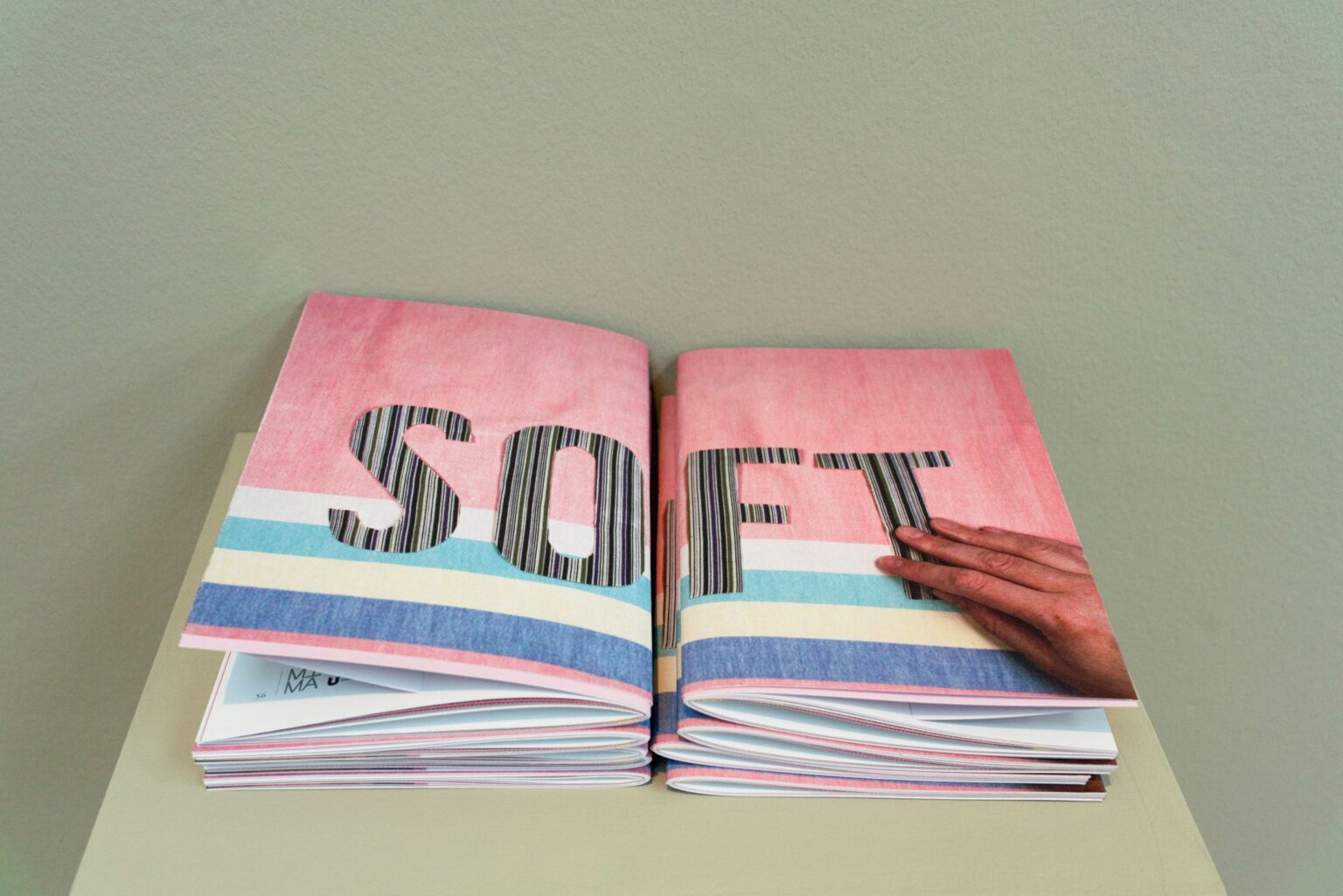
There is one place where this show does negotiate. The exhibition is accompanied by a publication conceived as an A–Z—twenty-six entries, one word from each artist, assembled into a shared vocabulary of the moment. It asks each artist what they would contribute to a common language, then puts those contributions next to one another. The show was negotiated in print. It was not, so far as I could hear, negotiated in space. The question was never whether sound travels, only whether anyone said so.
New Contemporaries has spent seventy-five years being described as the place to see what comes next. But I don’t know that I have seen the future of art. I have seen artists of their time: saturated, and at times under pressure from art history itself.
Jade Foster is a curator and art historian based in Yarm, Teesside.
New Contemporaries 2026 was at Middlesbrough Institute of Modern Art 8 May – 16 August 2026.
This review is supported by Middlesbrough Institute of Modern Art.
Published 19.08.2026 by Lesley Guy in Reviews
1,315 words