Fale Sā / Sacred House, which showed at HOME as part of Manchester International Festival (MIF) this year, was developed by New Zealand-based collective FAFSWAG over a two-year residency that began at MIF23. Rooted in ritual, spirituality and stories from the Pacific Diaspora of Aotearoa and the wider Moana, the show aims to offer a layered meditation on ideas of home. The artists interrogate how those who have been displaced may trace the notion of home through ancestral knowledge and practices, and how queer Indigenous futures may harness the feeling of it (home) through relationship to community, the environment, and the constantly expanding cosmos.
Responding to the lack of representation of queer Indigenous folk within the creative industries, FAFSWAG first formed back in 2013 as an informal arts collective from southern Auckland. In their online bio on the Arts Foundation website, they explain that they have ‘come to redefine what it means to occupy a fluid sexuality and gender spectrum, a multi-cultural identity and a growing interdisciplinary practice’.
In order to speak to their context of queer indigeneity, FAFSWAG artists work collaboratively to activate public and digital space, committed to social change, describing their work as cutting edge, culturally responsive and socially relevant. The collective has twelve active members, with ten of them participating in this show: Jermaine Dean, Falencie Filipo, Tapuaki Helu, Elyssia Wilson Heti, Nahora Ioane, Moe Laga-Toleafoa, Tim Swann, James Waititi, as well as the collective’s co-founders Pati Tyrell and Tanu Gago.
Engaging with ideas around ancestral time and queer futures, Fale Sā / Sacred House speaks to a current wave of global majority artists rejecting a western, capitalist, science-fiction idea of futurity, with tall glass buildings and flying cars, instead favouring an alternative conception of our world. They turn, instead, to a form of speculative world building not only informed by, but also rooted and interwoven within an ancestral assemblage, a term first presented to me by British-Iraqidigital artist Sara Al Sarraj in reference to religious studies scholar Laura Nasrallah’s concept of time. Time not as a linear, single thread, but as many entangled fibers which bind us to those who have come before and those who will come after.
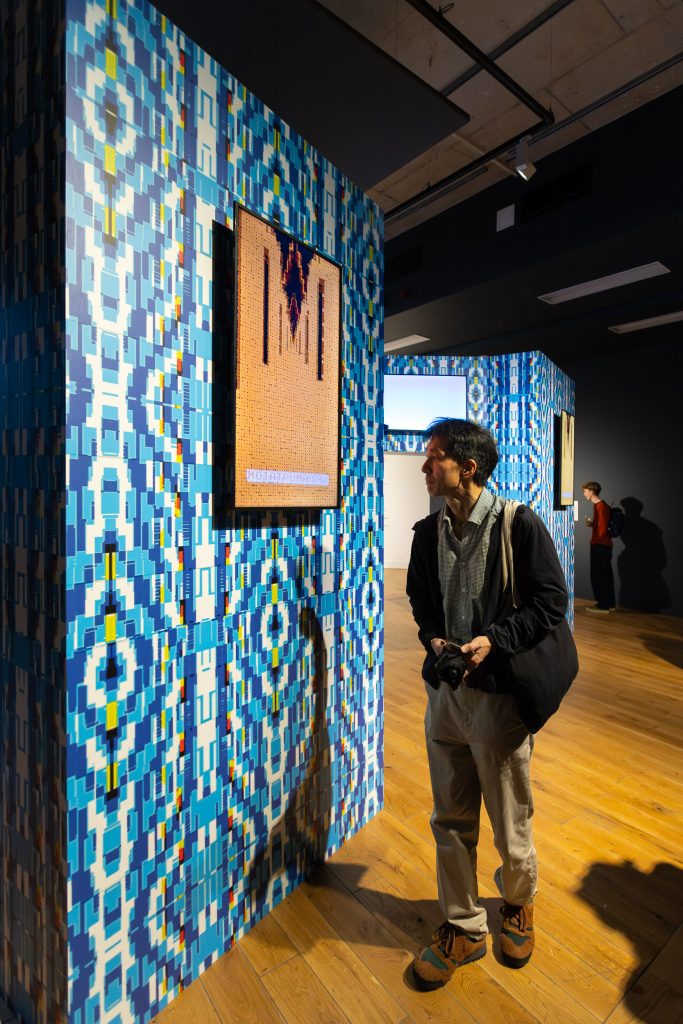
Despite claiming to work collectively, each work in the show has a corresponding title card attributing authorship to a certain member (or members) of the group. On entering the space, the first work we encounter is by James Waititi, a multidisciplinary Moana artist who describes themself as a descendant of the goddess of fire. Their large-scale work ‘Hemi’s adventure to the God’s’(2025)is a structure mimicking digital 3D design software, like Blender or Unreal Engine, adorned with a repeated pattern reminiscent of old PlayStation1 or Nintendo games. In this aesthetic, we are instantly able to imagine the building of blocks and forms that make up imaginary worlds with the click of a mouse, or the typing of some code. The artist notes in the wall text how the form is inspired by the gateway to their grandmother’s house, or marae, and as we walk through, under and around it, its function as a portal to an alternative reality is re-enforced. With six monitors showing expansive skies and gameplay walk-throughs, the work makes a direct reference to the 1980s and ‘90s video games that were the backdrop not only to a generation’s coming of age, but the political awakening in Aotearoa, New Zealand.
Driven by growing disillusionment with colonial structures in New Zealand and a reassertion of tino rangatiratanga (Maori self-determination), political activism of the ‘90s was grounded in the country’s land occupations, treaty settlements, and native language revival, while a parallel space of resistance quietly brewed in bedrooms and school computer labs. The pixelated worlds of ‘90s video games offered a new realm for storytelling and a chance for exploring ideas for a new world. ‘Hemi’s adventure to the God’s’evokes these ideas of ancestry and resistance through play and nostalgia, whilst harking back to our duty to the future through its explicit references to fabrics of digital world building.
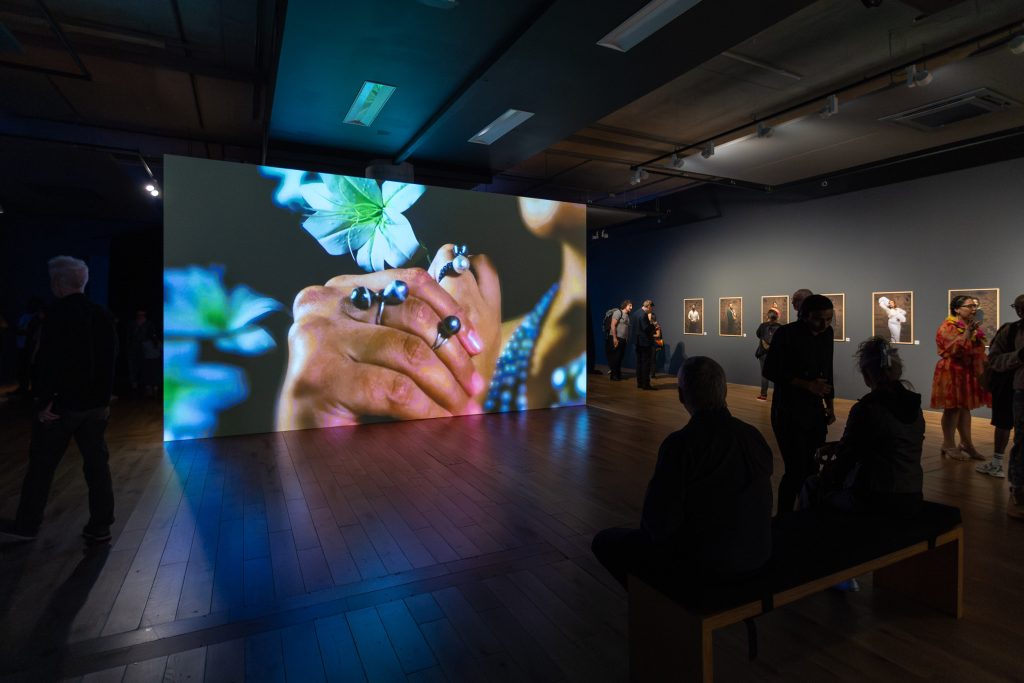
Another stand out piece of the show is the digital performance film ‘Te Varua’ (2025) by collective member Nahora Loane. We see the body of the performer in slow and meditative movement across six different settings representing six different stages of grief. It’s unclear why the artist chose to represent six stages – western conceptions of grief typically prefer prescribed stages whereas Maori cultures are said to view it as a more fluid, all-encompassing experience. Regardless, the six different settings are distinct, some with the blurred, dark edges of a soft vignette obscuring our view of the performer slightly, whereas in others, set design like leaves or flowers frame the performer completely, like a family portrait. The piece itself is a tender and delicate reflection on loss and end of life ritual. Presented on a large screen in the centre of the room with loud, clear, booming speakers playing a repetitive, meditative score, the piece is unavoidable, undeniable in its monumentality. Not unlike grief itself. The title of the piece references the in-between space after death, and the performance indicates a deep respect for, and a kind of participation in, one’s ancestor’s journeys into the afterlife, again linking other realms and past relatives in the here and now.
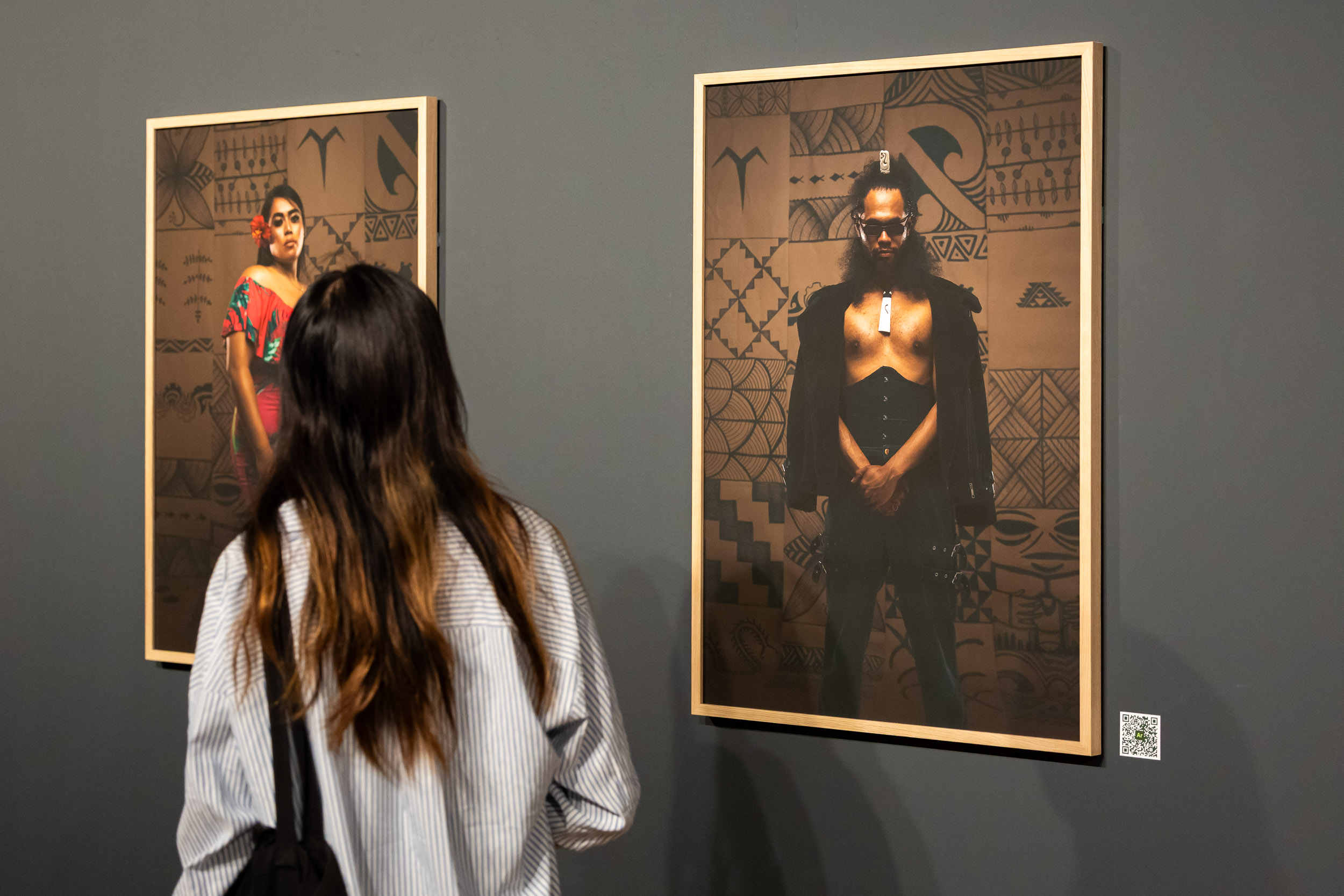
The collective have a history of engaging in queer Indigenous portraiture, a contemporary art form that attempts to reclaim or reinterpret identity, challenge colonial narratives and celebrate the diversity of gender and sexual expression within Indigenous cultures. Artists like Kali Spitzer and Zanele Muholi have each formed signature styles within the genre to international acclaim, using props and symbolism to subvert the style of photographs which characterised portraiture of colonized peoples in the nineteenth and twentieth centuries. From the Fale Sā exhibition we can see that FAFSWAG’s chosen technique of subversion employs digitality and futurity to look into the past. ‘Eyes of Khaos’ (2019 – 2025) by Mahia Tekore, for example, is a series of portraits of members of the collective and the artist’s peer group, representing queer spirituality that was erased by colonisation, using digital photography with flashes of light, digital manipulation and hyper hue saturation to create superhero style images. Similarly, ‘Sauniga’(2025) by Tanu Gago is a moving image triptych which features video portraiture of collective members hypnotically weaved in with imagery of symbolic, storytelling animals.
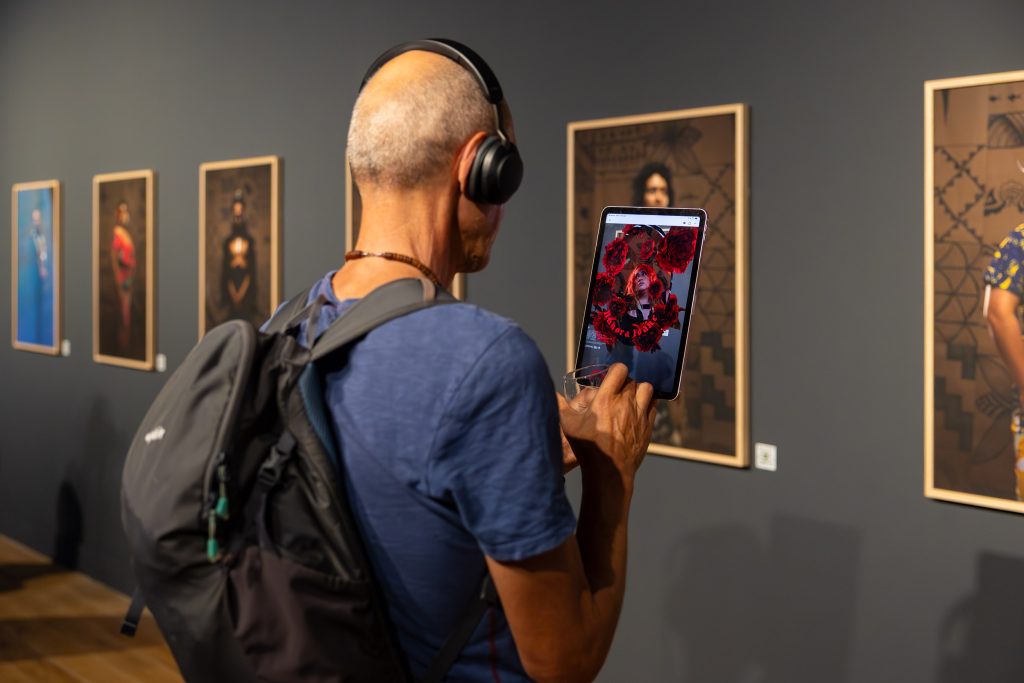
‘Rest in Pulotu / RIP FAFSWAG’(2025) is the only work whose authorship is attributed to the whole collective. By scanning the accompanying QR codes, photographic portraits of the collective become illuminated with 3D designs symbolic of each individual personality, and spoken testimonies of their lives can be heard. While this addition feels somewhat charming and sincere, perhaps including a nod towards digital archiving or attempting to generate intimacy, few people in the gallery space seem to have the right device, nor the app installed on their phone to view or listen. A frustratingly inaccessible feat, which, even if you have the courage to ask the invigilator to loan a device, is still limiting. The augmented reality format itself – the act of accessing content through an individual device – throws me out of the collective experience that the installations offer. It seems to me that the exhibition is trying to do too much here, maybe for the sake of digital engagement, rather than generating an easy mode of accessing the ceremonial feelings the exhibition is reaching for.
Despite this tendency to overstimulate, ‘MATA KI MOANA’ (2025) by Tapuaki Helu at the back of the gallery offers a more meditative space in the show, with a seascape projected onto two pieces of material that you can stand between. It feels like walking in the breath of a dream and is a welcome restful moment.
What begins to emerge throughout the exhibition is the idea that digital spaces—game worlds, fantasy and dreamscapes—offer a kind of terrain where one can imagine differently. I return to the work of writer and musician Adrianne Marie Brown, who says that we have the gift and responsibility to dream, to imagine outside of the boxes drawn for us by small minded angry white men. It’s clear from this exhibition that FAFSWAG dream outside of prescribed structures which can limit us, like the law or white supremacy, both in respect of the ancestors and also in spite of them. Indeed, as the artists themselves put it in the exhibition text: ‘We are our ancestors’ wildest dreams and worst nightmares realised in the modern day.’
FALE SĀ / SACRED HOUSE, HOME, Manchester, 4 July – 10 August 2025, part of Manchester International Festival 2025.
Jessica El Mal is British Moroccan writer, curator and artist based. She currently curates for The Arab British Centre, is the founder of A.MAL Projects and is a current PhD candidate at University of Leeds.
This review is supported by HOME.
Published 08.10.2025 by Jazmine Linklater in Reviews
1,518 words