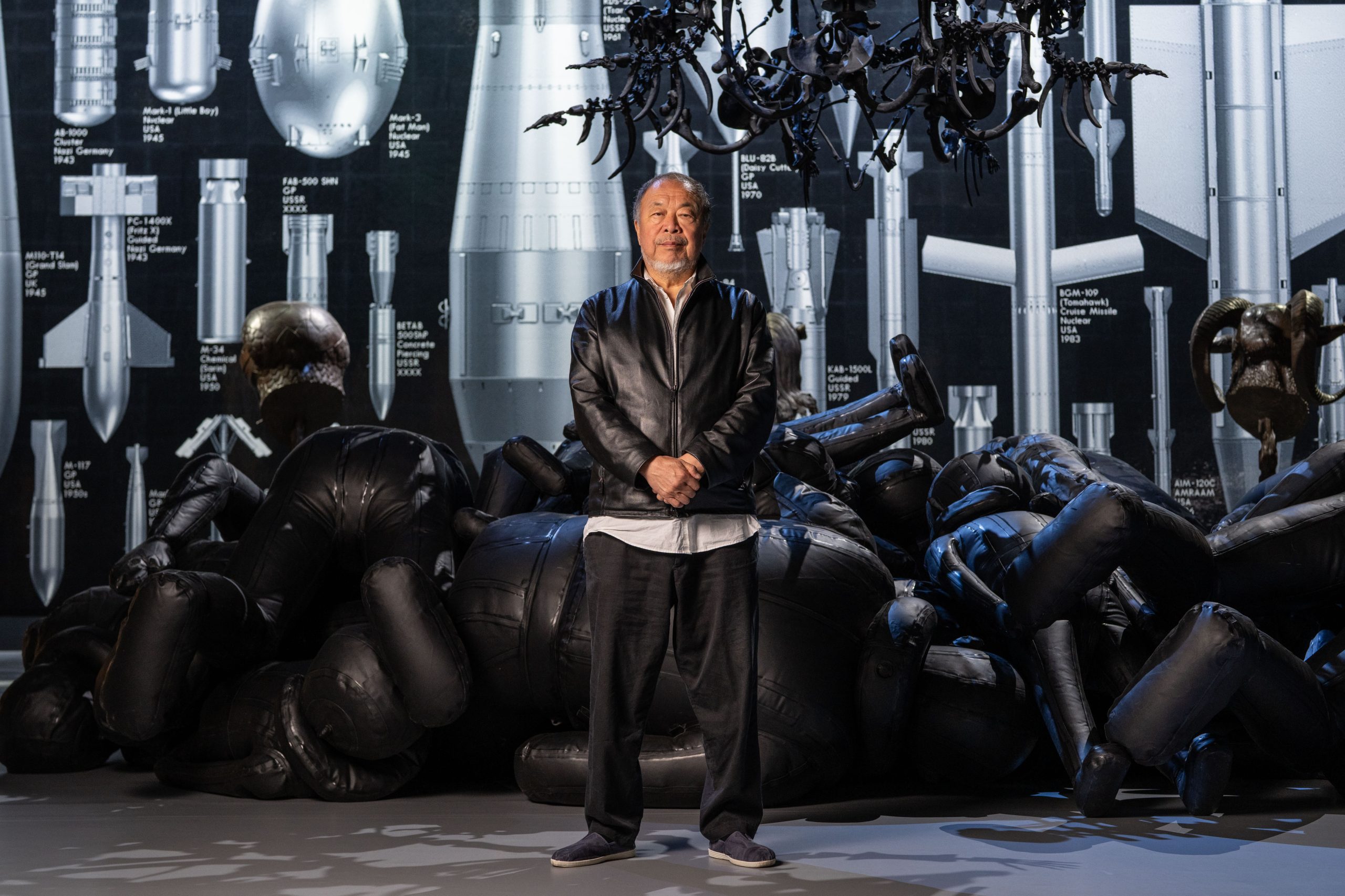
In January 2026, I read from Chinese media that the artist Ai Weiwei had returned to China to visit his mother. Ai has been seen as a vocal critic of China for his political art and activism, notably investigating government failings behind the large number of casualties in the Sichuan earthquake in 2008, the true scale of which authorities censored online. He gained international attention and support after he was secretly detained in China in 2011, allegedly for economic crimes but widely understood as political prosecution. Ai left the country in 2015, and has since then lived in Berlin, Lisbon and Cambridge. Is someone of such a formidable reputation welcome, even safe, in China today? After the trip – which largely went smoothly – he expressed in the media how Europe, which had a decade ago offered him freedom from surveillance, is in decline and how quality of life has improved in China. Around the same time, Factory International announced Ai’s summer exhibition, which they described as ‘monumental in scale and ambition’. Button Up! takes on big questions surrounding history, power and empire, specific to the site in Manchester. I kept wondering what had been on the artist’s mind while he lived abroad, leading up to that homebound journey. What had he seen that led to his recent comments? How would his understandings of contemporary times manifest in the same space that has housed the likes of Yayoi Kusama and David Hockney?
In the foyer below the ceremonial steps to the exhibition entrance, I’m met with a time-lapsed film documentary of China’s rapidly urbanising capital, titled ‘Beijing 2003’ (2004). This film, Ai’s earliest work on display here, prefaces the exhibition with the anthropological approach to places and people that marks his practice. As a visual account of the city before the Olympics in 2008, it depicts a time when international influences were more welcome in China. At that time, Ai brought the artistic vision he’d developed in the United States back to his home country, and would eventually earn a commission to design the ‘Bird’s Nest’ Olympics stadium with architects Herzog & de Meuron. While the film captures his time spent living in Beijing and witnessing its sweeping changes, his subsequent decade-long exile after 2015 alienated him from the city, only to experience it again as a traveller this year.
Ai’s earlier solo exhibitions in the United Kingdom were marked by the sprawling power of a single installation, from millions of handcrafted porcelain ‘Sunflower Seeds’ (2010) at Tate Modern’s Turbine Hall to ‘History of Bombs’ (2019), a vinyl print of life-sized explosives on the atrium floor of the Imperial War Museum, juxtaposed with its military collections. Here at Aviva Studios, the magnificence of Button Up! lies in the strength of multiplicity and enormity in equal measure. In the Warehouse, there are no temporary walls or structures to direct the audience. Nineteen works spanning more than twenty years stretch to the full limits of the hall which, according to Factory International, is ‘the size of an aircraft hangar’. Together they take on the histories of industrialisation, imperialism and conflict through an elephantine inquiry: what have empires brought upon the world and themselves?
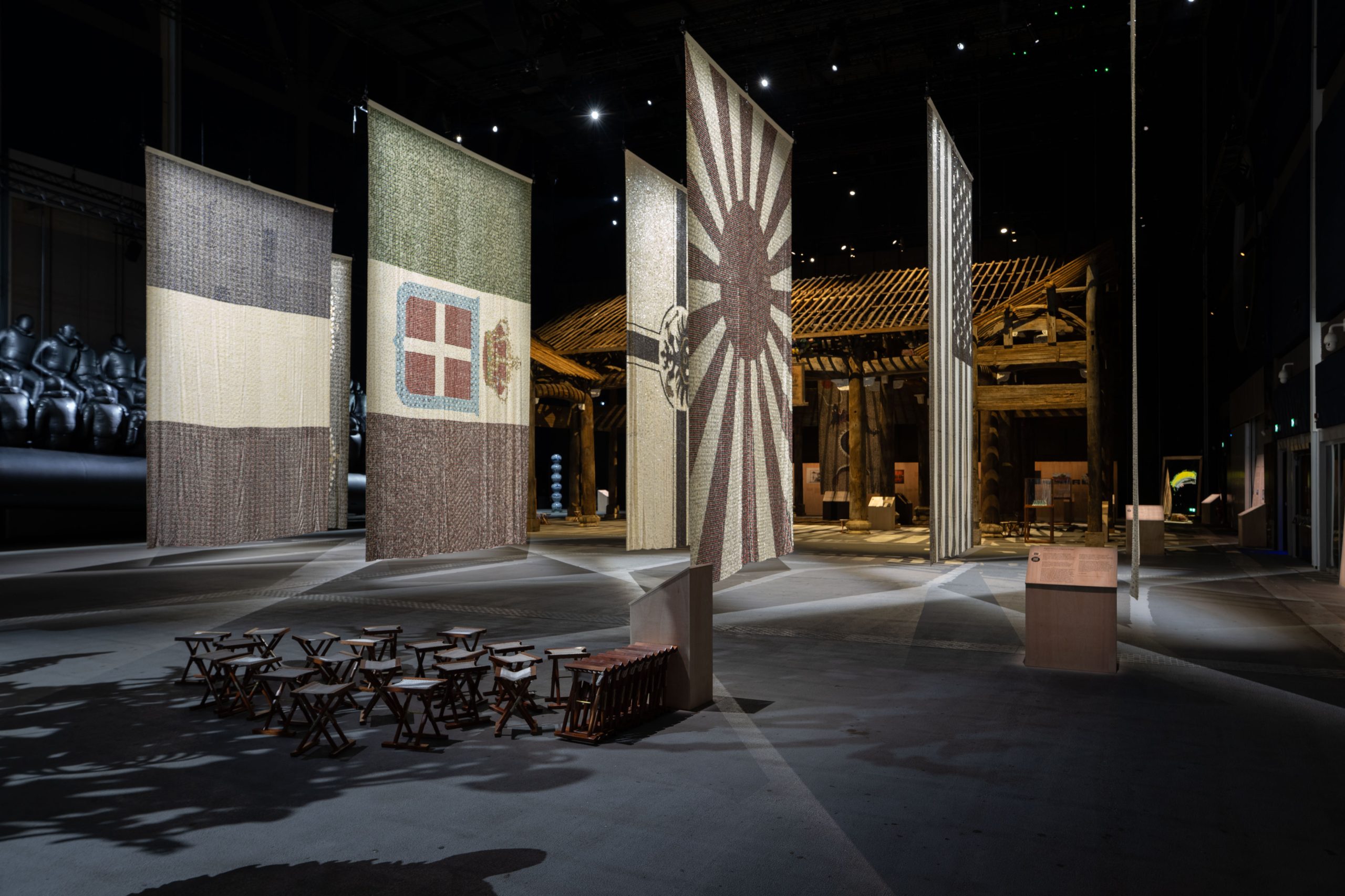
Smooth and interlocking surfaces of black plastic, glass and bronze glisten with reflections of spotlights in the dark. At the centre of the Warehouse, ‘Eight-Nation Alliance Flags’ (2024), hangs from the ceiling. These eight historic nation state flags, consisting of thousands of buttons, represent former empires that together invaded China in 1900. ‘History of Bombs’ (2019, 2025), reconstructed here from thousands of tiny plastic toy bricks, occupies one end wall. The bejewelled tapestries and white weaponry of these two works appear almost too brutally bright, exposing the glaring realities of violence, past and present, underpinning the exhibition. Ai bought the buttons from the manufacturing company A. Brown and Co. in London as it was closing down in 2019 and trying to sell off its stock. Eventually he found a purpose for them in creating this work. So, in a circuit of global capitalism, the buttons salvaged from waste in Britain became an artistic resource, hand-sewn into flags in China, one of the world’s largest manufacturing countries today. That this fabric work is now presented in Manchester, where the Industrial Revolution began and the textile trade rose and fell, reminds us all the more legibly of industrialisation’s colonial, extractive consequences.
The making of ‘Eight-Nation Alliance Flags’ took thirty-three artisans 281 days, ‘something that can only be realised in China’, Ai states in the exhibition text. This applies as much to the intensity of the creative process as its economic conditions. I’m immediately reminded of Antony Gormley’s ‘Asian Field’ (2003), a similarly vast installation with hundreds of thousands of clay figures created by 350 Chinese villagers, as if artistic ambitions for proliferation and scale were only affordable in China with the large supply of low-cost labour. It is well documented how Ai did, for example, pay Chinese makers of his ‘Sunflower Seeds’ living wages, and he is often cited pointing out that he paid slightly above average for the local area. But living wages in China remain significantly lower than the UK. In all instances, the Chinese makers remain nameless. Having said that, Ai did replicate part of this process in Manchester, by enlisting volunteers to build some of the panels in ‘History of Bombs’ at Aviva Studios. Unlike their Chinese counterparts, these volunteers were acknowledged by name as contributors on Factory International’s website. As spectacles of artistic labour, these epically scaled mosaic and fabrics embody unevenly distributed production processes in terms of craftsmanship and participatory engagement.
As I move back and forth to view the works at varying levels of granularity, I consider what Ai calls ‘accumulation art’ – a large whole made up of numerous constituent parts – as artistic language in the collectivist culture of communist China. In the book The Art of Cloning (2017), cultural theorist Pang Laikwan discusses how political leadership and civil society during China’s Cultural Revolution from 1966 to 1976 performed a sense of national uniformity through myriad ways of creating models and copies. This was the period when Ai’s intellectual father was persecuted in class struggle and Ai grew up internally displaced in northern Xinjiang, working in fields that seemingly extended to infinity. This experience informed his perspective of how individuals accumulate to a collective identity. In ‘Eight-Nation Alliance Flags’, I also see how each individual button, mirrored on both sides of the fabric by intricate design, upholds a collective image.
A ring of twelve bronze sculptures reimagining historical relics, named ‘Circle of Animals/Zodiac Heads’ (2010), stand between ‘History of Bombs’ and ‘Eight-Nation Alliance Flags’, situated in a global history of art that evolves into the present geopolitical landscape. In the eighteenth century, Manchu rulers of the Qing court commissioned Italian and French missionaries to create fountain sculptures in the form of twelve Chinese zodiac animal heads for the Old Summer Palace in Beijing. The zodiac heads were seized by British and French troops during the Second Opium War in 1860. Since the early 2000s, state-owned enterprises, government agencies and private collectors in China have sought to repatriate the heads at auctions, not without contentions. The Yves Saint Laurent estate, owning two heads, publicly offered to return them to China in 2009, on the condition that the country would grant freedom to Tibet. The wealthy Pinault family eventually bought and donated them to China, which was perceived as a strategic move to advance their business interests. The zodiac heads, in effect, served as props around which symbolic gestures were asserted.
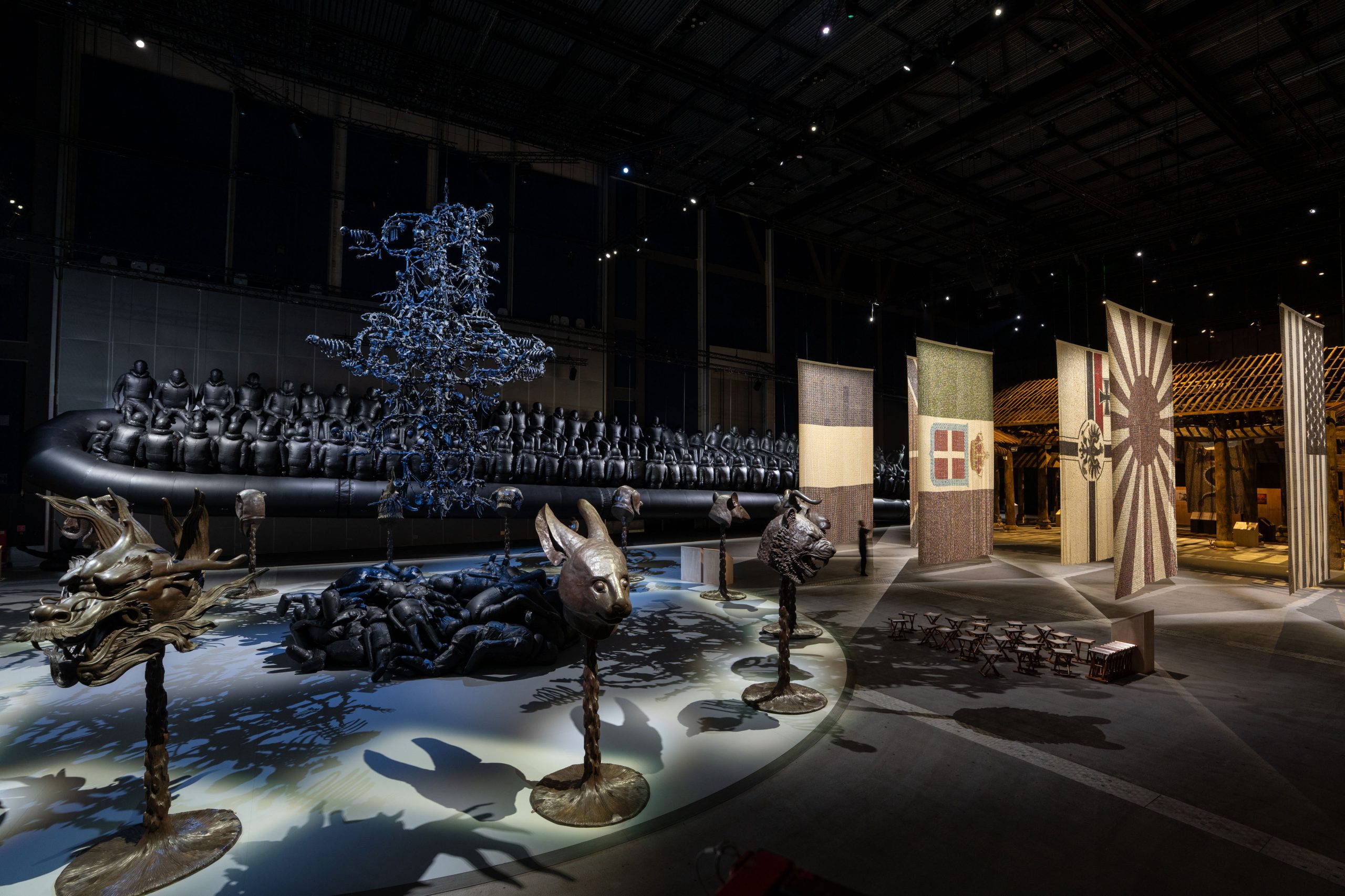
In the exhibition text, Ai explains that he created ‘Circle of Animals/Zodiac Heads’ in 2010 to question the nationalist motive behind the political regime claiming the zodiac heads of foreign origin as Chinese treasures. As someone from Hong Kong, a city strained between inherited British values and recent Chinese laws, I can resonate with this critique of statecraft. The same nationalist sentiment, however, looms large in the historical premise of ‘Eight-Nation Alliance Flags’ as a new work. Chinese history textbooks of my school years vehemently characterise the country’s colonial experience, including the occupation of northern China by eight empires, in a rhetoric of humiliation. While this discourse is decolonial in epistemology, it also serves to advance what historian Lim Jie-Hyun calls ‘victimhood nationalism’ in the 2025 book of the same name: a nationalist view of history and cultural memory legitimised by suffering and victimhood. It strikes me that the historiography challenged by ‘Circle of Animals/Zodiac Heads’ seems more foregrounded in ‘Eight-Nation Alliance Flags’. The outsized emblems of colonial powers obscure China’s own role as an oppressor – and its pertinence to Manchester – which is triangulated by Ai’s ‘Cockroach’ (2020) documentary on Hong Kong protests in 2019, to be screened at Aviva Studios in August, alongside a text on why Hong Kong migrants have relocated here. The two sides of the same flag thus unveil to me what a flattened view of bombs smooths out: violence persists not only in the form of war, but also in the erasure of institutions that protect a balance of power in both government and civil liberties. In Manchester, short of humiliation, connections that were once colonial now engender the possibility of a more truthful life and transnational belonging.
In pursuit of a better future, many more risk their own lives. When Ai left China for Germany in 2015, he researched at length to document refugees on perilous journeys through film, travelling twenty-three countries and interviewing over 600 people. Tributes to these people and border crossings abound here. Using plastic toy bricks, Ai reinterprets the iconic Japanese print ‘The Great Wave’ (1831), adding details of refugees aboard the boats in ‘Surfing (After Hokusai)’ (2023). Facing this work, there are larger-than-life models of refugees lumped over each other and on a rubber raft along the full length of the Warehouse, titled ‘Law of the Journey’ (2017, 2025). Even as exhibition visitors, our freedom of movement becomes ironic as we walk around these bodies in limbo. I’m reminded how, on a cosmic scale, we could be one particle collision away from becoming unnamed data in the news or an existence that simply perishes. Ai also immortalises and gives status to refugees in ‘Porcelain Pillar with Refugee Motif’ (2017), a set of vases illustrating their experience in the classical styles of Chinese porcelain, Greek and Egyptian carvings and pottery as if a speculative relic.
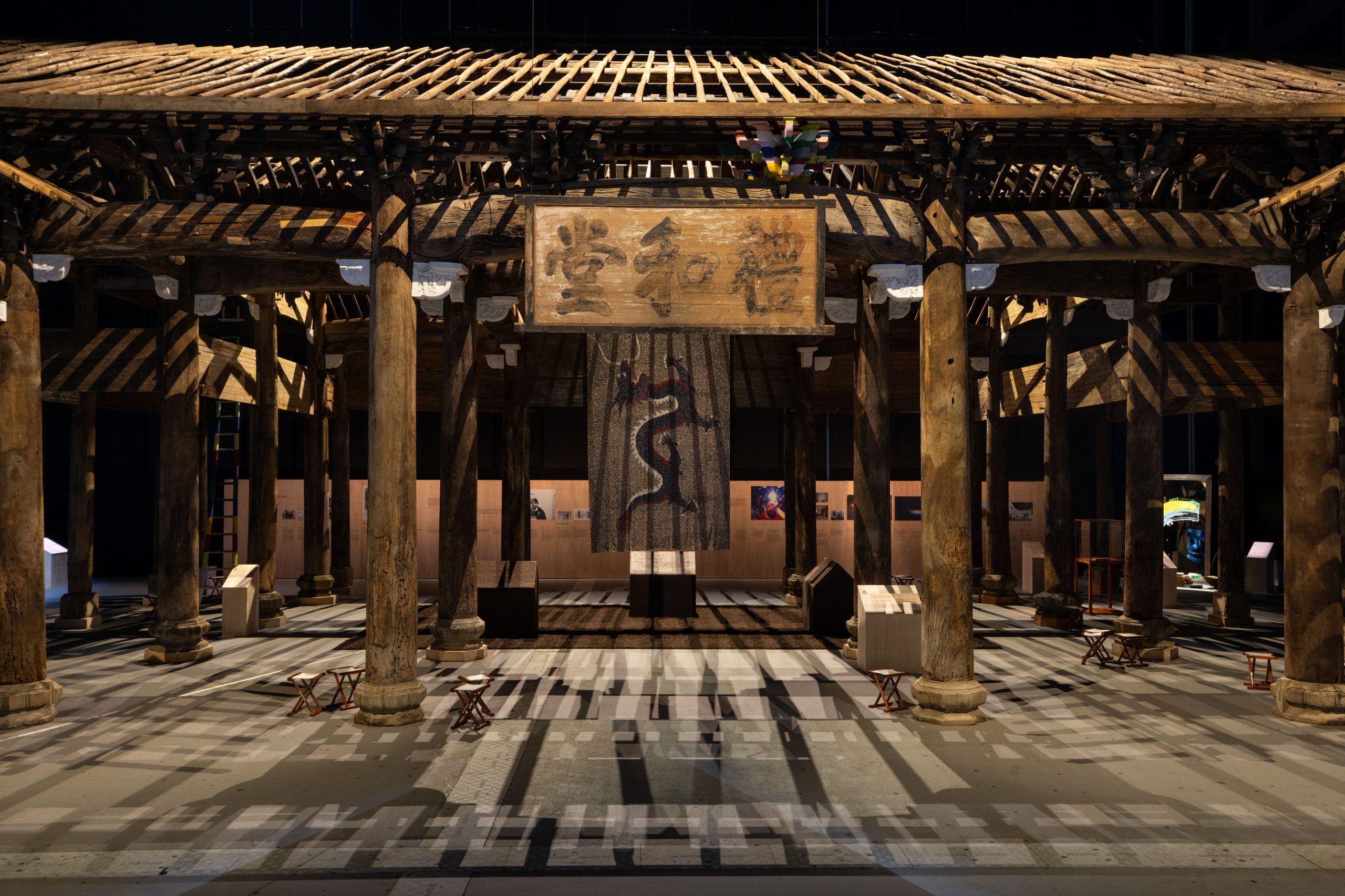
For me, who first learnt about Ai through his early works in China opposing the authoritarian regime, this exhibition – including the more recent works developed since he has lived in diaspora – allows me to recognise a much broader, humanitarian care at the heart of his practice. One that drives him to readily call out dehumanising conditions and systemic injustice wherever he sees them, irrespective of political system. I can then start to see why, when reflecting on his relationship with China, Ai cites the Chinese proverb that one could be on the east side of the river for thirty years and find oneself on the west side for the next thirty years (三十年河東,三十年河西). He says he ‘never had a fixed view or position about anything’. Rather than ambivalence, this may signal a strong faith and commitment – to human dignity and hope – even if it means suspending judgement as the ever-shifting world changes where he stands. It also dawns on me how migration and the diasporic experience shape one’s transnational identity. It may turn in ways we never expected, carrying whatever is worth remembering and pursuing. Just as the murmurs of longing in the sound work ‘Nian Nian / 念念 / (Commemoration)’ (2021) reverberate around the Warehouse thirteen years on from the Sichuan earthquake, solemnly reciting the names of children who lost their lives, it is through the fault lines of displacement that cultural memory still emerges, in all its linguistic and embodied specificities.
Ai Weiwei: Button Up!, Aviva Studios, Manchester, 2 July 2026 – 6 September 2026.
Lesley Cheung is a Hong Kong-born writer in Manchester.
This review is supported by Factory International.
Published 03.08.2026 by Jazmine Linklater in Reviews
2,032 words